

Setting up a new washing machine requires more than just plugging it in; a precise sequence of physical preparation and an initial calibration cycle are essential to prevent structural damage and ensure optimal lifetime performance.
The physics of stabilization: why transit bolts must go
Every new washing machine is equipped with heavy-duty transit bolts, typically located at the rear of the unit. These steel rods mechanically lock the heavy internal concrete counterweights and the stainless steel drum directly to the external steel chassis. During transport, this rigid connection prevents the delicate suspension springs and friction shock absorbers from being stretched or sheared by kinetic impacts.
If you start a cycle with these bolts still in place, the kinetic energy generated during the spin cycle cannot be absorbed by the internal suspension. Instead, this force transfers entirely to the bearings, the drum spindle, and your floor, leading to catastrophic mechanical failure or a fractured outer tub. To remove them safely, follow this procedure:
- Use the spanner supplied by the manufacturer to loosen the hex-head bolts counterclockwise.
- Gently pull the bolt assembly along with its plastic spacer sleeves out of the chassis. Save these parts in case of future relocation.
- Insert the plastic blanking caps provided into the open holes to prevent moisture and dust from entering the machine cabinet.
Achieving perfect equilibrium on the floor
Modern washing machines spin at velocities reaching up to 1400 rotations per minute, creating substantial centrifugal forces. Any slight deviation from a perfectly level plane causes uneven load distribution, which accelerated bearing wear and creates excessive noise. Grounding and leveling the appliance is a matter of material physics.
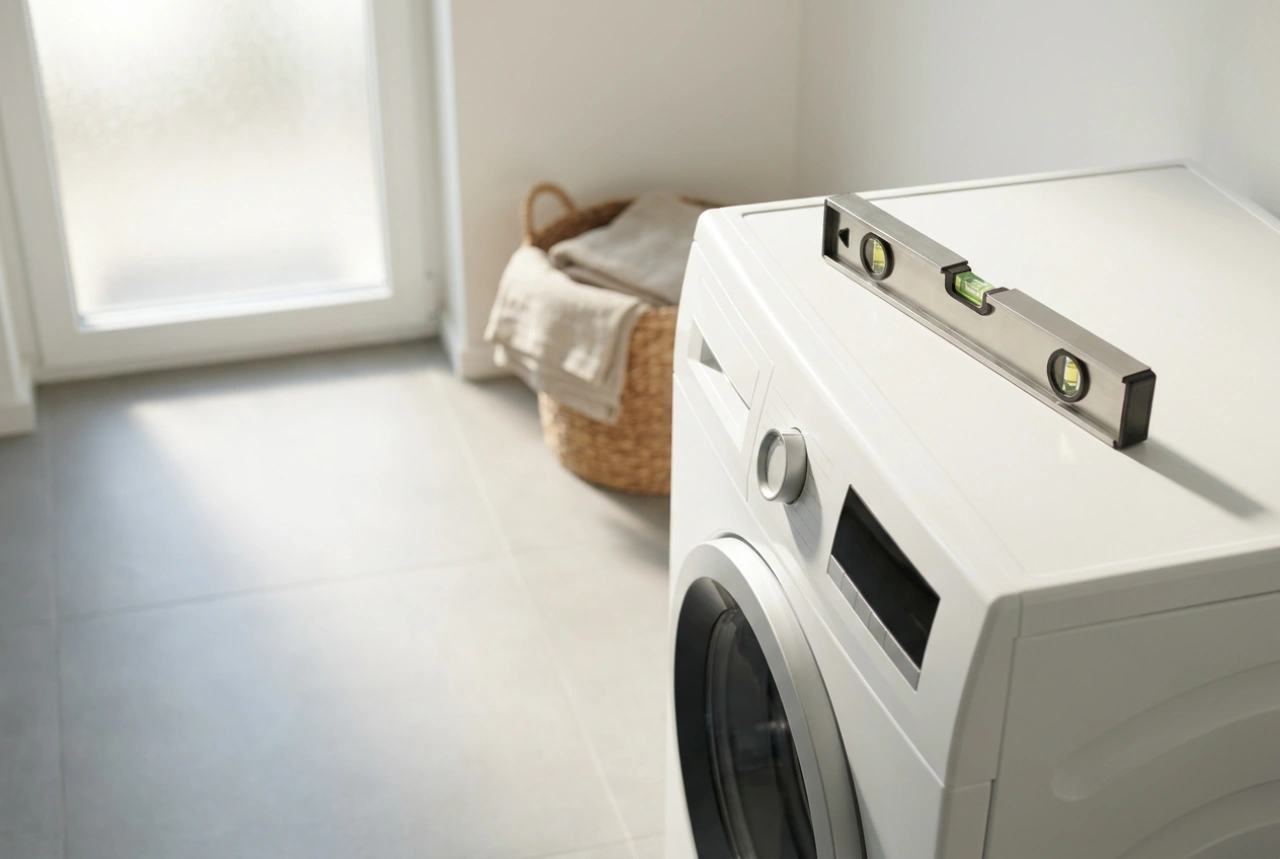
Place a high-precision spirit level directly across the top frame of the machine, checking both the left-to-right and front-to-back axes. If the bubble is off-center, adjust the threaded feet at the bottom. Loosen the locknuts using a wrench, rotate the feet to raise or lower each corner, and tighten the locknuts securely against the chassis base. A stable machine must not rock even slightly when physical pressure is applied diagonally to the top corners.
The maintenance wash: clearing manufacturing residues
During the manufacturing process, industrial lubricants, protective oils, plasticizers, and metallic dust accumulate inside the stainless steel drum, the outer plastic tub, and the internal rubber hoses. Running a standard load of laundry immediately will transfer these chemical residues directly onto your textiles, causing permanent staining and grey discoloration.
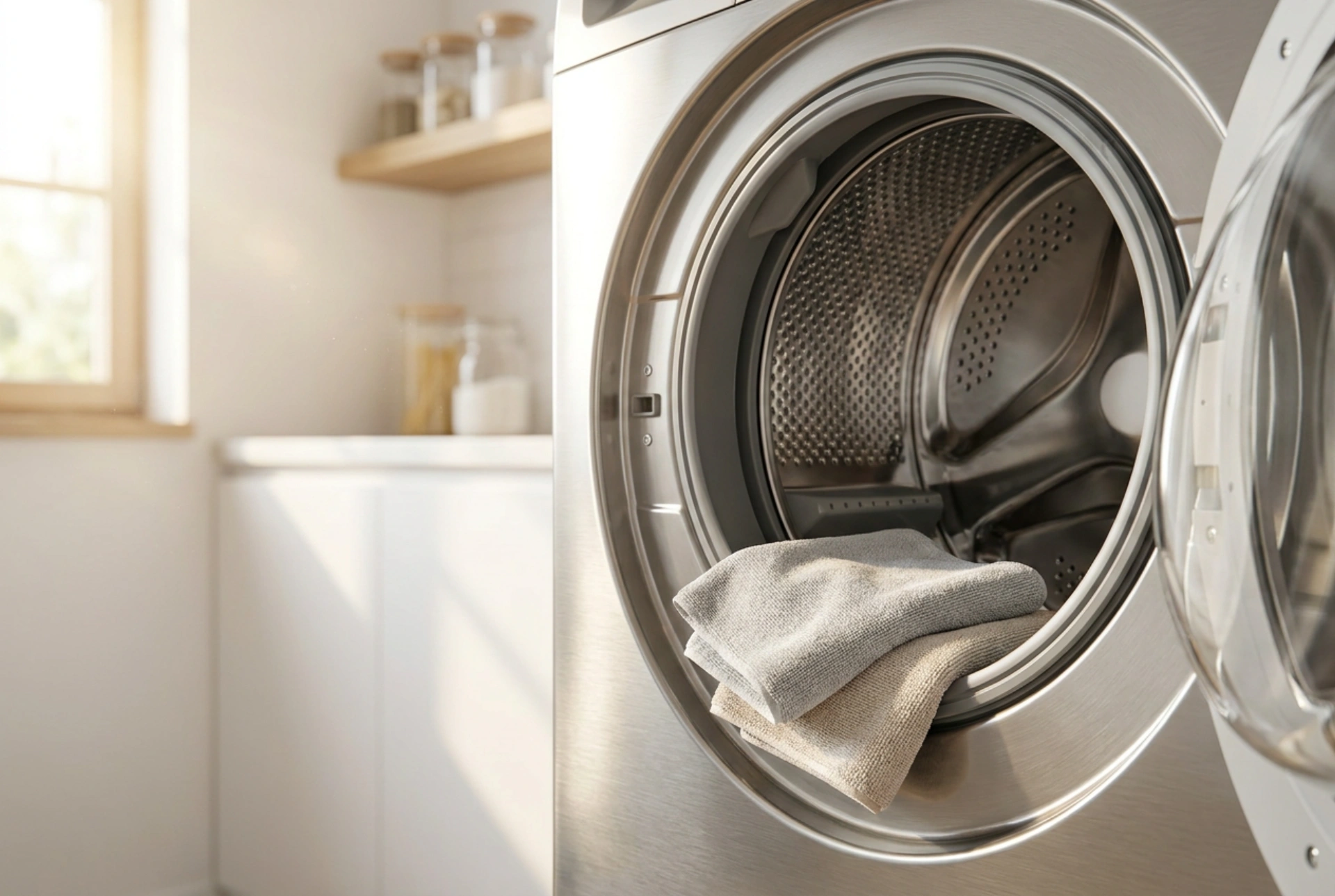
To clean these systems thoroughly, perform an initial maintenance wash, often referred to as a calibration or commissioning run, using chemistry and heat to purge the interior:
- Ensure the drum is completely empty of any fabrics or plastic packaging elements.
- Open the detergent drawer and add a small amount of powder detergent designed for whites directly into the main wash compartment. Powder is preferred here as it contains oxygen-based bleaching agents that effectively break down industrial oils. Do not use liquid detergents, which can leave a greasy film in a cold drum.
- Select a long, intensive cotton program with a temperature of at least 60 degrees Celsius (90 degrees Celsius is optimal if supported by the machine). The high thermal energy is necessary to liquefy protective grease coatings and emulsify synthetic manufacturing lubricants.
- Let the cycle run fully, including the intermediate spins and final drain, to clear the entire pump system.
Water hardness and initial detergent calibration
Once the initial run is complete, the machine is ready for daily use, but its efficiency depends on calibrating your detergent dose to your local water chemistry. High calcium and magnesium content (hard water) neutralizes active surfactants, requiring more detergent to achieve cleanliness. Conversely, soft water requires minimal detergent; excess dosing leads to oversudsing, which cushions the mechanical drop of the clothes in the drum and decreases washing performance. Always check your local water utility values and adjust the dosage slider inside your detergent drawer accordingly.