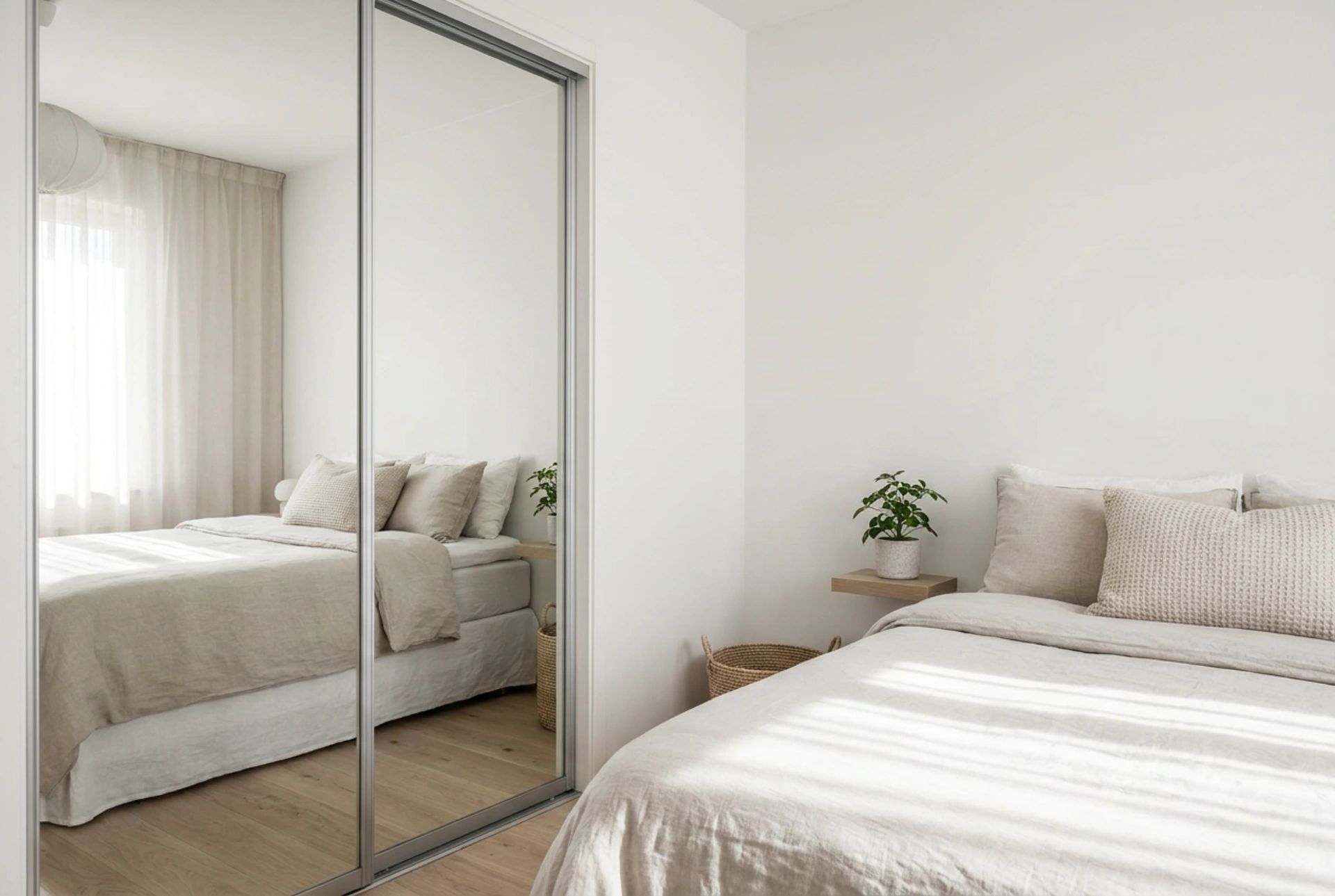


Sliding mirror doors serve as a highly efficient architectural tool for small bedrooms, combining mechanical space-saving with optical principles that physically and visually alter a confined layout.
The Optics of Perceived Space and Light Propagation
In interior physics, the perception of space is heavily dictated by light distribution and sightlines. Standard walls absorb light and establish hard visual boundaries, which can make a small bedroom feel restrictive. Installing a large, floor-to-ceiling mirror door alters this dynamic through the specular reflection of light.
When light waves strike a polished metallic surface behind glass—the composition of a standard mirror—they bounce back at the exact angle of incidence. This reflects the opposite side of the room, effectively duplicating the visual depth. Furthermore, natural light entering from windows is redirected deeper into dark corners, eliminating shadows that visually shrink a room. By maximizing the lux levels throughout the space, the environment feels open, airy, and significantly less confined.
Mechanical Efficiency: Eliminating the Swing Zone
Traditional hinged doors require a clear, unobstructed arc to operate—often referred to as the swing zone or dead space. In a small bedroom, this zone typically consumes between 1 and 1.5 square metres of valuable floor area that must remain completely empty. This restriction limits layout options, often preventing the placement of bedside tables, chests of drawers, or even the bed itself near the wardrobe.
Sliding doors operate on a parallel plane, moving along horizontal tracks mounted to the ceiling and floor. By eliminating the swing radius, the functional footprint of the room is maximized. Furniture can be placed directly adjacent to the wardrobe opening without obstructing access. The mechanical assembly relies on low-friction rollers and ball bearings, ensuring smooth, lateral movement that requires minimal kinetic force to operate, thereby saving physical space while maintaining effortless accessibility.
Visual Ergonomics and Cognitive Order
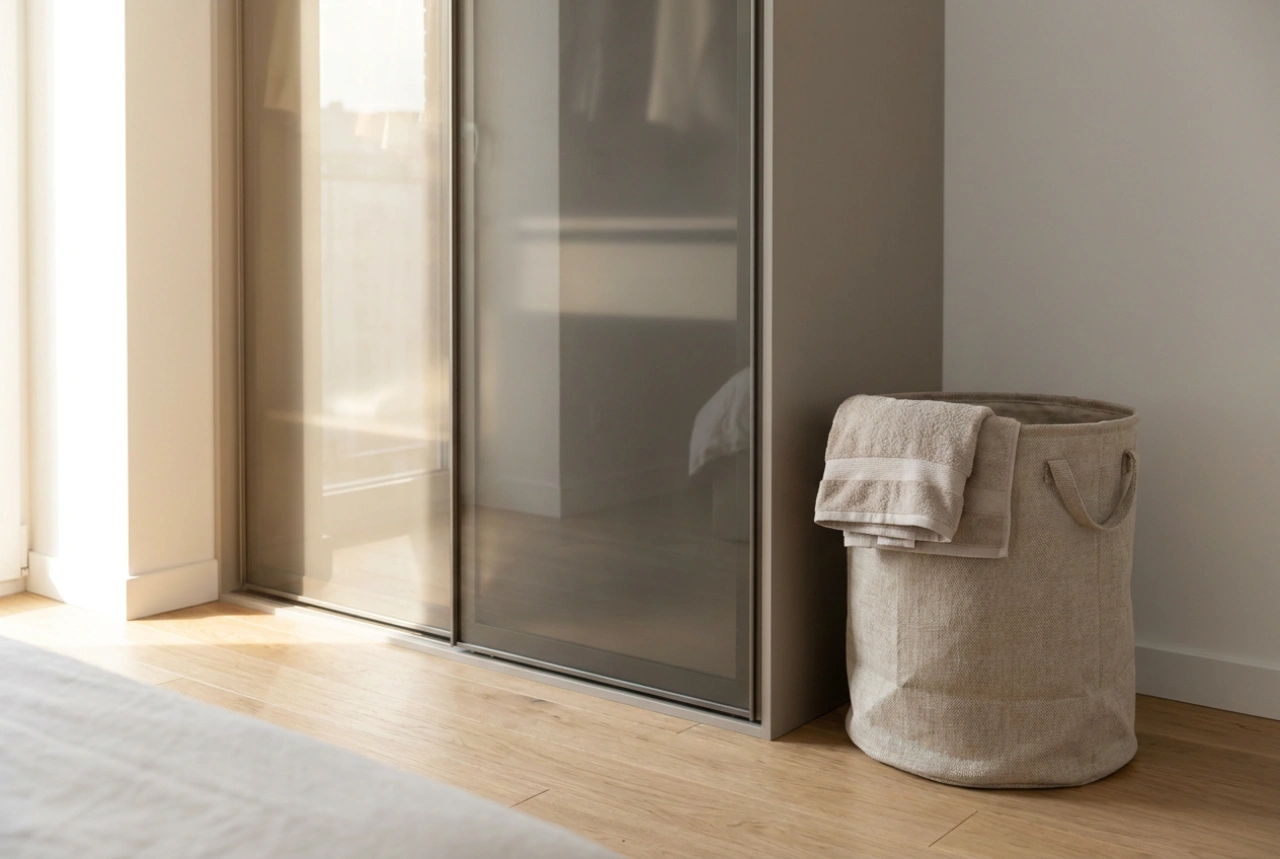
Visual clutter directly impacts our cognitive perception of order and space. A wardrobe with multiple doors, handles, and visible seams creates a fragmented surface that draws the eye and highlights the room's limitations. In contrast, sliding mirror doors create a seamless, monolithic facade.
By concealing storage shelves, hanging rails, and personal belongings behind a sleek, reflective barrier, the room gains a clean, unified aesthetic. The lack of projecting handles or complex hardware reduces visual noise, allowing the eye to sweep across the room uninterrupted. This minimalist approach creates a sense of structural calm, making even the most compact bedroom feel organized and systematically arranged.
Maintaining Reflective Surfaces: Science-Based Cleaning
To preserve the optical benefits of sliding mirror doors, the glass surface must remain free of dust, oils, and streaks, which scatter light and diminish the illusion of depth. Standard household dust is held in place by microscopic electrostatic charges, while fingerprints consist of lipids and organic oils.
An effective, non-toxic cleaning solution can be mixed using basic household chemistry: a one-to-one ratio of distilled water and isopropyl alcohol, or a mild solution of white acetic acid in distilled water. Distilled water is crucial because it lacks the dissolved minerals found in tap water, which leave behind white calcium carbonate deposits upon evaporation. Using a clean, tight-weave microfibre cloth, wipe the surface in an S-pattern from top to bottom. This technique ensures that contaminants are lifted and trapped within the fibres rather than redistributed across the glass, maintaining perfect clarity and maximum light reflection.