

A sliding wardrobe in the hallway must balance high-traffic daily transitions with the physical limitation of having only partial access to its contents at any given moment. Optimising this high-traffic storage space requires a systematic approach based on ergonomics, accessibility, and microclimate management to ensure smooth daily routines.
The Mechanics of Sliding Doors: Managing the Overlap
Sliding wardrobe doors operate on parallel tracks, meaning at least fifty per cent of the interior is always concealed. This design introduces a physical "dead zone" directly behind the overlapping panels where the doors bypass each other. Accessing this central area requires moving both doors, creating a multi-step physical action that disrupts quick daily routines.
To design an efficient workflow, reserve this central overlap zone for low-frequency items. Items such as guest slippers, emergency shoe-cleaning kits, or seasonal umbrellas fit perfectly here. Conversely, the outer compartments must hold high-frequency items. Position daily-wear jackets on the side that corresponds to your natural entry path into the home, allowing for a fluid motion of opening one door, hanging the coat, and sliding it closed in a single sequence.
Vertical Stratification: The Physics of Ergonomic Storage
Organising shelves and hanging rails requires an understanding of human biomechanics and load distribution. Dividing the wardrobe vertically into three distinct zones minimises physical strain and prevents structural wear on the shelving units.
- The Base Zone (Floor to 60 cm): This area is ideal for heavy items. Storing heavy footwear, boots, and bags at the bottom lowers the overall centre of gravity of the wardrobe and prevents high-altitude shelf bowing. Use pull-out wire trays here to avoid deep bending when retrieving shoes.
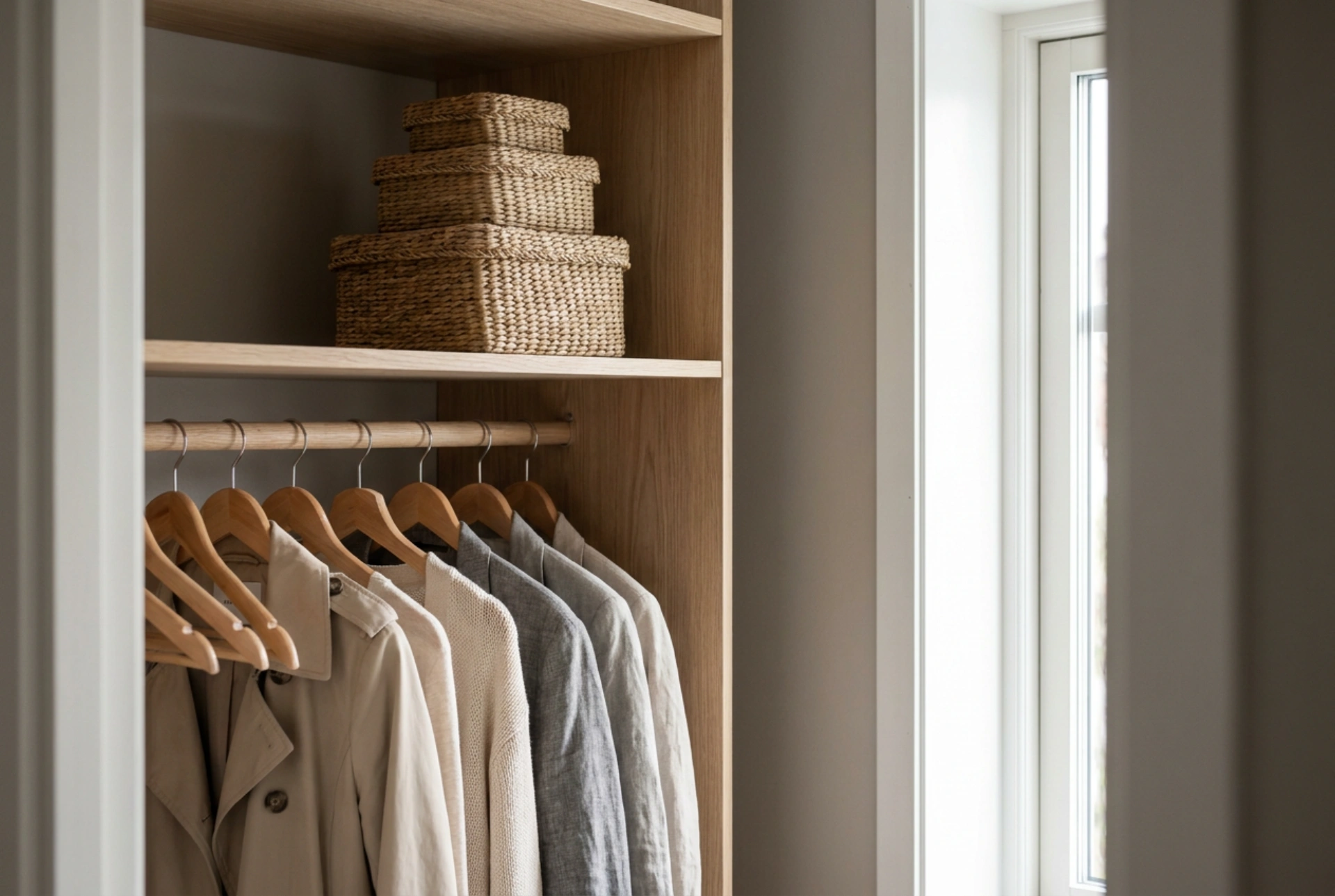
- The Golden Zone (60 cm to 170 cm): Positioned between waist and eye level, this zone requires the least physical effort to access. Place daily coats on a heavy-duty hanging rail suspended at approximately 150 cm to accommodate longer trench coats without dragging. Keep daily-use items like handbags, keys, and hats on intermediate shelves within this zone.
- The Apex Zone (Above 170 cm): Reserved for lightweight, low-frequency storage. Reaching upward shifts the body’s balance, so store only soft, light items like off-season duvets, spare hats, or scarves in lightweight canvas boxes here. Do not store heavy containers overhead to prevent accidental falls.
Microclimate and Moisture Control in Closed Spaces
Hallway wardrobes frequently host damp outerwear and shoes exposed to rain, snow, and road salt. Placing wet items directly into a closed sliding wardrobe creates a high-humidity trap. Without adequate ventilation, trapped moisture condenses on the cold back wall of the wardrobe, leading to musty odours, fabric degradation, and potential mould growth on natural materials like leather and wool.
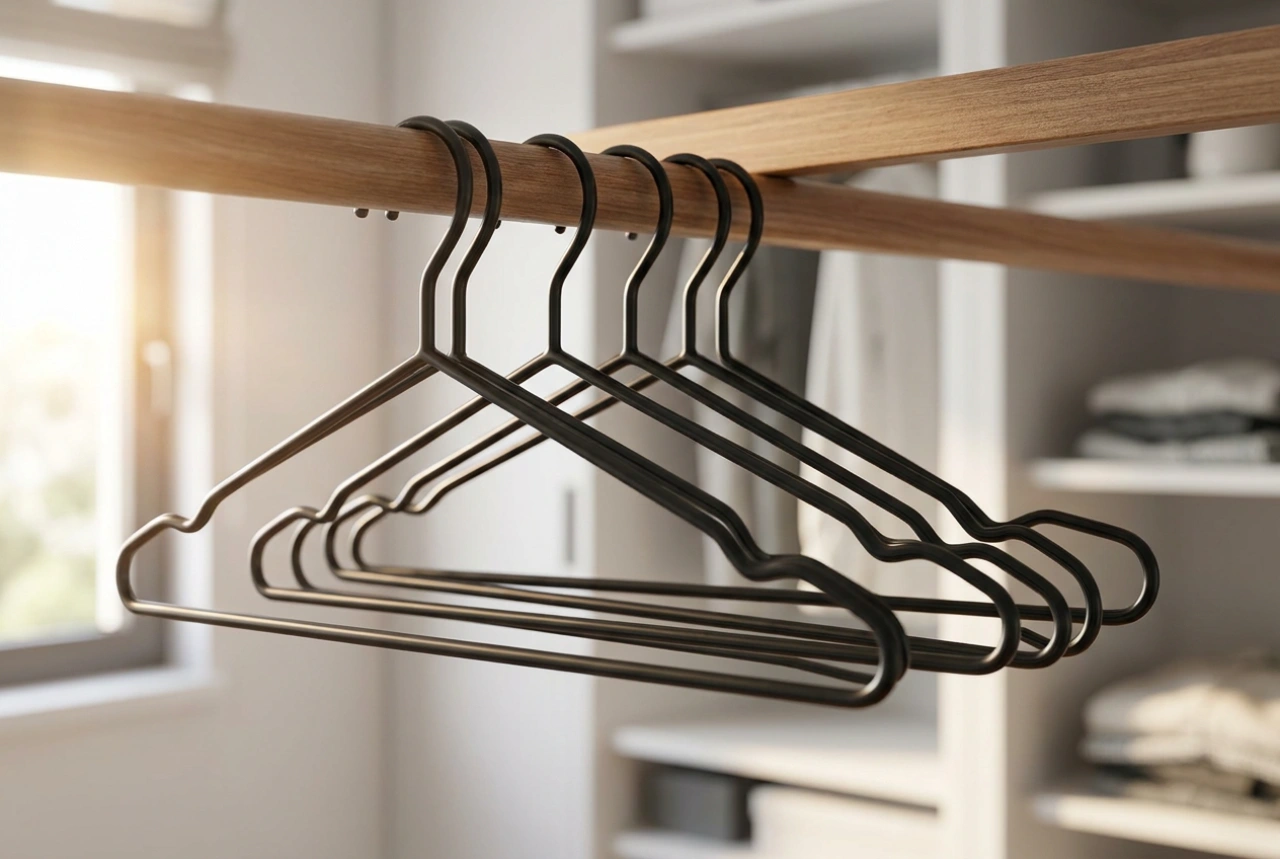
To combat humidity, implement strict material guidelines. Never store damp garments immediately. Allow coats to dry on an external hook or leave the sliding doors slightly open for several hours to facilitate natural evaporation. Opt for breathable storage containers rather than airtight plastic bins. Wire baskets, wicker baskets, and canvas bins allow air to circulate freely around accessories. Additionally, keeping space between hangers ensures air can circulate between garments, preventing moisture from becoming trapped in dense layers of fabric.
The Order of Operations: Active vs. Passive Storage
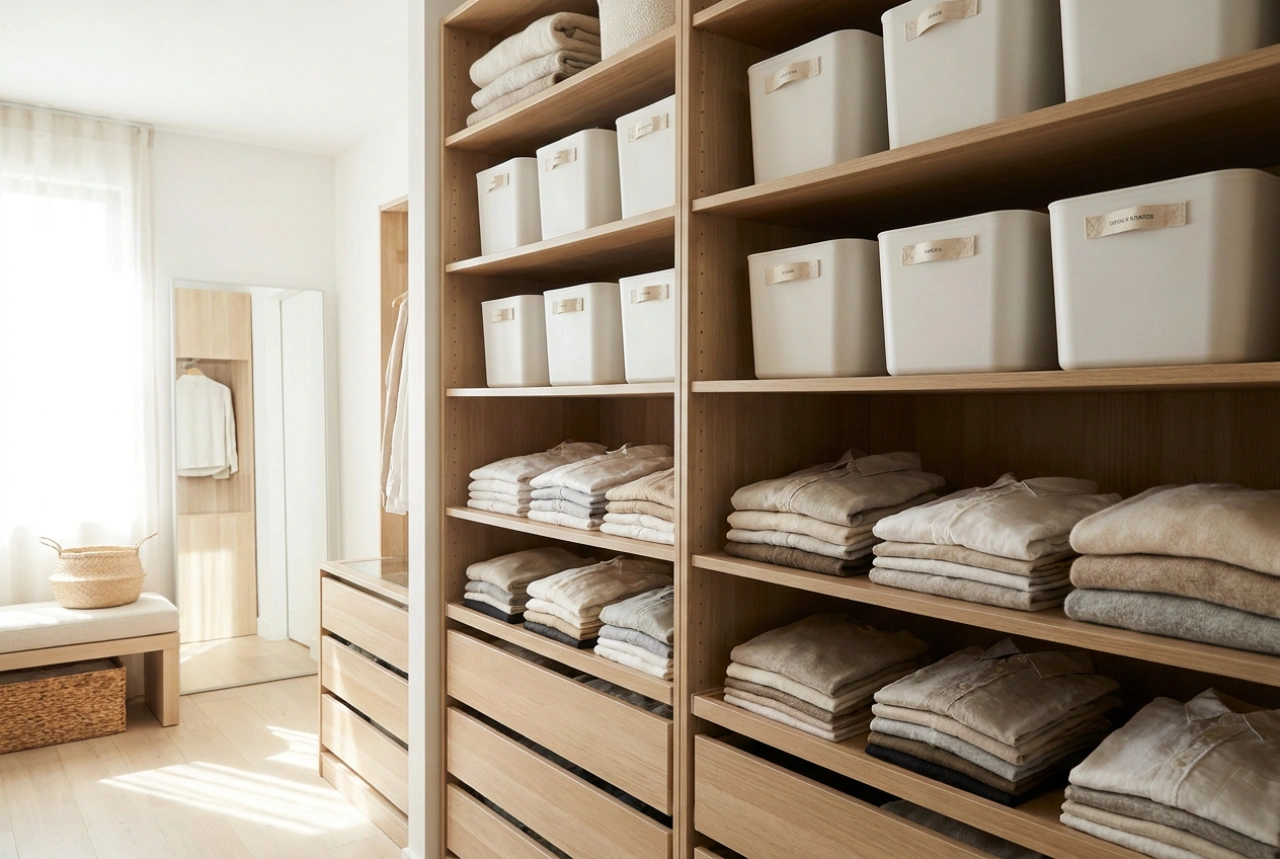
A common error is mixing daily-use clothing with occasional or seasonal outerwear, which leads to visual clutter and physical bottlenecks. To prevent this, separate the wardrobe strictly into "active" and "passive" zones.
The active zone should be a streamlined, minimal space containing only the coats and shoes currently in use for the ongoing week. Limit the number of hangers in this section to prevent overcrowding; compressed down jackets lose their loft and insulation properties over time. The passive zone, located deeper in the wardrobe or behind the less accessible sliding door panel, should house formal wear, off-season coats protected in breathable fabric garment bags, and specialised outdoor gear. This systematic separation ensures that during the morning rush, you only interact with relevant, ready-to-wear items.