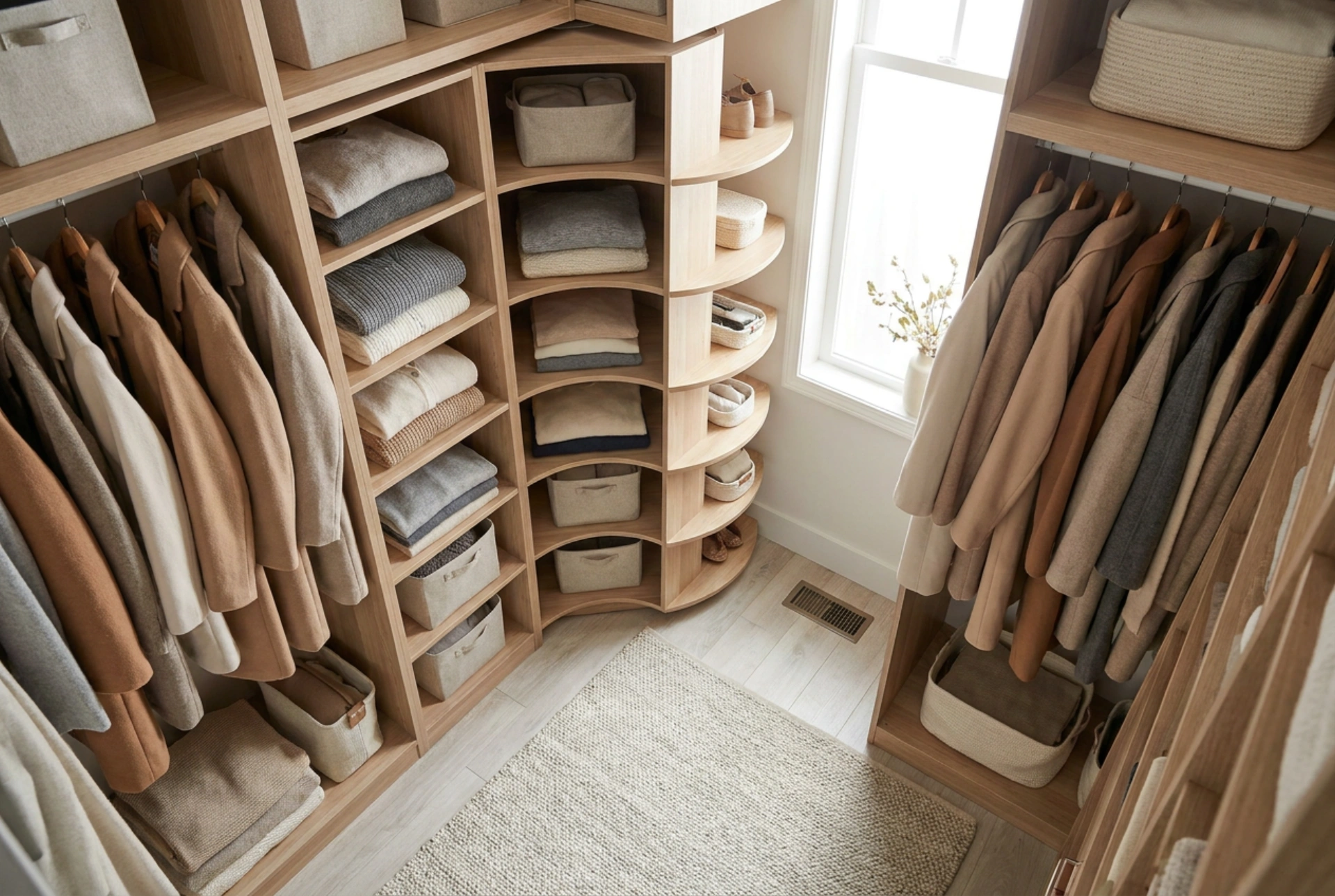


Corner wardrobes in hallways often suffer from the "dead space" phenomenon, where deep, dark angles become inaccessible storage graveyards. Maximising this space requires understanding the geometry of reach and applying smart mechanical solutions that bring the back of the cabinet to the front.
The Geometry of the Corner: Why Space is Wasted
Standard hallway wardrobes have a depth of 60 centimetres, but when two units meet at a 90-degree angle, the diagonal depth of the corner exceeds one metre. This depth is greater than the average human arm's reach, creating a physical blind spot. Items placed in these deep corners are difficult to see and retrieve, leading to underutilisation. To solve this, interior organization must rely on dynamic hardware rather than static flat shelves. Static shelves in deep corners force you to reach over front items, disrupting order and wasting valuable vertical volume.
Rotational Mechanics: Utilizing Carousel Units
One of the most effective ways to exploit 90-degree corners is the installation of rotational shelving, commonly known as carousel units. These systems operate on a central vertical steel axis that allows circular or three-quarter circle shelves to rotate 360 degrees. By rotating the shelf, items stored at the very back are effortlessly brought to the front. To ensure longevity and smooth operation, distribute weight carefully. Place heavier, low-frequency items like hiking boots or heavy winter boots on the lowest shelf to maintain a low center of gravity. This minimizes torque on the central spindle and prevents the rotation mechanism from warping or sticking over time.
Articulated Pull-Out Systems: Straight-Line Accessibility
Where rotational shelves leave small triangular gaps in the absolute corners, articulated pull-out systems (often referred to as blind-corner slides) offer a highly efficient alternative. These mechanisms use a system of interlocking tracks and hinges. When you pull the cabinet door or the front basket, the rear baskets slide sideways and then forward into the opening. This mechanical translation ensures that 100% of the corner volume is accessible. For hallway closets, these steel wire baskets are ideal because they allow dust, grit from shoes, and dry debris to fall through to a cleanable tray below, rather than accumulating in inaccessible corners.
Managing Microclimates and Airflow in Hallway Corners
Hallways are transition zones where wet coats, damp umbrellas, and dirty shoes are frequently introduced. Enclosed corner cabinets can easily trap moisture, leading to stagnant air, musty odours, and even mould growth on leather goods or textiles. When planning your corner wardrobe fittings, prioritize ventilation. Instead of solid timber or MDF partitions, opt for epoxy-coated wire baskets or perforated metal shelves. This allows air to circulate freely. Additionally, avoid storing wet outerwear directly inside the deep corner; reserve this space for dry, off-season garments packed in breathable fabric garment bags, keeping them elevated away from floor-level moisture.
Zoning by Weight and Frequency of Use
To maintain order in a corner wardrobe, implement a strict zoning system based on physics and daily habits:
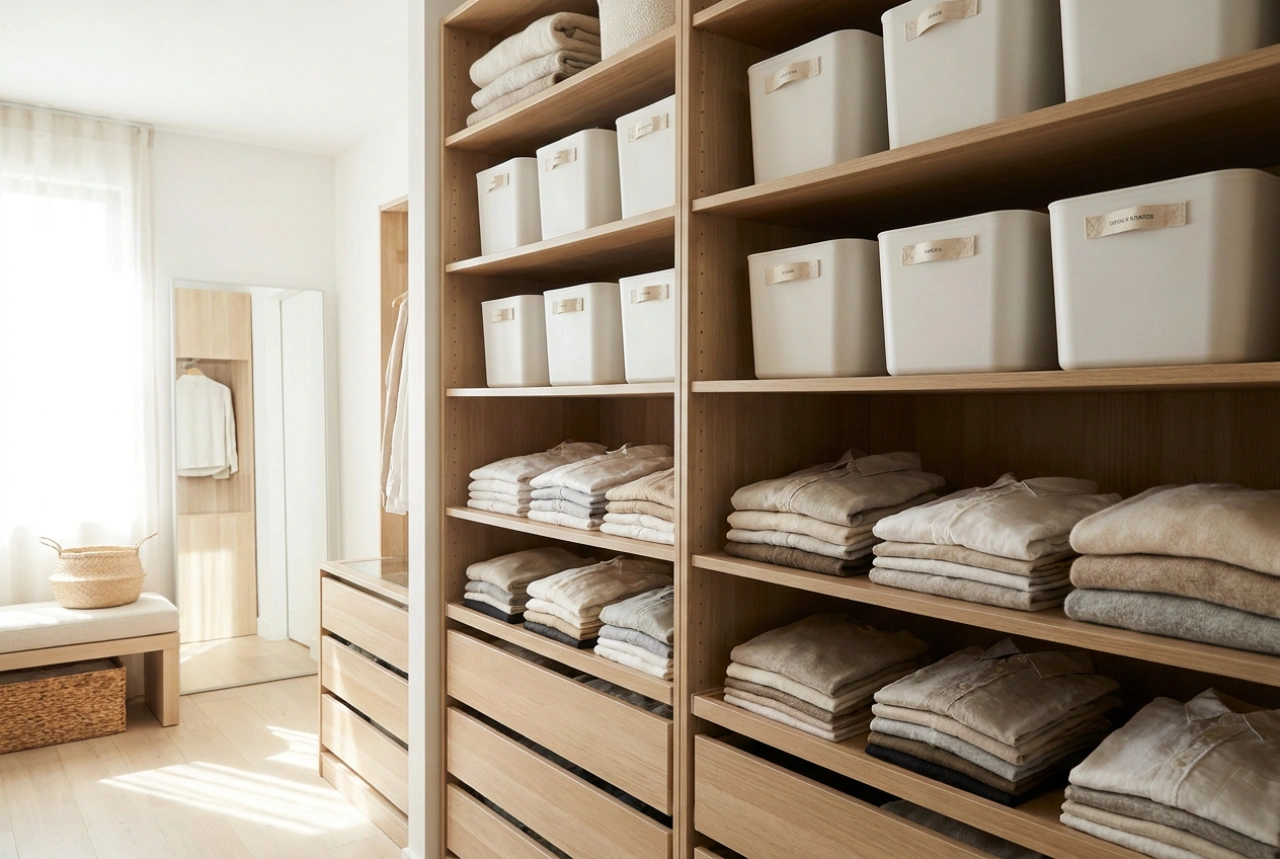
- The Upper Zone (Above 1.8 metres): Best suited for lightweight, seasonal items such as hats, scarves, or summer beach bags stored in clear, labeled polypropylene bins.
- The Middle Zone (0.8 to 1.8 metres): The optimal ergonomic height. Use this for daily-use items, utilizing swivel hangers or L-shaped hanging rails that make sliding coats out of the corner seamless.
- The Lower Zone (Below 0.8 metres): Reserved for heavy items and footwear. Pull-out shoe racks on full-extension ball-bearing slides allow you to view your entire shoe collection without bending into the dark recess of the wardrobe.