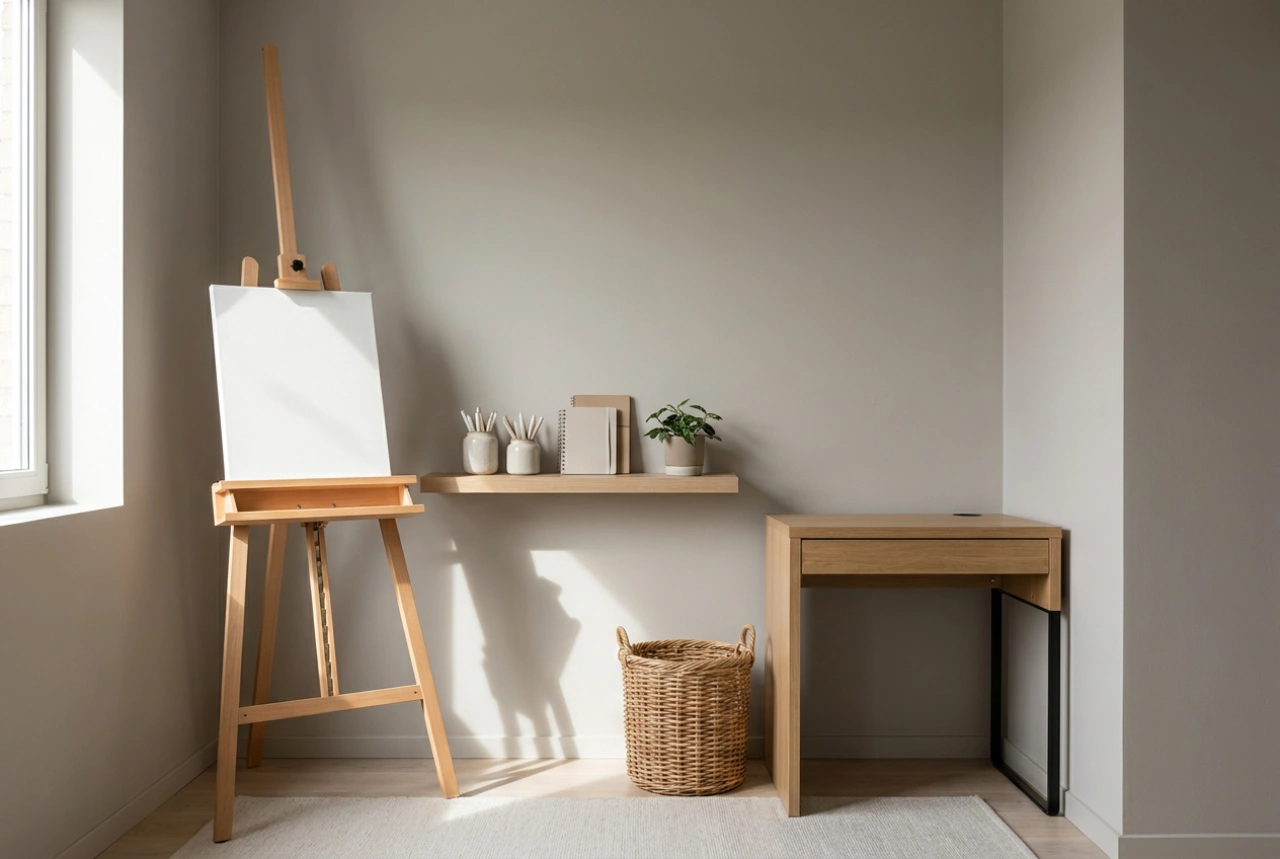


Setting up a dedicated drawing station with a blackboard encourages cognitive development while keeping creative messes contained to a designated, easy-to-clean zone.
Choosing the Right Blackboard Material
When selecting a blackboard, material composition determines both longevity and ease of cleaning. Natural slate offers a highly durable, non-porous surface that resists wear, but its significant weight requires secure wall anchoring. Alternatively, medium-density fibreboard (MDF) coated with high-quality chalkboard paint provides a lightweight, customisable option. Chalkboard paint contains fine abrasive aggregates, such as silica, which create the necessary texture or "tooth" for the chalk to shear off and cling to the surface. To prevent "ghosting"—the permanent shadow left by old drawings—the surface must be completely non-porous and cured according to the manufacturer's physical specifications before its first use.
Ergonomic Layout and Height Calibration
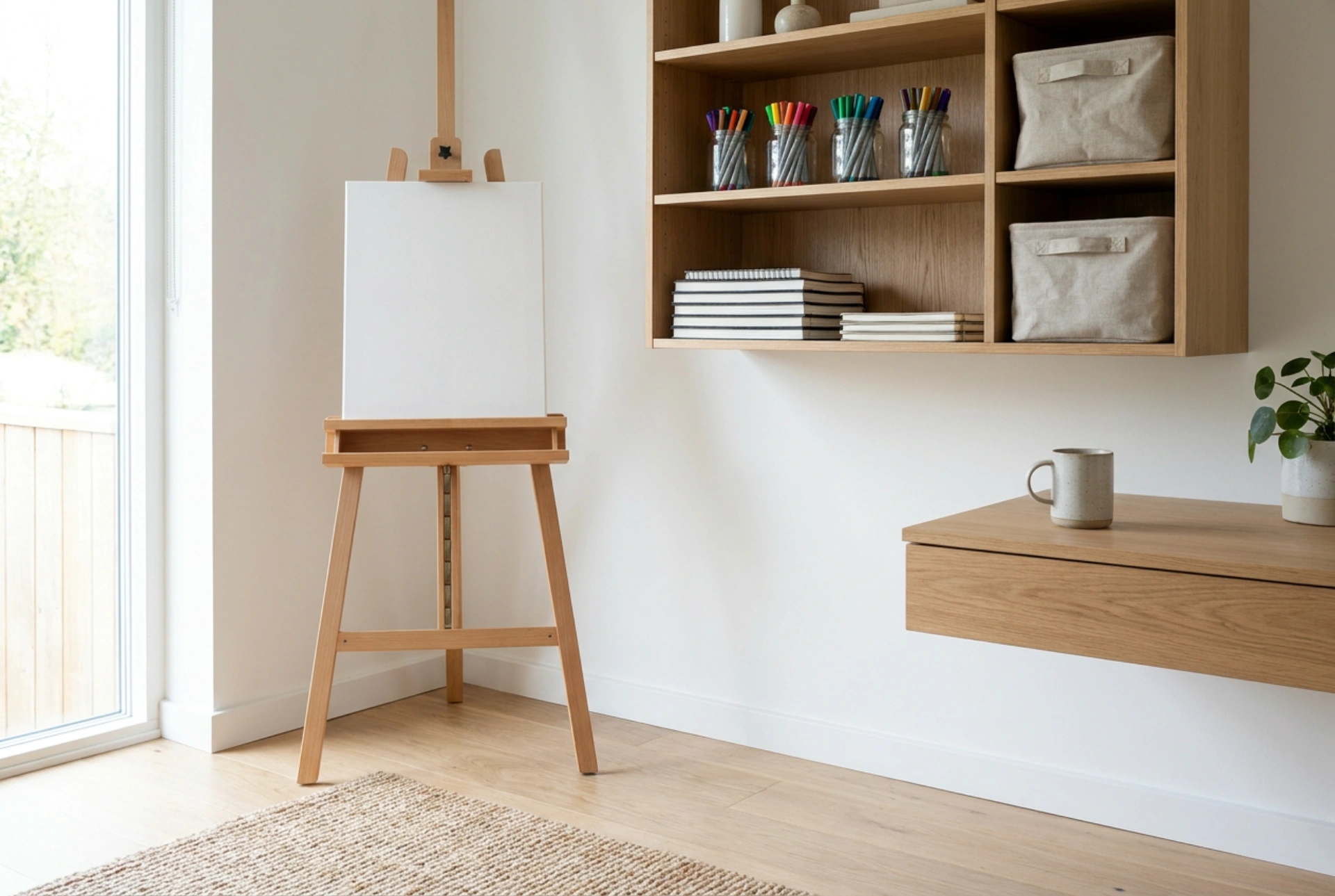
Standing while drawing engages large muscle groups, promoting physical stability and bilateral coordination. To prevent physical fatigue and neck strain, mount the blackboard so that its vertical centre aligns with the child's chest level when standing. This placement allows the shoulder joint to rotate naturally and keeps the arm moving freely without forcing the cervical spine into a sharp downward bend. For younger children, a heavy-bottomed wooden easel is a highly adaptable alternative, provided it features rubberised feet to prevent lateral slipping on smooth oak floors or tiles.
Lighting Without Glare
Standard overhead lighting often casts a shadow of the child's body directly onto the drawing board. To eliminate this issue, position the drawing station adjacent to a window to utilise diffused natural side-lighting. For evening use, install an adjustable task light with a neutral colour temperature of approximately 4000 Kelvin. Mount the light fixture slightly above and to the side opposite the child's dominant hand to prevent hand-shadow interference across the active drawing area.
Managing Chalk Dust and Paint Mediums
Traditional school chalk consists of calcium carbonate bound with soft clay. When applied to a textured board, it releases fine particulate matter that settles on surrounding surfaces. To minimise airborne dust, select high-density dustless chalks which incorporate heavier wax or oil binders, causing the dust particles to fall directly downward instead of dispersing into the air. Underneath the blackboard, install a shallow wooden or metal trough to catch falling particles. Line this trough with a damp sponge or a removable felt strip that can be rinsed regularly. When cleaning the board, avoid dry felt erasers, which merely redistribute dust back into the room. Instead, use a slightly damp microfibre cloth. The split polymer fibres of microfibre rely on capillary action and weak electrostatic forces to lift and lock dust particles within the cloth fabric.
Organising Tools for Accessibility and Order
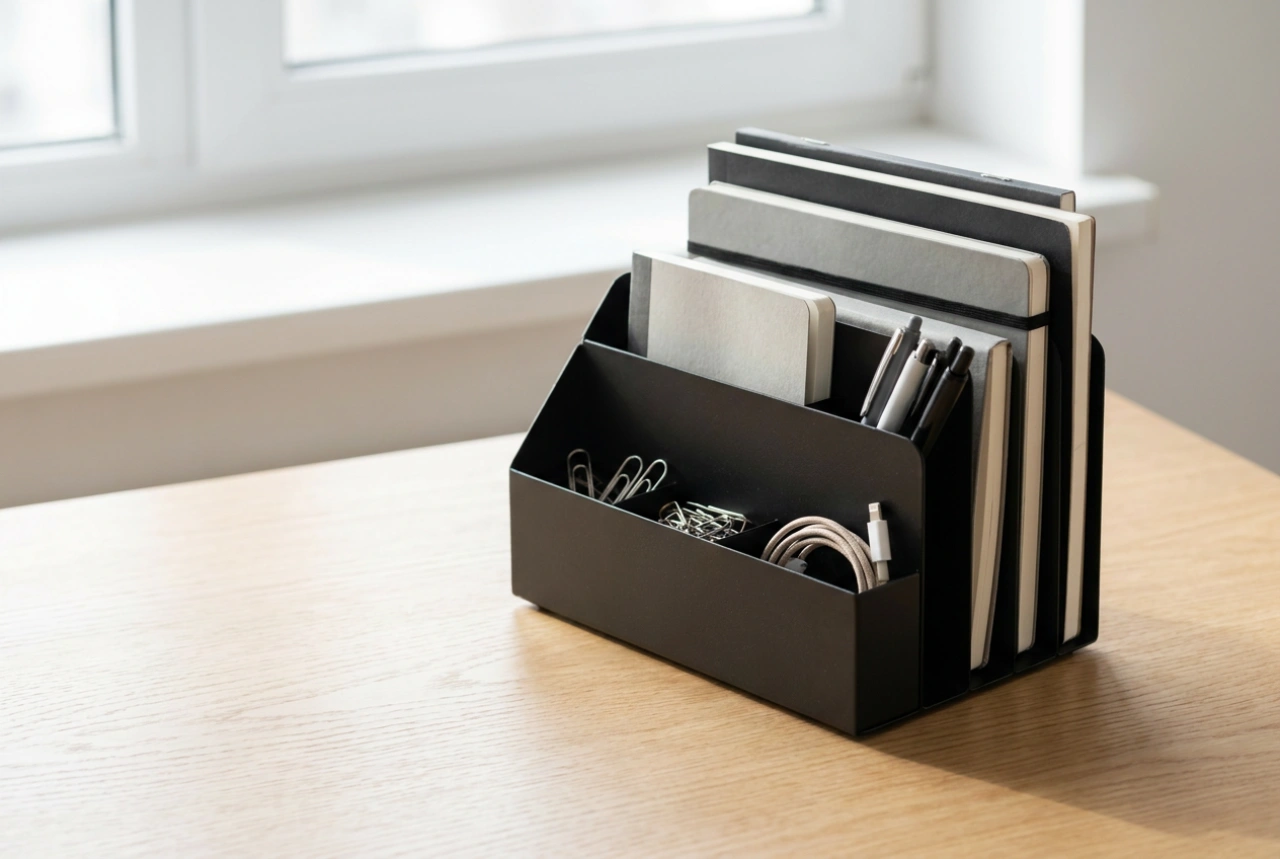
Children maintain order more easily when materials are highly visible and physically simple to return to their spots. Use heavy, wide-based ceramic or thick glass jars to store chalks, markers, and brushes; lightweight plastic cups tip over easily when a child reaches for a tool. Group drawing utensils by category using the following systematic approach:
- Horizontal marker storage: Store liquid chalk markers and felt-tips horizontally to ensure even ink distribution across both ends of the capillary reservoir, preventing premature drying.
- Color-coded bins: Use small, open wooden boxes or canvas bins for secondary supplies like paper rolls, stencils, and erasers, keeping the immediate drawing ledge clear.
- Dry-erase vs. wet-erase sorting: Clearly separate water-soluble chalk from permanent pigments to prevent accidental staining of the blackboard surface.
Surface Restoration and Maintenance
Over time, blackboard surfaces accumulate a stubborn grey film of bound calcium carbonate. Standard water rinsing often leaves streaks as the dissolved minerals dry back onto the surface. To deeply clean and restore the board, use a mild solution of one part white vinegar (which contains weak acetic acid) to five parts warm water. The acetic acid reacts chemically with the calcium carbonate, converting it into highly soluble calcium acetate, which can be effortlessly wiped away. Always dry the surface thoroughly with a clean lint-free cloth before allowing chalk to be used again, as dampness will soften the chalk tip and clog the surface pores.