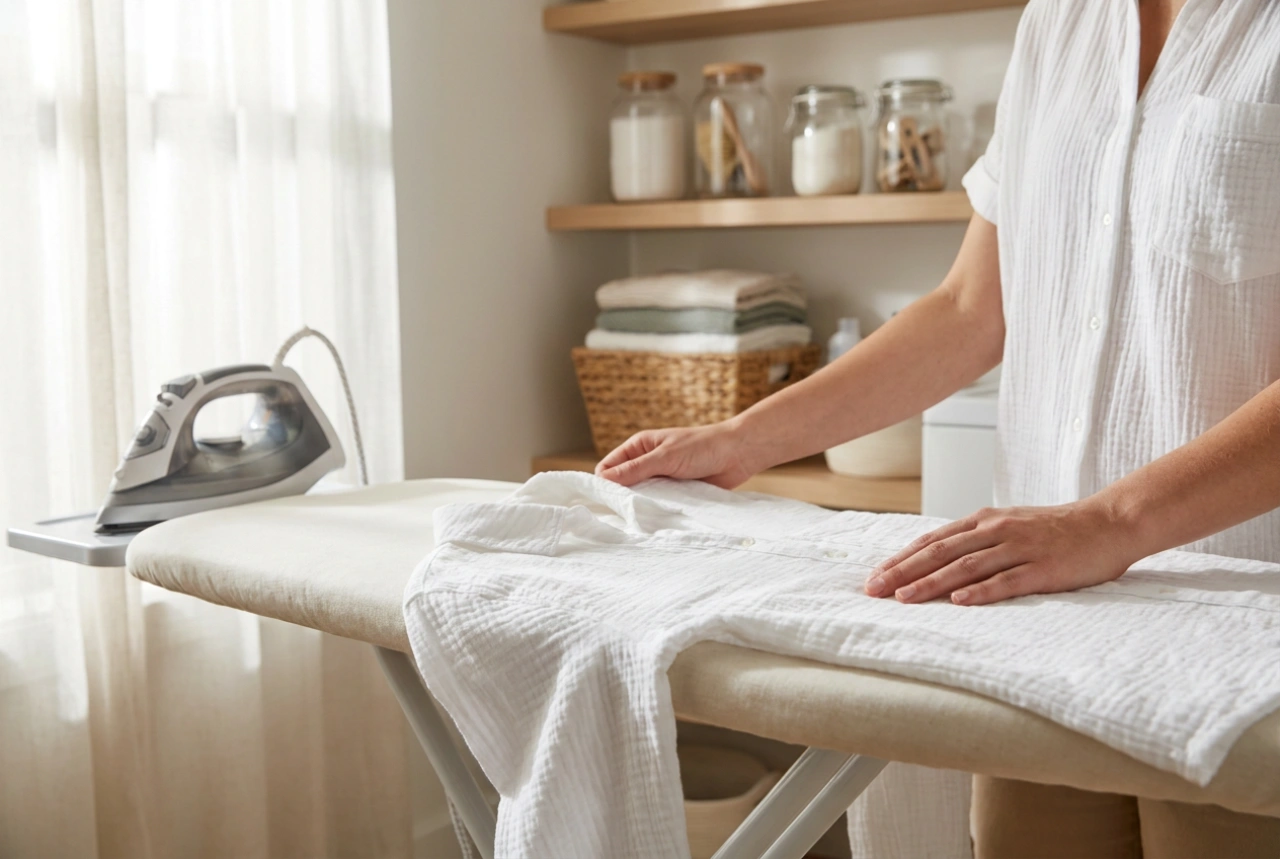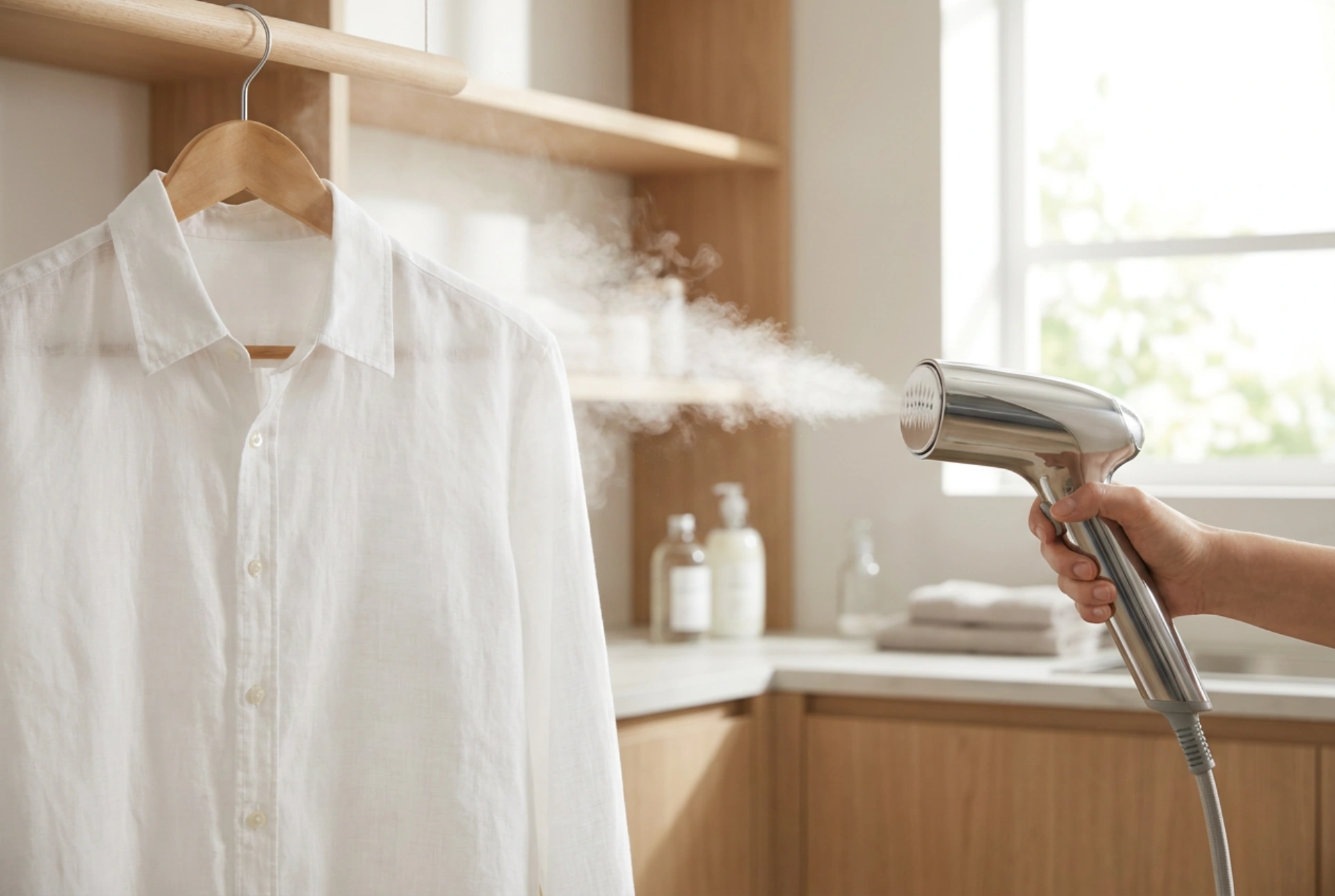


High-capacity garment steamers offer an efficient alternative to traditional ironing, using high-temperature water vapour to relax fabric fibres. However, managing the thermal energy of pressurized steam requires a precise understanding of material physics and safety protocols to protect both your garments and yourself.
The Physics of Steam and Fabric Relaxation
To use a garment steamer effectively, it is essential to understand how steam interacts with textiles on a molecular level. Fabrics made of natural fibres like cotton, linen, and wool contain hydrogen bonds that hold their polymer chains in place. When fabric creases, these bonds are locked into distorted positions. Steam introduces two critical elements to resolve this: moisture and heat.
The high-temperature water molecules penetrate the intermolecular spaces of the fibres, temporarily breaking the weak hydrogen bonds. As the fibres absorb the thermal energy, they become highly pliable. The natural weight of the fabric, combined with gentle downward tension, allows the fibres to realign into a smooth, relaxed state. Unlike dry ironing, which compresses the fibres under high pressure and can flatten the natural loft of the weave, steaming relaxes the material without physical crushing, preserving the texture and volume of the textile.
Choosing the Right Temperature and Distance for Different Materials
Different textile fibres have varying thermal thresholds, meaning a one-size-fits-all approach to steaming can lead to material degradation. Synthetic fibres, such as polyester, nylon, and acrylic, are thermoplastic. If exposed to excessive heat, these fibres can melt, glaze, or shrink permanently. Natural fibres like silk and wool are highly sensitive to moisture-induced distortion and high heat, which can cause protein fibres to shrink or lose their natural lustre.
To safely steam delicate or synthetic materials, maintain a physical distance of at least 5 to 10 centimetres between the steamer nozzle and the fabric surface. This distance allows the steam to expand and cool slightly before contact, reducing the thermal load on the fibres. Conversely, robust natural fibres like heavy cotton and dense linen can tolerate direct, close-range steam contact, as their high molecular crystallinity requires greater thermal energy to break the hydrogen bonds. Always steam from the inside of the garment when dealing with structured items or fabrics with a raised nap, such as velvet, to prevent flattening the pile.
Practical Safety Protocols and Thermal Protection
The steam emitted from a high-power garment steamer typically exceeds 100 degrees Celsius at the nozzle, posing a severe risk of thermal burns. Because steam carries more latent heat than boiling water, contact with skin can cause rapid and deep tissue damage. Implementing correct physical techniques and protective gear is paramount for safe operation.
- Use Heat-Resistant Gloves: Always wear a silicone or heavy-duty fabric thermal glove on the hand holding the garment taut. This creates a barrier against accidental steam deflection.
- Maintain a Top-Down Path: Always steam in a downward motion. This ensures that any condensation or water droplets that collect on the nozzle face run away from your hand rather than dripping onto your skin.
- Ensure Adequate Ventilation: High-output steaming rapidly increases the relative humidity of the room. Work in a well-ventilated space to prevent condensation on walls and wooden furniture, which can promote mould growth over time.
- Keep the Cord Clear: Ensure the power cord is fully extended and free from twists to prevent tripping hazards or accidental pulling of the hot appliance.
Water Chemistry and Appliance Longevity
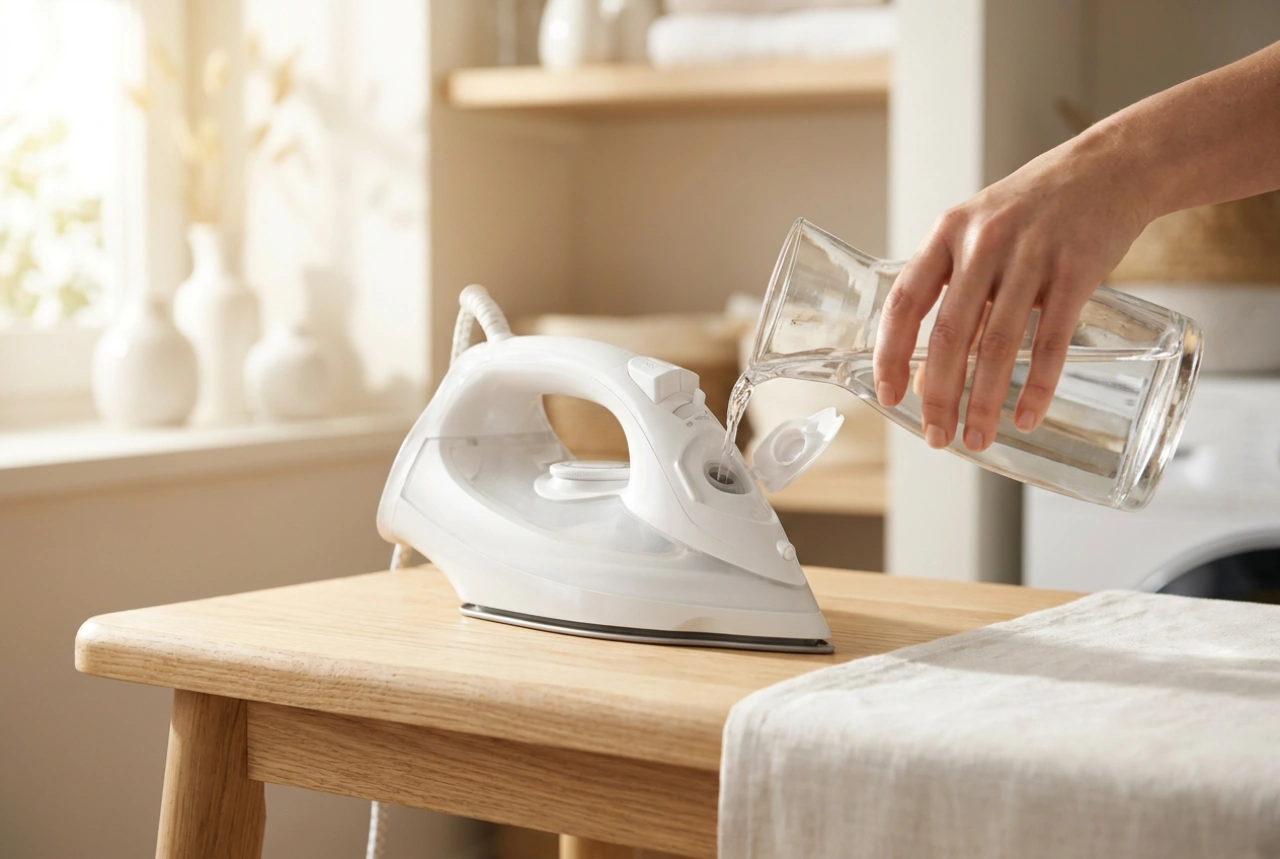
The type of water used in a garment steamer directly influences both its performance and safety. Tap water contains dissolved minerals, primarily calcium and magnesium carbonates. When heated, these minerals precipitate out of solution, forming solid scale deposits within the heating chamber and steam ports.
This mineral build-up restricts steam flow, leading to uneven pressure, sputtering, and the projection of hot water droplets instead of a dry, consistent vapour. To prevent this, use distilled or demineralised water. This eliminates mineral scale formation, ensuring the heating element operates at peak thermal efficiency and prevents permanent damage to the internal thermostatic controls. If tap water must be used, regular descaling with a diluted citric acid solution is required to dissolve the accumulated calcium carbonate without damaging the internal seals.