

Resin stains are among the most stubborn fabric contaminants due to their hydrophobic polymer structure, which makes them completely insoluble in water. Successfully removing these sticky deposits without weakening or tearing the underlying textile fibres requires a careful combination of thermal manipulation and targeted organic chemistry.
Phase 1: Thermal Hardening to Reduce Stain Mass
Before applying any liquid solvents, it is crucial to remove the bulk of the physical resin. Attempting to wipe or scrape soft, warm resin only spreads the adhesive deeper into the weave of the fabric, coating individual thread fibres. Instead, utilise temperature to alter the material state of the resin from a sticky semi-solid to a brittle crystalline form.
Place an ice pack or a sealed bag of ice cubes directly over the stain, or put the entire garment in a clean freezer bag and place it in the freezer for at least thirty minutes. Once the resin is thoroughly frozen, it loses its elasticity. Gently bend the fabric back and forth over the stain area. The frozen resin will crack and shatter, allowing you to lift or brush away the large solid fragments from the surface. Always use a dull tool, such as the edge of a spoon, to scrape off the loosened shards; sharp edges can easily sever delicate warp and weft threads.
Phase 2: The Science of Dissolution – Like Dissolves Like
Once the bulk of the resin is gone, a microscopic residue will remain bound to the fibres. Because resin is non-polar, water-based detergents are ineffective at this stage. You must introduce a non-polar or moderately polar organic solvent that can break the intermolecular bonds holding the resin to the cellulose or synthetic polymers of your clothing.
- Isopropyl Alcohol (Rubbing Alcohol) or Methylated Spirits: These are highly effective, fast-evaporating solvents that are safe for most natural and synthetic fibres, including cotton, wool, silk, and polyester. They work by breaking down the resinous acids without dissolving the synthetic structure of polyester or nylon.
- Acetone: A powerful solvent that easily liquefies resin, but it must be used with extreme caution. While safe for natural cellulose fibres like cotton and linen, acetone will instantly dissolve synthetic fibres such as acetate, triacetate, and acrylic, leaving permanent holes in the garment. Always perform a patch test on an inconspicuous hem.
- Vegetable Glycerin or Eucalyptus Oil: For highly delicate or dyed fabrics where alcohol might cause colour bleeding, these natural lipids can help soften the hardened resin bonds over several hours, making them easier to wash away with surfactants.
Phase 3: The Correct Order of Operations for Application
The technique used to apply the solvent is just as critical as the chemical agent itself. Rubing the stain back and forth damages the micro-fibrils of the thread, leading to pilling, thinning, and permanent fabric distortion. Follow this precise method to transfer the dissolved resin away from your garment:
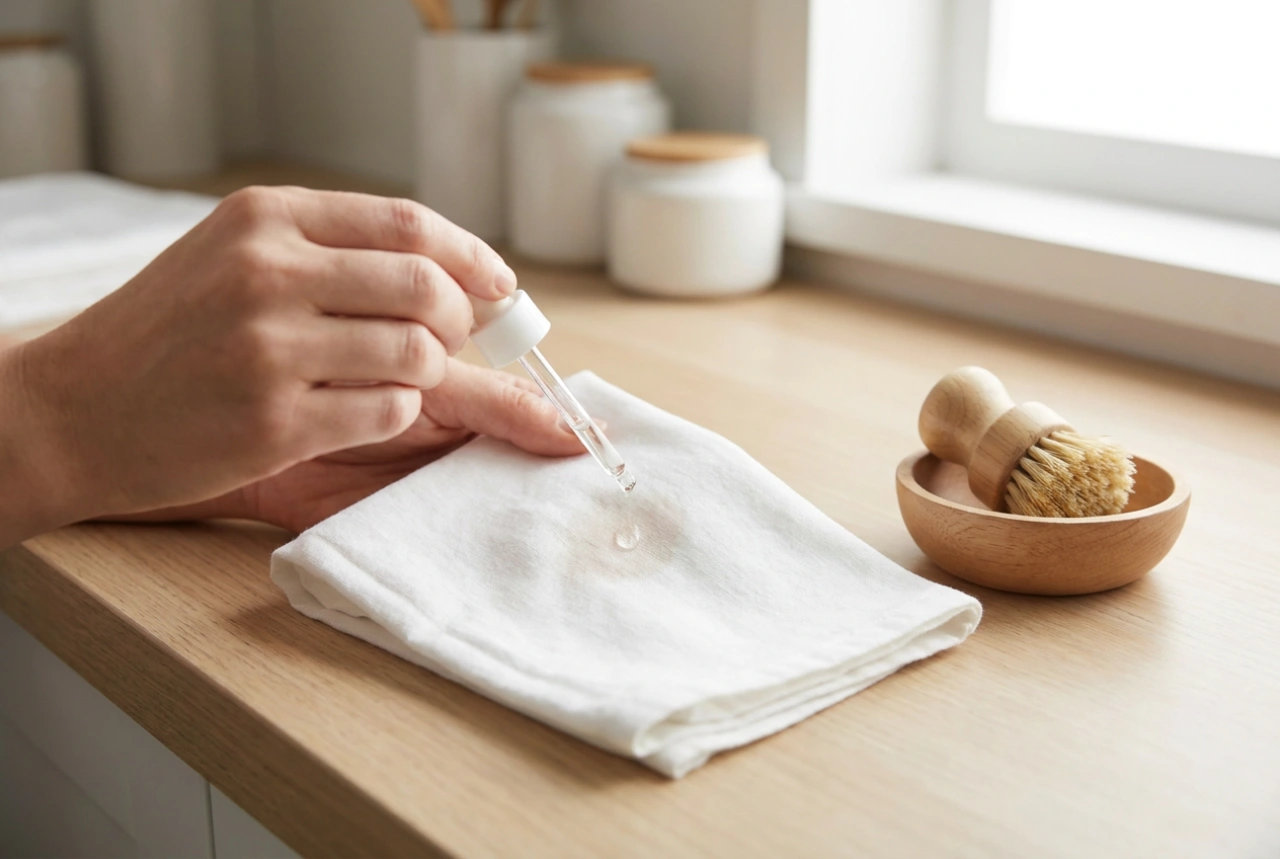
First, place a clean, white, absorbent cotton cloth or paper towel directly underneath the stained fabric. This acts as a wick. Saturate a clean cotton bud or microfibre cloth with your chosen solvent. Dab the stain gently from the outer edges working inward; this prevents the dissolving resin from spreading into a larger ring. Press firmly but do not scrub. The solvent will liquefy the resin, which is then drawn downward by capillary action into the absorbent backing cloth underneath. Replace the backing cloth as soon as it begins to absorb the resin to prevent re-transferring the stain.
Phase 4: Surfactant Washing and Final Rinse
After the resin has been dissolved and blotted away, the remaining solvent and loosened microscopic particles must be emulsified. Apply a high-quality liquid laundry detergent or a concentrated dishwashing liquid directly to the treated area. The surfactant molecules in the soap possess both hydrophilic (water-attracting) and lipophilic (fat-attracting) ends. They will surround the solvent and resin residues, forming micelles that can be suspended and washed away during rinsing. Wash the garment at the maximum temperature permitted by the care label, as heat further aids in melting any trace resins, ensuring a perfectly clean finish.