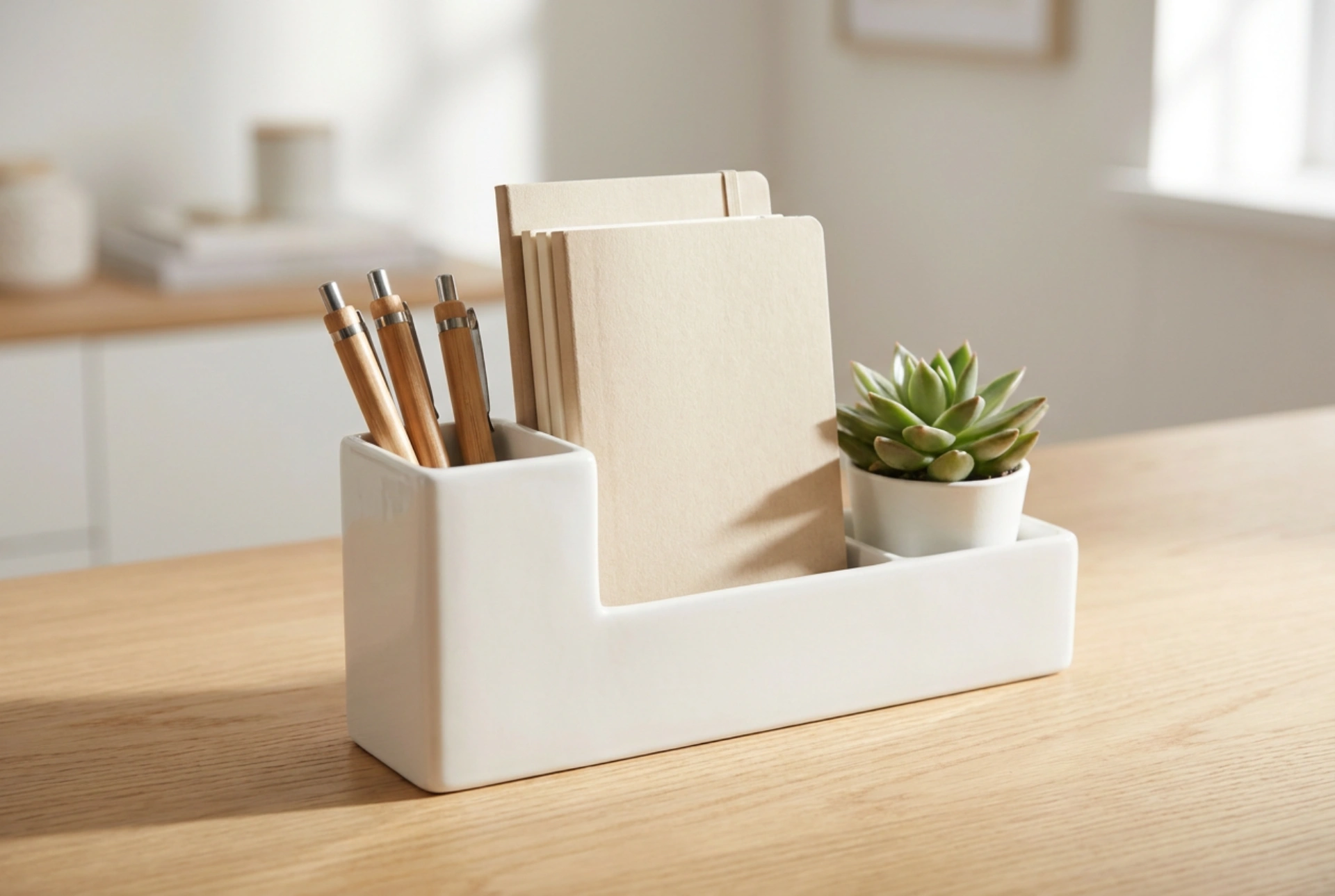


Selecting a white desk organiser is a functional strategy to reduce visual noise and streamline daily workflow through ergonomics and material durability. The correct choice depends on understanding material science, weight distribution, and surface physics to maintain a clutter-free and pristine workspace.
The Physics of White Surfaces: Material Selection and Light Reflectance
White surfaces are highly favoured in workspaces because they reflect maximum visible light, reducing eye strain and creating an illusion of open space. However, different materials interact with light and dust in distinct ways. When selecting an organiser, understanding these physical properties is essential.
- Powder-Coated Steel: This material offers exceptional structural integrity and weight. The powder-coating process involves electrostatic application of dry powder, cured under heat to form a tough, thermoplastic or thermoset skin. It resists scratches, does not degrade under UV light, and provides a stable base for heavy items like tablets or books.
- ABS Plastic: Acrylonitrile Butadiene Styrene is a common polymer used for moulded organisers. It is highly impact-resistant and lightweight. However, unfinished plastics possess a high electrostatic charge, which actively attracts airborne dust particles. Matte finishes conceal micro-abrasions better than high-gloss options, which reflect light harshly and highlight every fingerprint.
- Lacquered MDF or Wood: Medium-density fibreboard finished with white polyurethane lacquer provides a dense, solid feel. It absorbs sound vibrations better than metal or plastic. However, low-quality lacquers can yellow over time when exposed to natural UV radiation from nearby windows due to photochemical degradation.
Ergonomic Compartmentalisation and Gravity-Based Ordering
An effective desk organiser relies on physical accessibility and structural balance. The layout must match your physical reach and the weight distribution of your tools to prevent tipping and unnecessary movement.
Vertical and Horizontal Zoning
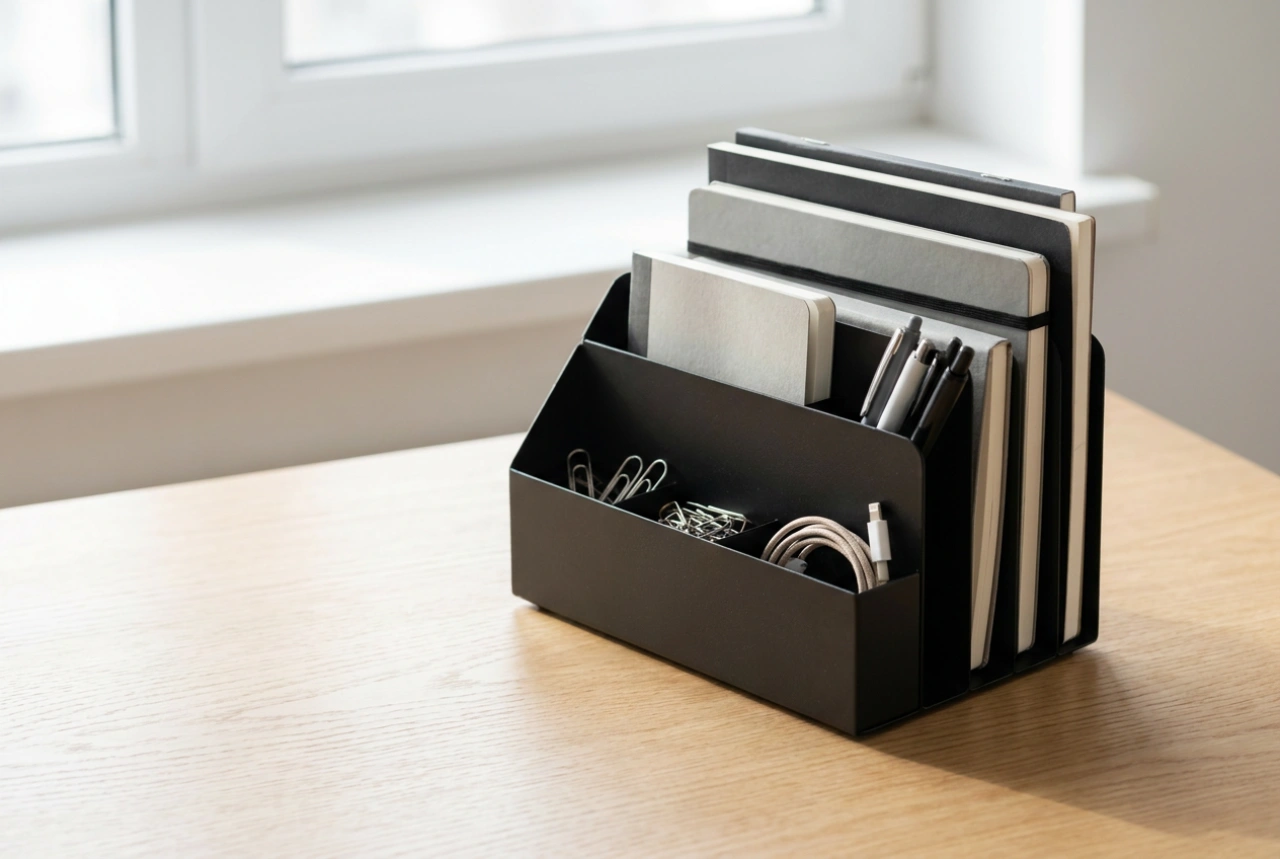
Store heavier, taller items such as notebooks, binders, or tablets at the back of the organiser. This keeps the centre of gravity low and close to the desk surface, preventing the unit from sliding or tipping when you pull an item out. Front compartments should be shallow, designed for high-frequency tools like pens, paperclips, or utility knives, allowing for quick, tangential finger access without looking.
The Friction Coefficient of Bases
Every time you retrieve an item, lateral force is applied to the organiser. To prevent it from sliding across your desk surface, look for units equipped with high-friction silicone or neoprene rubber feet on the base. These materials have a high coefficient of static friction, absorbing lateral forces and protecting delicate wood or laminate desktops from scratches caused by microscopic debris trapped beneath the organiser.
Maintaining the Pristine White Finish: Chemistry and Cleaning
White organisers are highly susceptible to visible marking from graphite, ink, and natural skin oils. Maintaining the clean aesthetic requires specific chemical approaches based on the material composition.
For plastics and powder-coated metals, avoid abrasive scouring pads which create micro-scratches that trap future dirt. Instead, use a mild surfactant (such as diluted dish soap) to break down lipophilic skin oils. If ink or graphite has bound to the surface, isopropyl alcohol (isopropanol) can be used as a solvent on metals and high-quality ABS, but test a small area first as alcohol can dull certain polymer finishes. To counteract the electrostatic charge that attracts dust to plastic organisers, wipe them occasionally with a diluted anti-static solution or a highly diluted fabric softener mixture, which leaves a microscopic conductive layer that dissipates static charge.
Systematic Order of Operations for Daily Workspace Maintenance
A white organiser only functions efficiently if a strict sorting system is integrated into your daily routine. Implement a three-step cycle at the end of each working day:
- Reset: Return every tool to its designated slot based on frequency of use. Pens with the caps on point downwards to prevent ink drying.
- Purge: Remove temporary papers, sticky notes, and detritus that do not have a permanent home in the organiser.
- Wipe: Use a dry microfibre cloth to lift dust before it bonds with humidity or skin oils on the white surface.