

Keeping magnetic letters organized near a whiteboard or magnetic wall prevents missing pieces and maintains a clutter-free learning or working environment. By understanding the physics of magnetic attraction and utilizing targeted storage zones, you can establish an efficient system for quick access and seamless cleanup.
The Physics of Magnetic Storage: Friction and Gravity
Magnetic letters typically contain small ferrite or ceramic magnets embedded in plastic or wooden casings. When stored directly on a vertical magnetic board, two main forces interact: magnetic pull (normal force) and gravity (downward force). If the board has a slick, glossy surface, the coefficient of friction is low, causing letters to slide down and eventually fall off when disturbed. Overcrowding the board also disrupts the magnetic flux paths, making individual pieces easier to knock loose.
To prevent this, store letters in a horizontal or slightly inclined tray when not in use. A wooden or textile-lined container increases the friction coefficient dramatically compared to slick steel or glass. This reduces mechanical wear on both the magnets and the board's protective coating, extending the lifespan of your educational materials.
Choosing the Right Storage Materials and Layout
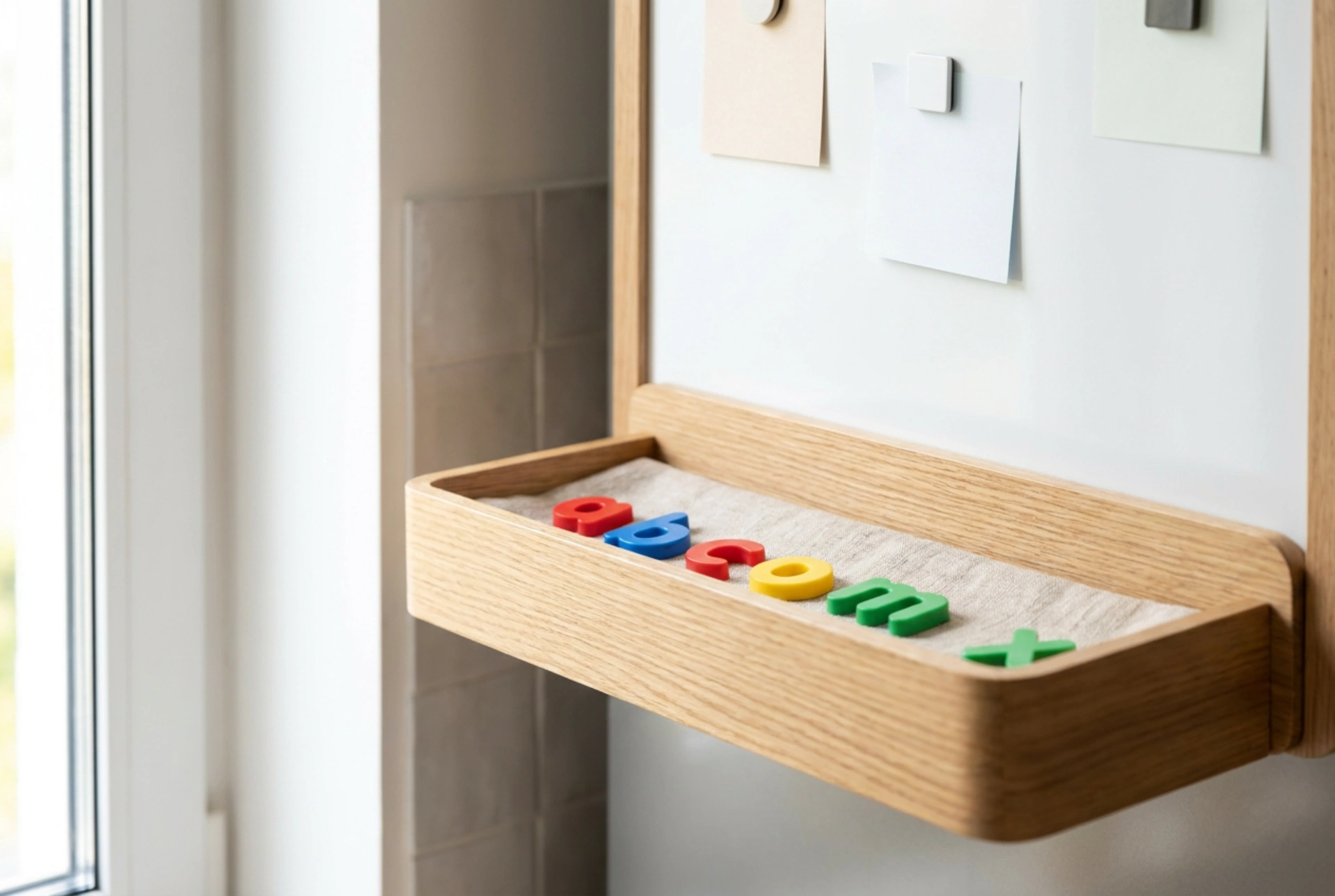
An optimal storage solution is a wall-mounted wooden tray or shelf positioned immediately adjacent to or directly beneath the magnetic board. This minimizes the physical distance the letters must travel, reducing the likelihood of pieces dropping to the floor during transitions.
- Wooden Trays with Soft Linings: Hardwood trays lined with linen, felt, or cotton canvas offer excellent friction. The textured fibers grip the plastic edges of the letters, preventing sliding even if the tray is slightly tilted.
- Ferromagnetic Metal Strips: If you prefer to store letters flat against a surface but off the main board, thin sheet metal strips coated with a textured matte paint can be mounted nearby. The matte finish increases surface roughness, providing the necessary friction to counteract gravity.
- Shallow Compartment Boxes: Deep containers force you to rummage, which can demagnetize weak magnets through repeated physical impacts. Shallow compartments allow you to lay letters flat in a single layer, protecting their structural integrity.
Managing Magnetic Flux and Clumping
Magnets naturally seek to align their poles to minimize energy, which causes magnetic letters to clump together in a chaotic mass when thrown into a single deep bin. This clumping not only makes finding specific letters difficult but can also lead to demagnetization over time if opposing poles are constantly forced together under pressure.
Using physical dividers made of non-magnetic materials like wood, cardboard, or acrylic shields the individual letters from each other's magnetic fields. Grouping letters into specific channels—such as vowels in one section and consonants in others—keeps the magnetic flux localized and prevents large, tangled clusters. For advanced organization, color-coded sections can guide the user to return pieces to their designated spots instantly.
Maintenance and Cleaning for Optimal Adhesion
Over time, magnetic letters accumulate skin oils, dust, and micro-particles from the air. This microscopic layer of grime acts as a barrier, increasing the distance between the magnet and the metal board (even a fraction of a millimeter significantly weakens magnetic attraction according to the inverse-square law) and decreasing friction.
Regular maintenance keeps the system functioning perfectly. Clean the magnetic backing of each letter with a microfiber cloth slightly dampened with isopropyl alcohol or a mild soapy water solution. Avoid soaking the letters, as water can seep into the magnet housing, causing rust on the iron-based magnets, which permanently degrades their magnetic strength. Ensure all components are completely dry before returning them to their designated wooden tray.