

Designing an efficient custom sliding wardrobe requires analyzing your movement patterns, garment care needs, and spatial physics rather than just choosing aesthetic finishes. By aligning the internal layout with your daily routines, you minimize physical strain, speed up your morning preparation, and extend the lifespan of your clothing through optimal storage conditions.
Analyzing Your Daily Movement and Ergonomic Reach
The foundation of any custom wardrobe layout is the human body. Ergonomics dictates three distinct access zones based on physical reach without strain. The primary zone, situated between 70 and 160 centimetres from the floor, is the most accessible area and should host your daily garments. Placing items you use every day outside this zone forces repetitive bending or stretching, which strains the lower back over time.
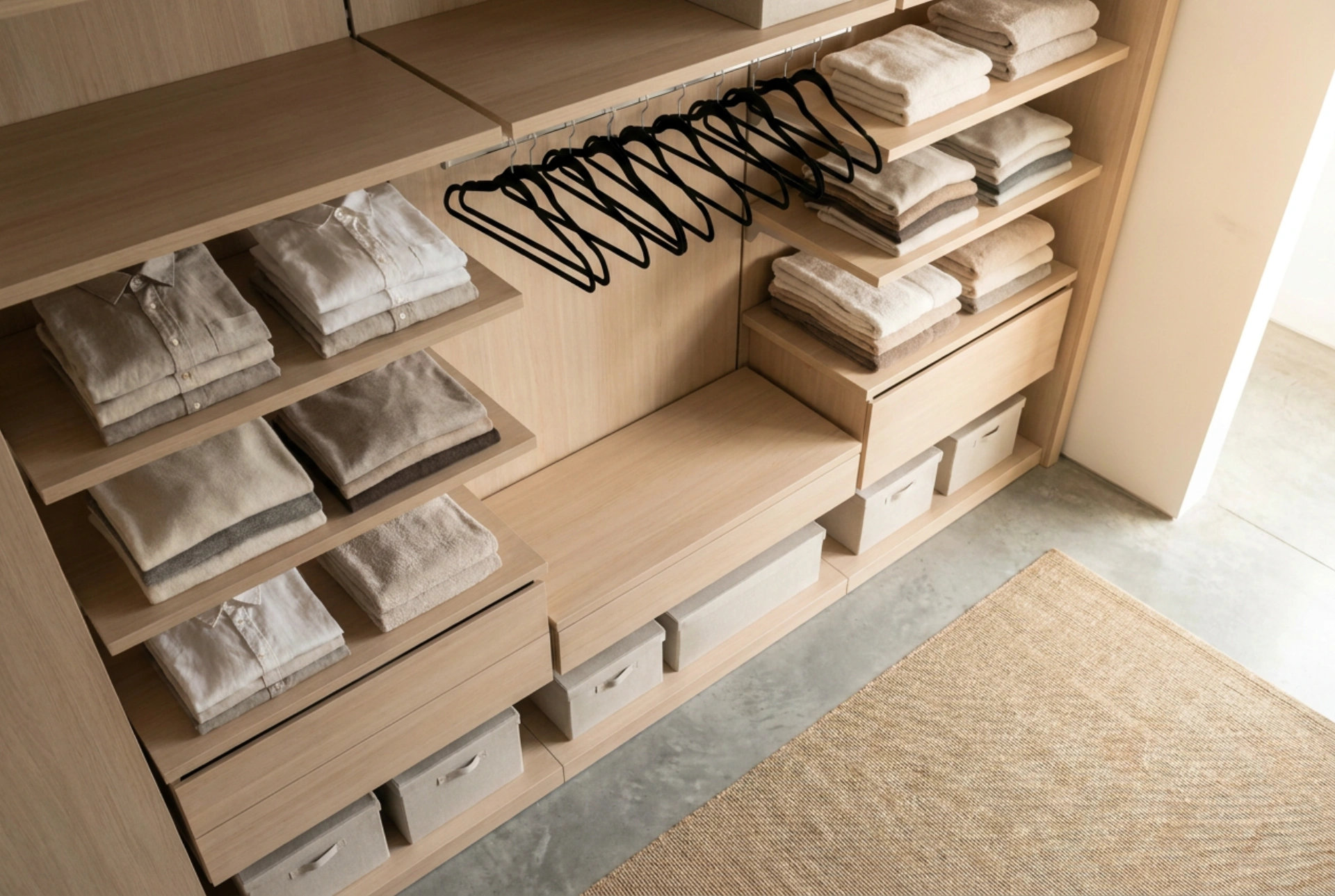
The secondary zone includes the lower area from the floor up to 70 centimetres and the upper area from 160 to 200 centimetres. These sections are ideal for folded trousers, shoes, or secondary storage boxes that do not require daily retrieval. The tertiary zone, above 200 centimetres, relies on ladders or hydraulic pull-down rails. This area is reserved for seasonal items, spare bedding, and travel gear. When planning, track your outfits for two weeks to determine the exact ratio of hanging space to drawer space needed in your primary zone.
The Physics of Sliding Door Mechanisms
Sliding doors are highly space-efficient because they do not require clearance to swing open, but they demand careful hardware selection to ensure longevity. The weight of the door panels dictates the type of track system required. Bottom-running systems rely on the floor to bear the weight, making them highly stable and suitable for heavy materials like solid wood or thick mirrored glass. Top-hung systems suspend the doors from the ceiling or top carcass, which prevents dust accumulation in the lower tracks but requires a reinforced structure to prevent sagging.
To ensure smooth, silent operation, look for high-performance ball-bearing rollers coated with a wear-resistant polymer. These reduce the friction coefficient significantly. Additionally, integrate dense brush seals along the vertical edges of the doors. These seals act as physical dust barriers, compressing when the doors close to prevent airborne particulates from settling on clean garments, while also dampening the sound of the panels meeting the frame.
Compartment Science: Air Circulation and Fabric Preservation
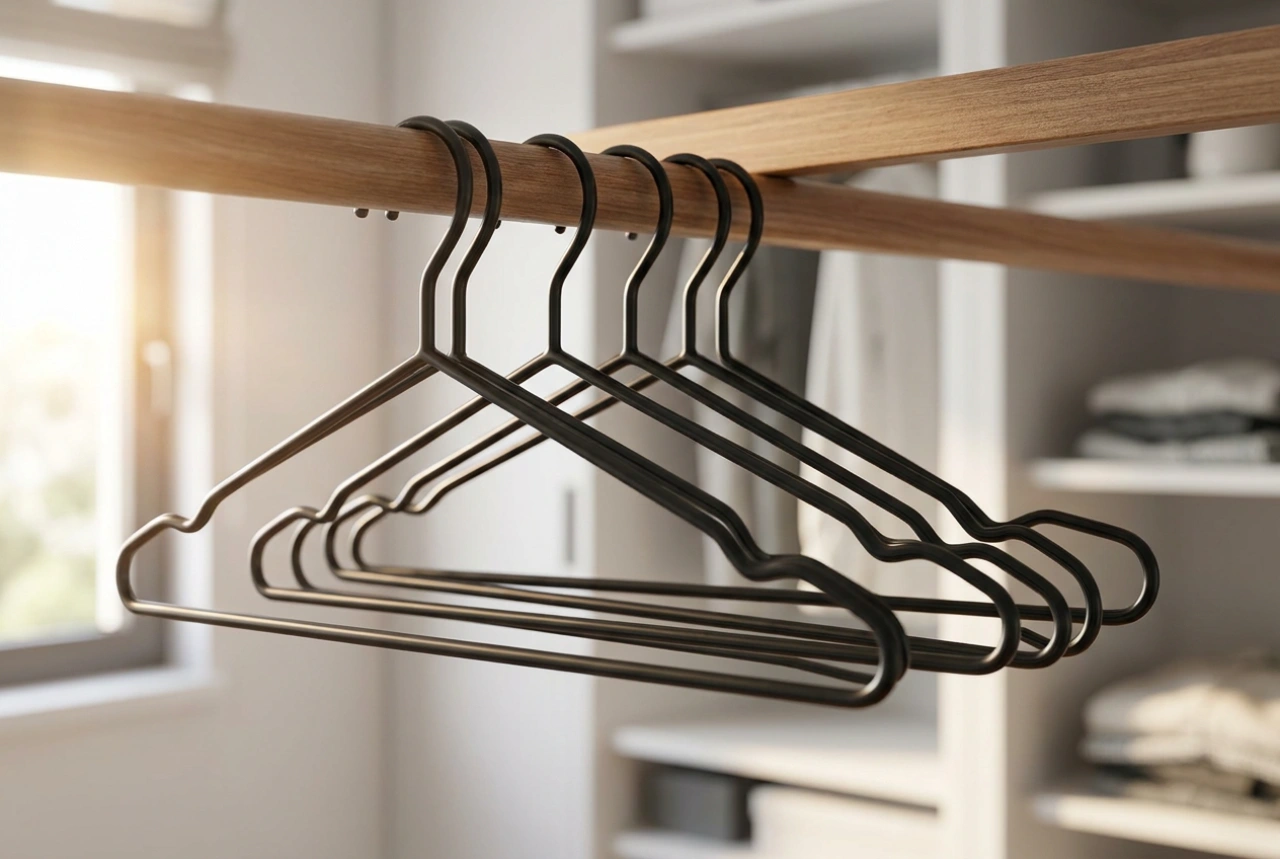
Closed wardrobes are prone to microclimates where stagnant air traps humidity, leading to musty odours or textile degradation. To prevent this, never pack shelves or hanging rails to maximum capacity. Leaving approximately ten percent of the volume empty allows natural air convection to occur. For delicate fabrics like wool and silk, store them in shallow drawers or on open hangers with ample spacing.
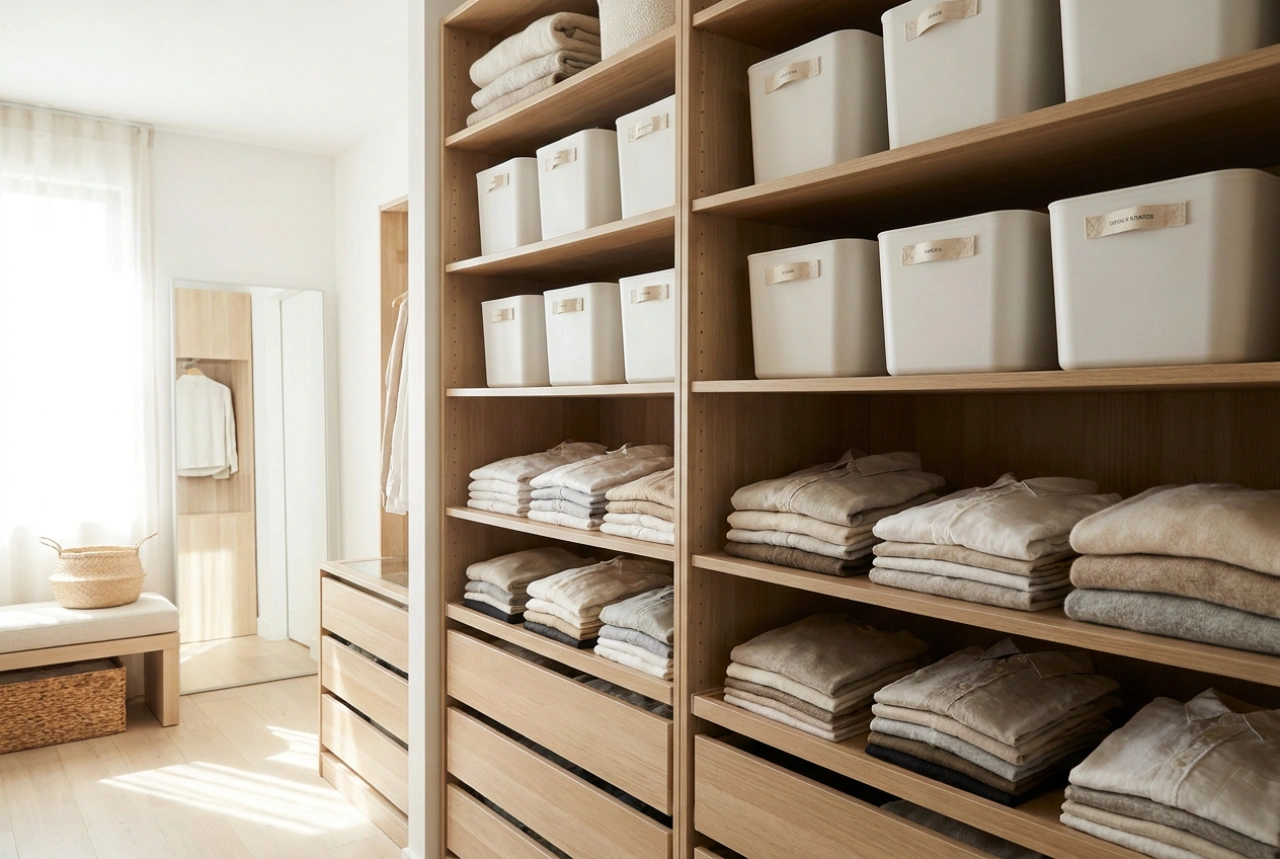
When planning shelves for folded knitwear, the ideal width is 30 to 35 centimetres per stack, with a maximum height of 30 centimetres. Stacking garments higher than this compresses the lower items, causing deep creases and weakening the fabric fibres. For drawers, select integrated soft-close runners with full-extension mechanisms so you can access the very back of the drawer without blind searching, preventing forgotten clothes from gathering dust.
Creating Transition Zones for Daily Habits
A common design mistake is ignoring how clothes enter and leave the wardrobe daily. A highly functional layout includes a designated transition zone—often a single, easily accessible open compartment or an external hook. This zone holds garments that have been worn once but are not yet ready for the laundry, allowing them to air out before being returned to closed storage. Separating worn clothes from freshly laundered items reduces the transfer of skin oils and environmental particles to clean fabrics, keeping your entire wardrobe fresher for longer.