

Shoe odour is a common domestic challenge caused by a combination of moisture, restricted airflow, and bacterial activity. By understanding the chemical and physical mechanisms behind these smells, you can create highly effective, natural odour absorbers using common household materials.
The Science Behind Footwear Odour
To eliminate shoe odour permanently, one must address its root cause: microbial metabolic byproducts. Human feet contain a high density of sweat glands, releasing moisture composed of water, salts, and trace amino acids. Within the warm, dark, and damp microclimate of a shoe, naturally occurring skin bacteria—specifically species like Brevibacterium and Staphylococcus—feed on these secretions. As they break down sweat, they produce volatile organic compounds (VOCs) such as isovaleric acid, which carries a distinct, pungent aroma. Therefore, effective odour control requires two simultaneous interventions: moisture extraction and chemical neutralisation of these acidic compounds.
Chemical Neutralisation: The Power of Alkaline Agents
Sodium bicarbonate, commonly known as baking soda, is an amphoteric substance with a mild alkaline pH of around 8.1. Most unpleasant footwear odours are derived from carboxylic acids, which are highly acidic. When sodium bicarbonate comes into direct contact with these acidic vapour molecules, a chemical neutralisation reaction occurs. The acid is converted into an odourless salt, significantly reducing the volatile compounds suspended inside the shoe lining. To utilise this mechanism without leaving a dusty residue in your shoes, fill a breathable cotton sock or sachet with baking soda, tie it securely, and insert it deeply into the toe box, where the sweat gland concentration is highest.
Physical Adsorption: Activated Charcoal and Zeolite
While neutralisation alters the chemical state of odour molecules, adsorption physically traps them. Activated charcoal and natural zeolite minerals are highly porous materials with an exceptionally large internal surface area. Under a microscope, activated charcoal resembles a dense network of microscopic pores that capture organic molecules through weak electrostatic attractions known as van der Waals forces. Zeolites function similarly as molecular sieves, absorbing water molecules and gas compounds within their crystalline framework. Placing a sachet filled with activated carbon or zeolite granules inside your footwear overnight draws both ambient moisture and VOCs out of the shoe fabric, locking them away within the porous matrix. These materials can be periodically regenerated by exposing them to direct sunlight, which drives off the trapped moisture and gases.
Desiccation: Eliminating the Moisture Catalyst
Bacteria require water activity to survive and reproduce. By rapidly drying the interior of your shoes after use, you halt bacterial proliferation. Cornstarch is an excellent organic desiccant; its fine starch granules readily absorb moisture through capillary action. For synthetic or heavy work boots, inorganic silica gel packets—often found in product packaging—provide superior moisture absorption. Silica gel works by physical adsorption, pulling water molecules into its highly porous silicon dioxide structure. Saving these packets and placing three to four units inside each shoe immediately after wear is one of the most efficient ways to lower internal humidity before bacteria can multiply.
Creating a Custom Multi-Action Odour Absorber
To achieve maximum efficacy, combine these physical and chemical principles into a single, reusable insert. Follow this simple protocol:
- Select the carrier: Use a pair of clean, breathable cotton socks or cut squares of natural linen. Avoid synthetic polyester, as tight weave patterns restrict gas and moisture exchange.
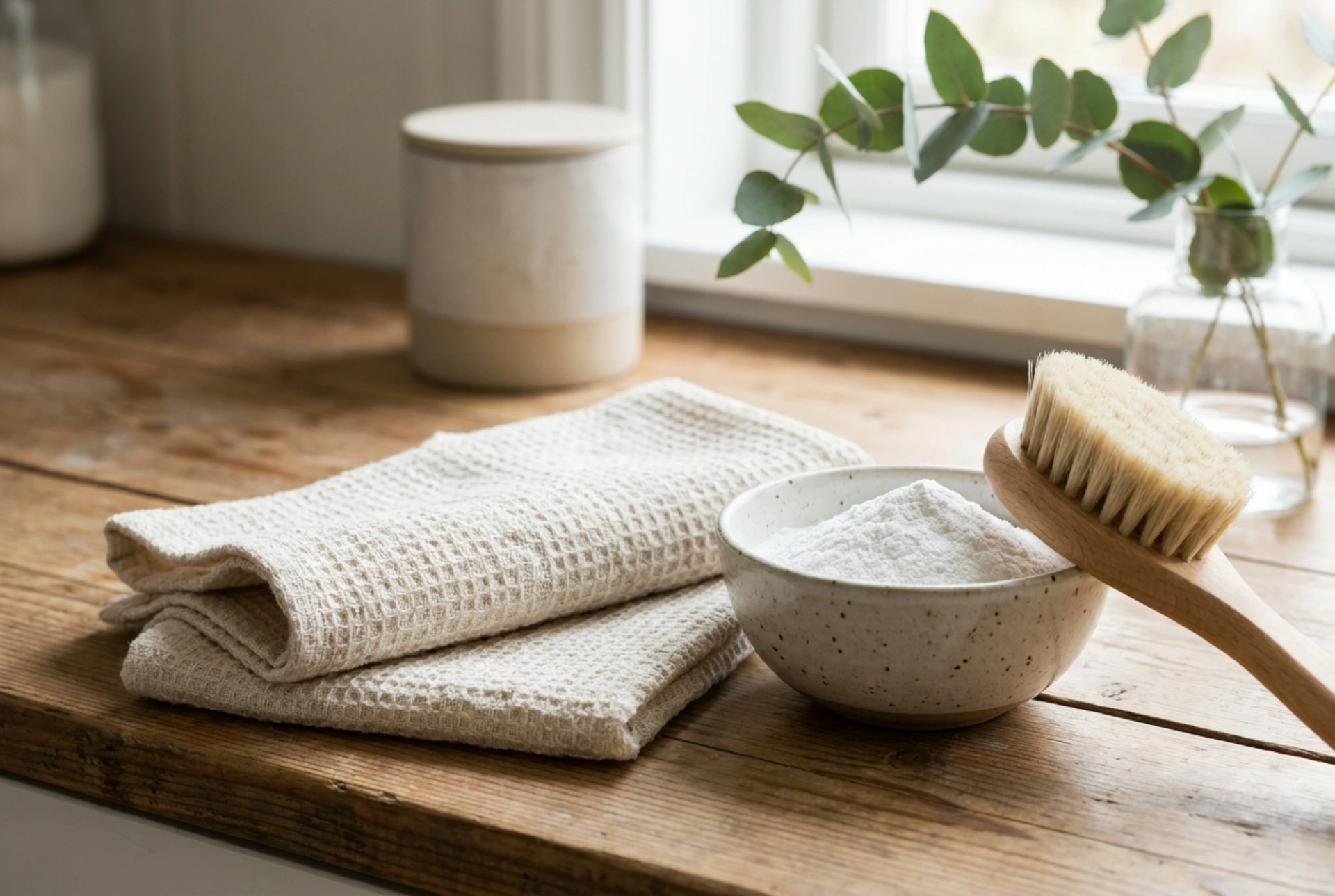
- Mix the active ingredients: Combine two parts sodium bicarbonate (for chemical neutralisation), two parts cornstarch (for rapid moisture absorption), and one part activated charcoal granules (for physical VOC trapping).
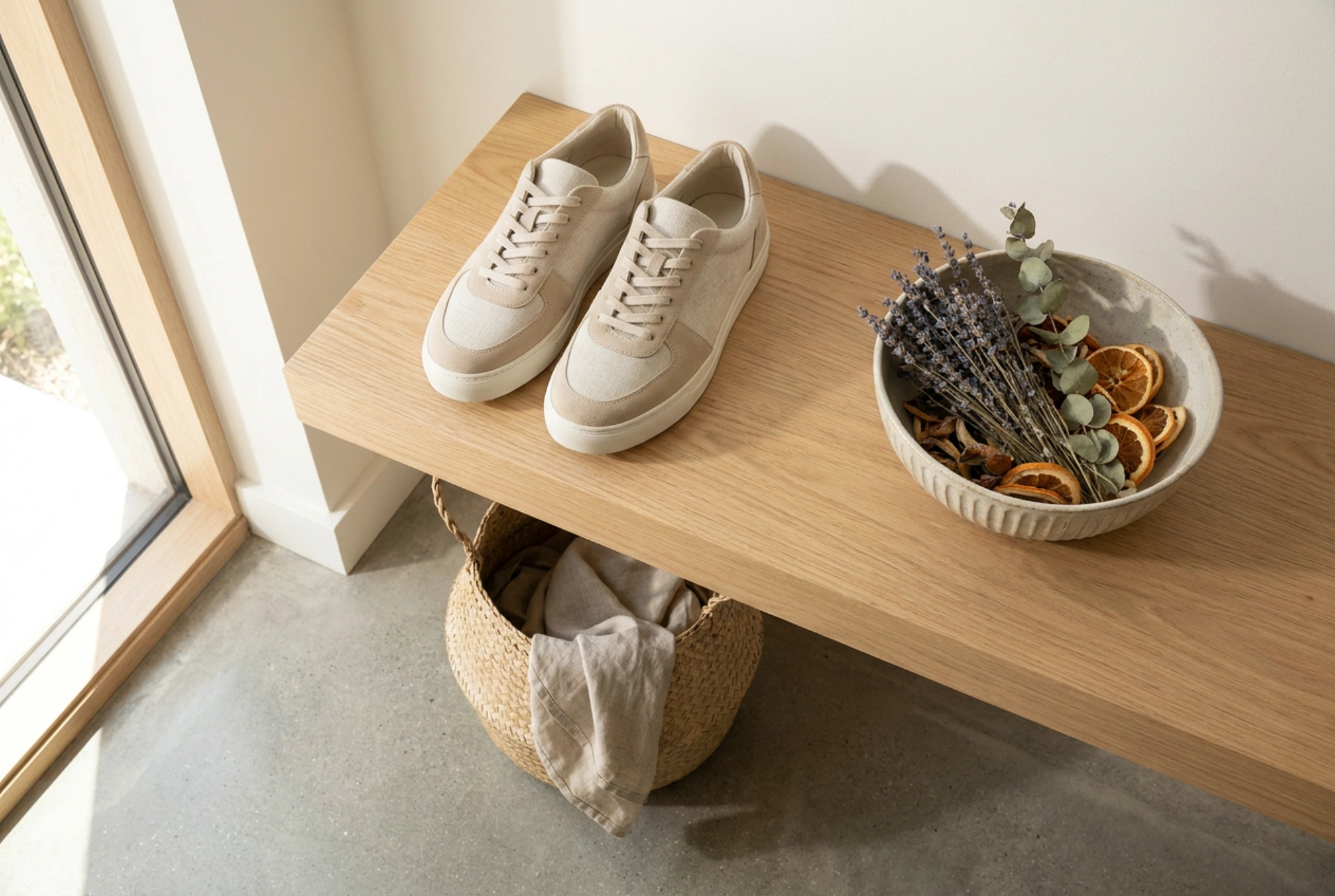
- Assemble the sachet: Fill the carrier fabric with the mixture, leaving enough space to tie a secure knot at the top. For aesthetic appeal, you may add dried botanical elements like lavender or citrus peel, which contain natural terpenes that mask residual smells.
- Application: Insert the sachets immediately after removing your shoes. Leave them in place for at least eight to twelve hours in a well-ventilated area with moderate room temperature (around 18–21°C).
Material Maintenance and Airflow Management
No odour absorber can compensate for saturated materials. Always allow footwear to rest for at least 24 hours between wearings. This resting period allows natural materials like leather, suede, and canvas to release absorbed perspiration into the surrounding air. Store shoes on open-slat shelves rather than in enclosed plastic boxes, ensuring continuous convective airflow around and under the soles.