

Washing wool requires understanding its unique fiber structure to prevent irreversible shrinkage and felting caused by heat and friction. By managing temperature stability and mechanical movement, you can safely clean delicate woolen garments at home without altering their shape.
The Material Science of Wool Fibres
To wash wool successfully, you must first understand its microscopic anatomy. Wool fibers are composed of keratin proteins covered in tiny, overlapping scales called cuticles. When wool is dry, these scales lie flat. However, when exposed to moisture and heat, the scales swell and open up. If mechanical friction is introduced while the fibers are in this vulnerable, open state, the scales catch on one another and interlock. This process is known as felting, and it is the physical mechanism behind shrinkage. Once the scales lock together, the process is virtually irreversible, resulting in a stiff, shrunken garment that has lost its elasticity.
The Critical Role of Temperature Stability
A common misconception is that hot water alone causes wool to shrink. In reality, thermal shock—the rapid change from one temperature to another—is the primary catalyst for severe fiber contraction. For example, washing a wool sweater in warm water and then rinsing it in cold water causes the open cuticles to lock instantly. To prevent this, the water temperature must remain completely stable throughout the entire washing and rinsing process. The ideal temperature for washing wool is between 20°C and 30°C. Water in this range is warm enough to dissolve natural oils and dirt without triggering excessive swelling of the fibers, provided the temperature remains consistent from start to finish.
Mechanical Movement: Squeezing vs. Rubbing
Agitation is the physical force that drives wool fibers together, causing them to felt. Traditional washing machines, even on some gentle cycles, can subject wool to excessive rotational force and rubbing. When washing wool by hand, the objective is to minimize friction. You should never rub, scrub, or wring woolen fabrics. Instead, use a gentle compression technique. Submerge the garment in water and gently press down on it, allowing the soapy water to flow through the knit. Release the pressure, let the garment expand, and press down again. This squeezing motion removes dirt through water movement rather than mechanical abrasion.
Step-by-Step Safe Washing Protocol
Follow this precise sequence of operations to ensure your wool garments remain soft and retain their original dimensions:
- Prepare the bath: Fill a clean basin with lukewarm water (25°C). Add a mild, pH-neutral liquid detergent specifically formulated for wool. Ensure the detergent is completely dissolved in the water before introducing the garment, as undissolved soap can lodge in the wool fibers.
- Submerge and soak: Place the wool garment into the water. Gently press it down so it is fully saturated. Let it soak for no more than 10 to 15 minutes. Prolonged soaking can weaken the protein structure of the wool.
- Wash with compression: Use the gentle squeezing method described above. Focus gently on high-contact areas like cuffs and collars, but avoid twisting the fabric.
- Rinse at equal temperature: Drain the soapy water. Refill the basin with fresh water that is exactly the same temperature as the wash bath. Gently submerge and compress the garment to rinse out the soap. Repeat this step until the water runs clear.
- Extract water safely: Lift the wet garment, supporting its weight from underneath so it does not stretch. Gently press out excess water against the side of the basin. Do not wring.
Drying and Reshaping Techniques
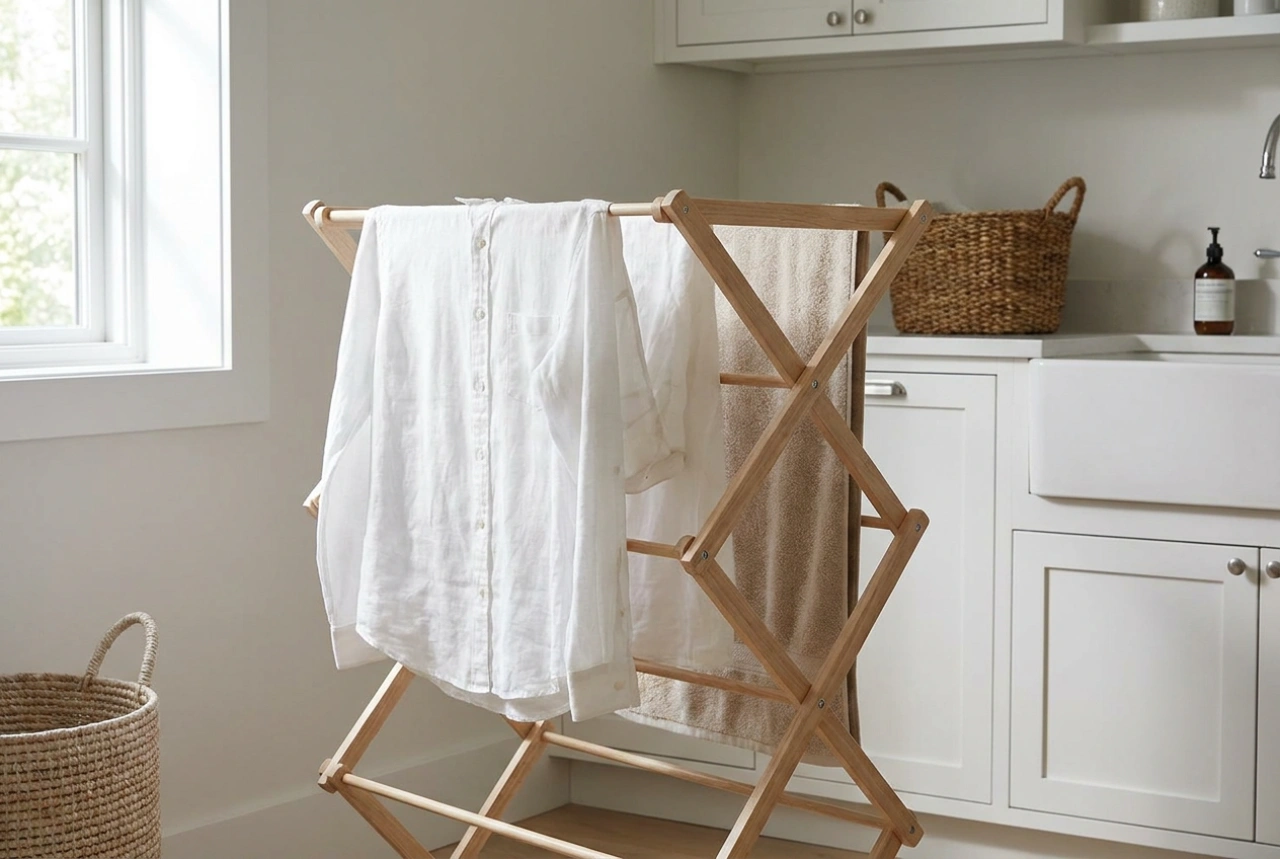
Wet wool is highly susceptible to stretching because the weight of the water pulls on the weakened fibers. Never hang a wet wool garment on a hanger or a clothesline, as this will permanently distort its shape. Instead, use the towel-rolling method. Lay the garment flat on a clean, dry, light-colored towel. Roll the towel up tightly with the sweater inside, pressing down gently along the roll. The towel will absorb the bulk of the excess moisture. Unroll the towel, place the garment flat on a dry rack or another dry towel, and gently reshape it to its original dimensions, smoothing out any wrinkles. Allow it to air dry away from direct sunlight and artificial heat sources.