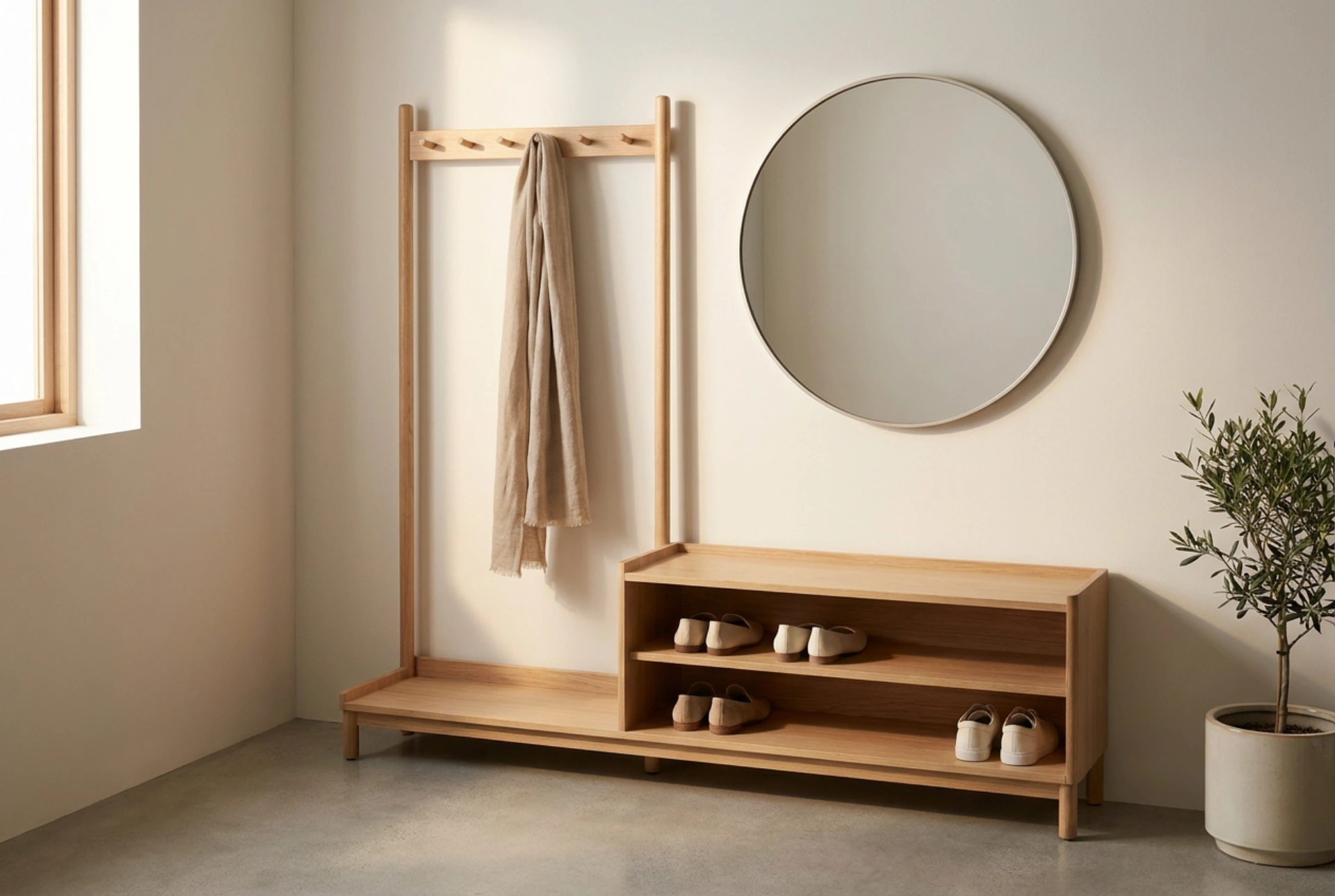


The entrance of a home functions as a high-frequency transition zone, where spatial efficiency directly dictates the speed and ease of daily departures. Integrating a coat rack with a shoe cabinet into a single, cohesive unit minimizes transit friction by aligning physical movements with natural human ergonomics.
The Ergonomics of a Unified Transition Zone
In spatial design, the 'reach envelope' determines how easily an individual can access items without unnecessary physical strain. A combined coat rack and shoe cabinet utilizes vertical space to align your daily essentials within this natural movement path. When these two elements are separated, the body must perform multiple turns, bends, and steps to gather outerwear and footwear, increasing cognitive load and transition time. By positioning the hanging storage directly above the shoe repository, you create a singular, vertical axis of preparation. This configuration respects the natural sequence of dressing: putting on footwear first provides a stable base, followed immediately by reaching upward for a jacket or coat, eliminating wasted steps and streamlining your departure flow.
Microclimate Management and Material Preservation
Footwear and outerwear are constantly exposed to external elements like rain, mud, and perspiration. Storing these items requires an environment that actively prevents material degradation. Closed shoe cabinets must feature adequate ventilation—such as louvred doors or open slatted backings—to facilitate passive air exchange. Without airflow, trapped moisture raises the relative humidity within the cabinet, creating an ideal breeding ground for microbial growth and fungal spores, which break down leather, synthetic adhesives, and textiles.
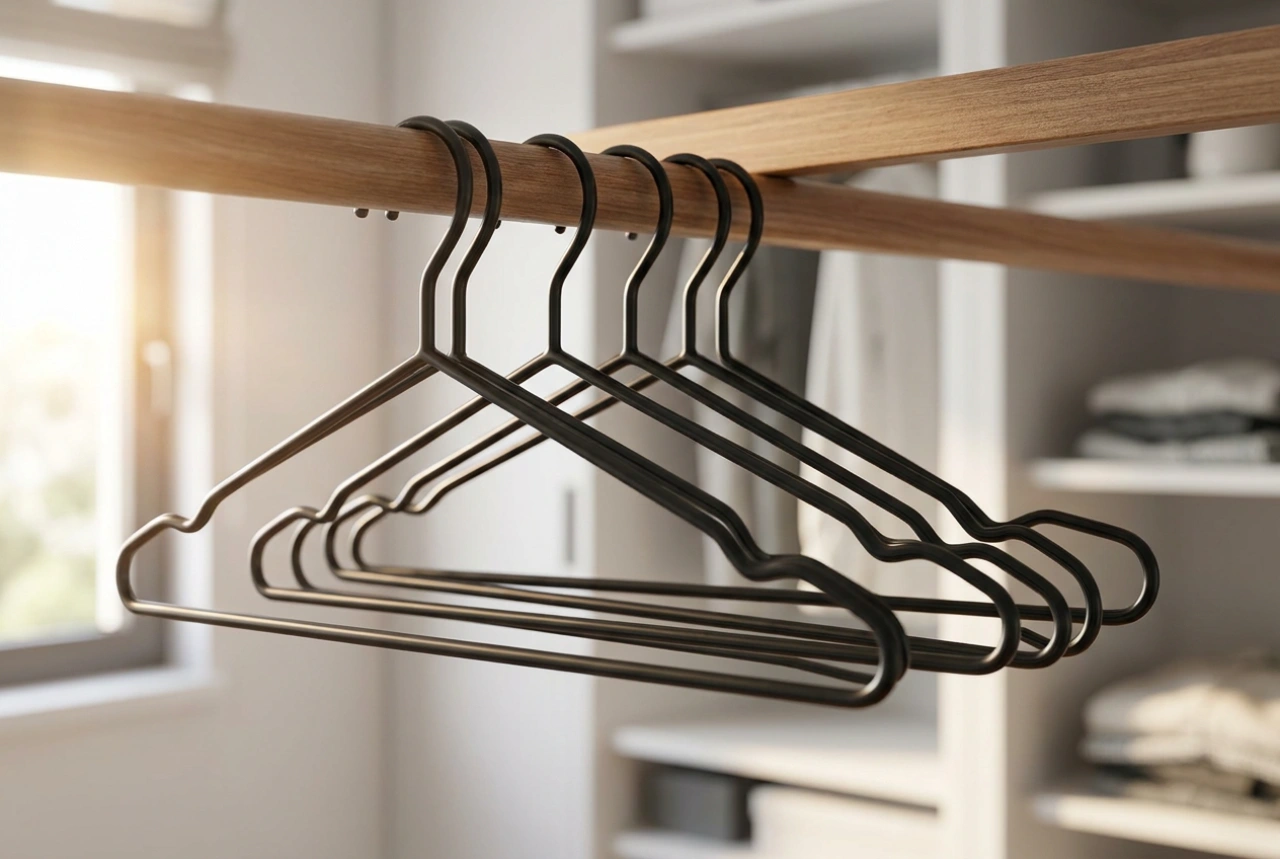
The materials of the storage unit itself play a vital role in longevity. Solid timber coated with a moisture-resistant polyurethane or natural oils can withstand occasional dampness but requires regular wiping. High-density fibreboards must be sealed perfectly on all edges to prevent moisture from penetrating the core, which leads to irreversible swelling and structural weakening. When selecting a unit, look for powder-coated steel elements on the coat rack section; the electrostatic powder-coating process creates a non-porous barrier that resists corrosion from wet garments and mechanical abrasion from metal hangers.
Structural Physics: Load Distribution and Safety
An integrated unit combines heavy, concentrated loads at the bottom with dynamic, high-leverage forces at the top. Understanding the physics of this balance is crucial for both functionality and safety. The center of gravity of an empty unit is naturally low, especially if the shoe cabinet forms a broad, deep base. However, hanging heavy winter coats creates a lever arm that shifts the center of gravity upward and forward, introducing a high risk of tipping if the unit is not secured.
To mitigate mechanical instability, always adhere to structural principles. A wider, deeper shoe cabinet base provides a larger footprint, lowering the risk of accidental tipping when pulling garments from the upper rack. Any unit exceeding a height-to-depth ratio of 3:1 must be mechanically fastened to the wall. Utilize appropriate wall anchors designed for your specific substrate to counteract the shear forces exerted when items are pulled or hung. Lastly, place heavier boots and infrequently used footwear in the lowest compartments. This keeps the collective center of mass as close to the floor as possible, enhancing static stability.
Optimizing the Maintenance Cycle
To preserve both the storage unit and your apparel, implement a systematic maintenance routine based on material science. Wet coats should never be hung directly against wooden backing panels; allow them to dry in an open, well-ventilated space before placing them on the rack to avoid water spotting and wood warping. For shoe compartments, utilize removable, non-porous plastic trays at the base to catch grit, road salt, and water run-off. This prevents corrosive salts from degrading the cabinet's protective finishes. Regularly cleaning the surfaces with a damp, microfibre cloth and a mild, pH-neutral surfactant ensures that abrasive dust particles do not wear down the protective lacquer or powder coating over time.