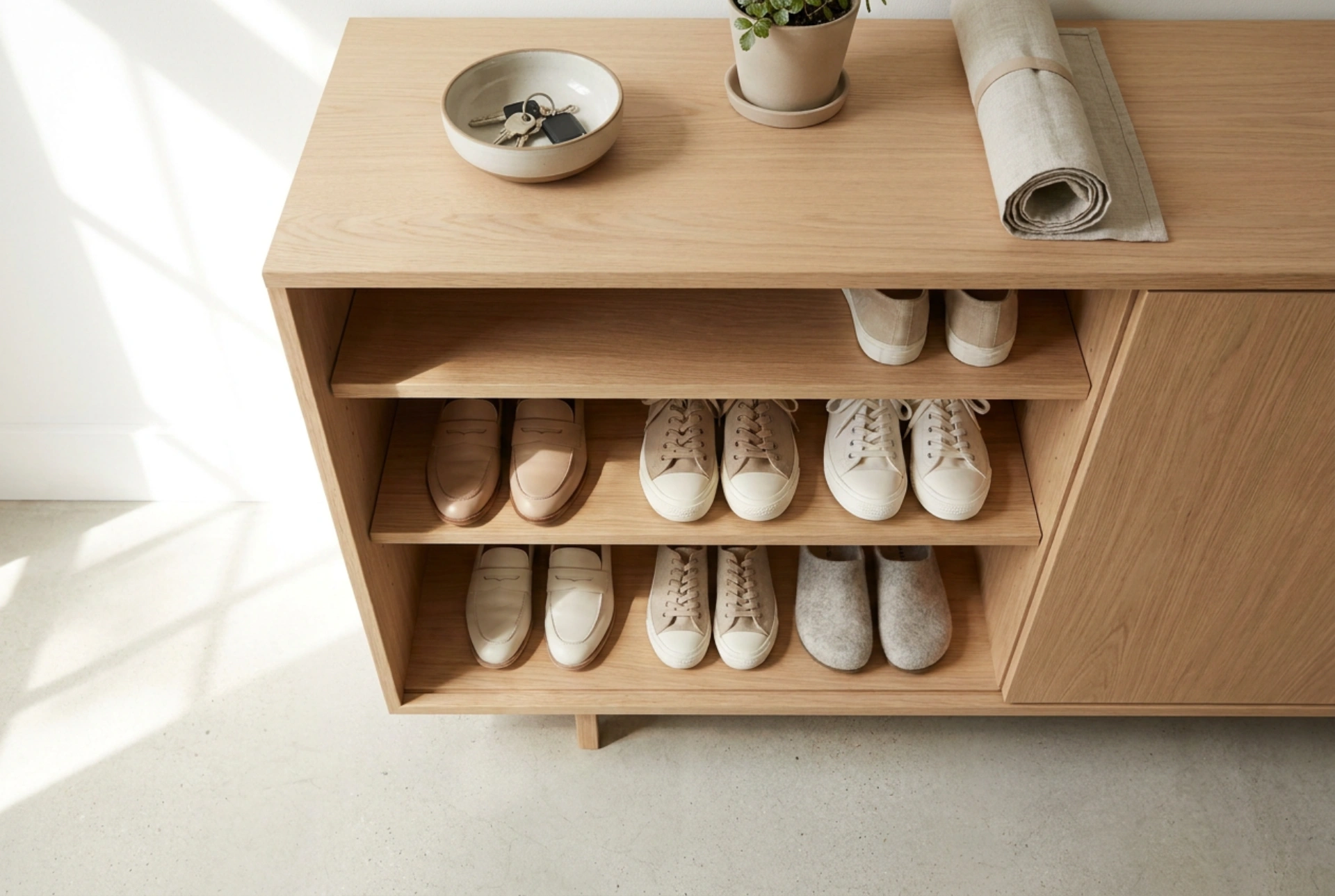


Structuring your entryway shoe storage with a dedicated cabinet does more than clear floor space; it establishes an efficient physical workflow and protects footwear materials from atmospheric degradation. By applying systematic organization and understanding the microclimatic needs of different materials, you can eliminate the daily friction of searching for matching pairs.
Microclimate Control: Airflow and Moisture Management
Footwear absorbs moisture and salt from perspiration and environmental exposure during wear. When shoes are left in a disorganized pile on the floor, they lack the necessary ventilation to dry evenly, leading to structural degradation of leather and the proliferation of odor-causing bacteria. A well-designed shoe cabinet utilizes vertical separation and controlled ventilation to mitigate these risks.
To optimize air circulation, choose a cabinet with slatted doors or open back panels. This allows ambient air to flow continuously around the footwear, facilitating the evaporation of residual moisture. Storing shoes on inclined metal grates or slatted wooden shelves rather than flat, solid surfaces ensures that air circulates beneath the soles. This prevents dampness from trapping between the shoe bottom and the shelf, which can cause rubber adhesives to degrade and leather soles to rot.
Ergonomic Zoning: Minimizing Kinetic Friction
The daily search for matching shoes is primarily a failure of spatial categorization and ergonomics. By dividing your shoe cabinet into distinct kinetic zones based on reach and frequency of use, you streamline your exit routine. The human body operates most efficiently within specific comfort zones, and aligning your footwear placement with these zones reduces physical strain.
- The Primary Zone (Waist to Eye Level): Place daily wear footwear here. This height requires no bending or stretching, minimizing the time needed to retrieve and replace pairs.
- The Secondary Zone (Knee to Waist Level): Store seasonal or semi-frequent shoes here. Accessing this zone requires minimal bending.
- The Tertiary Zone (Floor Level): Reserve the lowest shelves for heavy boots, outdoor work footwear, or wet shoes. This keeps heavier objects stable and prevents dirt from falling onto clean shoes below.
- The Upper Zone (Above Eye Level): Use this area for off-season storage, packaged in breathable cotton bags to prevent dust accumulation while allowing air exchange.
Structural Order: Preventing Deformation
Improper storage is a leading cause of physical damage to shoes. When shoes are piled together, the weight of upper pairs compresses and warps the structure of those underneath. This pressure can cause permanent creasing in leather, weaken structural heel counters, and misalign sole profiles.
A dedicated cabinet ensures each pair occupies its own defined footprint. To maintain the structural integrity of leather footwear, utilize wooden shoe trees made of unvarnished cedar. Cedar trees exert light, uniform tension to keep the leather taut, preventing the toe box from curling upward as it dries. Additionally, cedar wood acts as a natural desiccant and deodorizer, absorbing organic acids from perspiration. For tall boots, insert rigid boot shapers to prevent the shafts from creasing or collapsing, which can crack the leather finish over time.
Hygiene and Material Maintenance inside the Cabinet
Maintaining the interior of a shoe cabinet requires a basic understanding of household chemistry. Dirt, mud, and road salt brought from outdoors carry alkaline and acidic compounds that can degrade both the cabinet materials and adjacent footwear. Implementing a strict transition routine protects your storage ecosystem.
Before placing any footwear into the cabinet, remove loose debris using a stiff-bristled brush. For wet shoes, allow them to air-dry completely in a well-ventilated space outside the cabinet first. To clean the cabinet shelves, avoid harsh chemical solvents that can strip protective varnishes. Instead, use a damp cloth with a highly diluted solution of pH-neutral vegetable soap. If moisture issues persist, place a small container of activated alumina or silica gel in the corner of the cabinet to act as a passive desiccant, maintaining the relative humidity below sixty percent to inhibit mold growth.