

Storing delicate porcelain and ceramic plates requires more than just piling them on top of each other; improper stacking leads to micro-cracks, glaze degradation, and structural stress. Transitioning to vertical plate racks inside your cabinets redistributes physical load and protects your tableware from abrasive friction.
The Physics of Plate Degradation in Horizontal Stacks
Traditional horizontal stacking forces the lowest plate in the pile to bear the cumulative mass of all the plates above it. This concentrated static load creates significant downward pressure. Over time, even minor vibrations in the kitchen—caused by heavy footsteps, closing cabinet doors, or nearby appliances—cause the plates to rub against one another. Because ceramic glaze is brittle and can contain microscopic imperfections, this constant shifting acts like ultra-fine sandpaper.
Furthermore, when you pull a plate from the bottom or middle of a stack, you introduce shear stress. The friction between the unglazed foot ring (the rough, unpolished circle on the underside of a plate) and the glazed upper surface of the plate beneath it causes deep scratches. These micro-abrasions eventually weaken the structural integrity of the ceramic body, making it highly susceptible to thermal shock and chipping during washing or food serving.
How Vertical Plate Racks Prevent Mechanical Wear
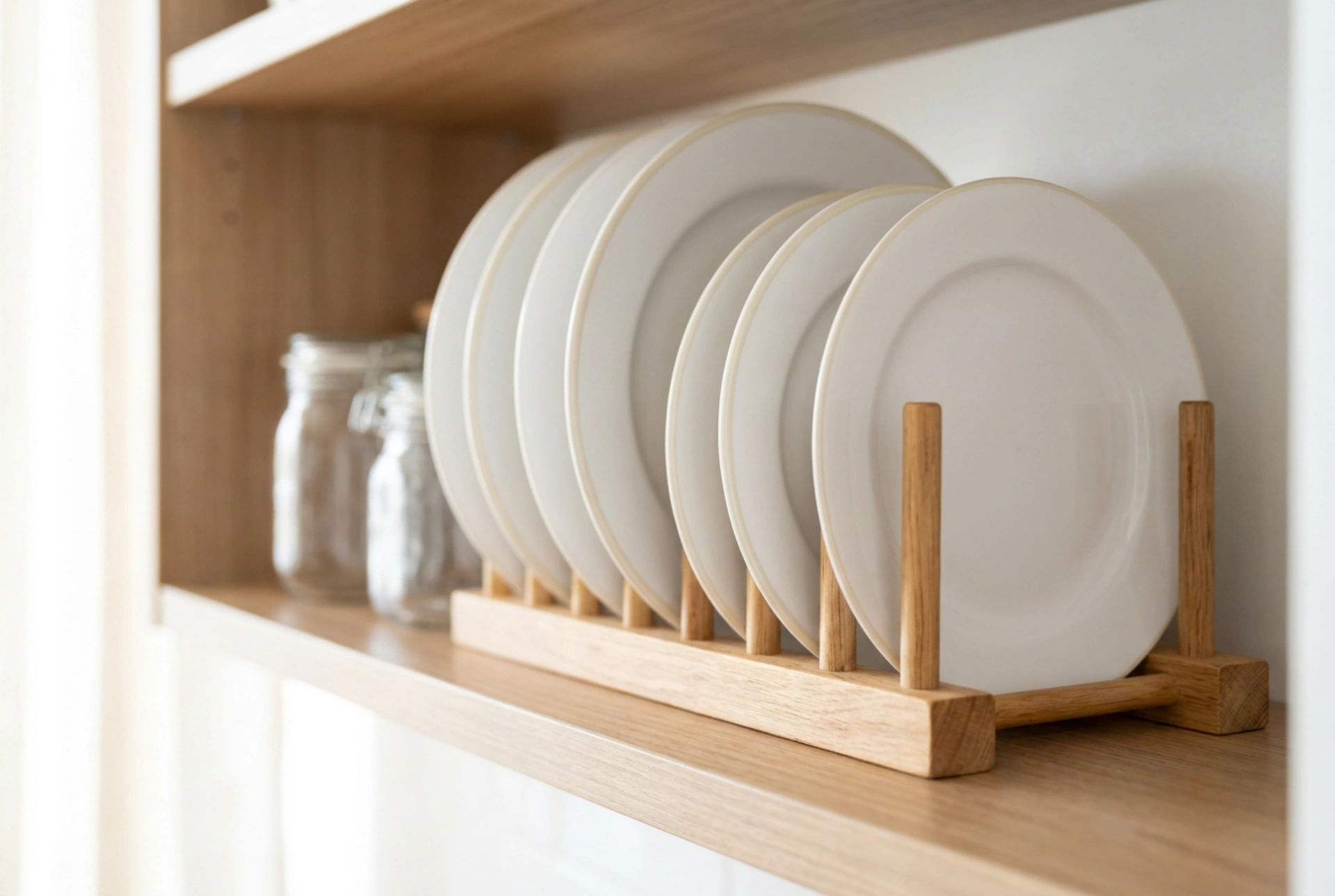
A vertical plate rack fundamentally changes the distribution of gravitational force. Instead of acting as a single, heavy pillar, each plate is supported individually within its own slot. The weight of the plate is distributed along its lower rim and the vertical supports of the rack, shifting the stress from the vulnerable flat surface to the stronger, curved edge.
This separation eliminates surface-to-surface contact entirely. Without direct contact, there is no risk of the rough foot rings scratching the delicate decorative glaze of adjacent dishes. Additionally, vertical storage facilitates easier access. You can retrieve any single plate without needing to lift, slide, or rearrange other pieces, eliminating the main source of handling impacts and accidental drops.
Material Science: Selecting the Right Rack Structure
The material of your cabinet plate rack plays a critical role in preserving your tableware. Different materials interact with ceramic and porcelain in distinct ways:
- Coated Metals: Steel racks coated with soft plastic, silicone, or vinyl are highly effective. The soft outer layer acts as a shock absorber, dampening vibrations and protecting the edges of the plates from hard metallic impacts.
- Hardwoods: Untreated or sealed wooden racks (such as beech or bamboo) offer natural flexibility. Wood is softer than ceramic glaze, meaning the rack will wear down long before it can scratch your dishes. However, wood must be kept dry to prevent moisture absorption and mold growth.
- Polymers: Heavy-duty plastic racks are durable and easy to clean, but they must be free of sharp molding seams or burrs that could scrape the plates during insertion.
Optimal Layout and Air Circulation
To maximize the efficiency and safety of vertical plate storage, proper spacing is essential. Slot width should match the depth of your plates. Standard flat dinner plates require narrower slots, while deep soup plates or bowls need wider gaps to prevent them from leaning too heavily against the adjacent dividers.
Airflow is another crucial factor. Storing damp dishes in a closed cabinet creates a microclimate with high humidity. This trapped moisture can degrade the cabinet interior and foster bacterial growth on porous earthenware. Vertical racks promote natural convection, allowing air to circulate freely around each plate. This ensures rapid drying and prevents the buildup of stale odours or moisture rings on the cabinet shelves.