

A greasy film on car glass compromises visibility and creates dangerous glare from oncoming headlights, yet standard glass cleaners often merely smear these stubborn hydrophobic residues across the surface.
The Anatomy of Road Film and Interior Haze
To effectively remove the stubborn haze on vehicle glass, one must understand its composition. The exterior film is primarily composed of airborne road oils, unburnt diesel particulates, silicone residues from automated car washes, and organic matter. These hydrophobic substances bond tightly to the silica structure of the glass. On the inside, the film consists of plasticizer outgassing from dashboard materials combined with moisture and dust. Because these contaminants are non-polar, water alone cannot dissolve them; they require targeted chemical solvents and physical mechanical action to break their surface adhesion.
Choosing the Right Chemical Agents
Selecting the correct cleaning agent depends on the chemical nature of the residue. Different contaminants require specific molecular approaches:
- Isopropyl alcohol: A polar solvent that disrupts lipid bonds, rapidly dissolving greasy, organic films and evaporating without leaving a residue.
- Surfactants: Molecules that lower surface tension, allowing water-based cleaners to lift and suspend oily road grime.
- Mild organic acids: Chemical compounds that break down alkaline mineral scale and hard water spots without etching the glass surface.
For glass surfaces with integrated window tints, ammonia-based cleaners must be avoided. Ammonia chemically degrades the polyester film and adhesive backing of aftermarket tints, leading to purpling and peeling.
The Mechanics of Cleaning: Techniques and Textiles
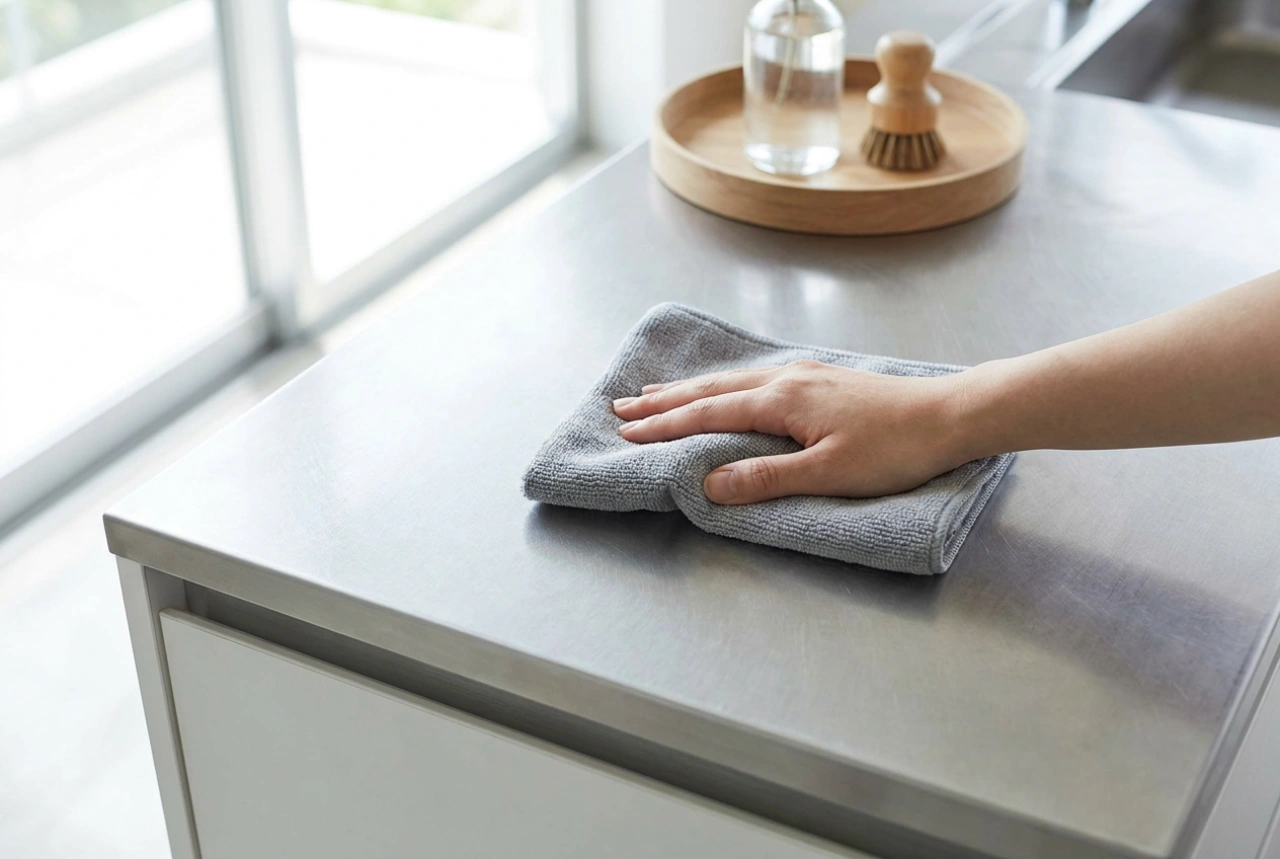
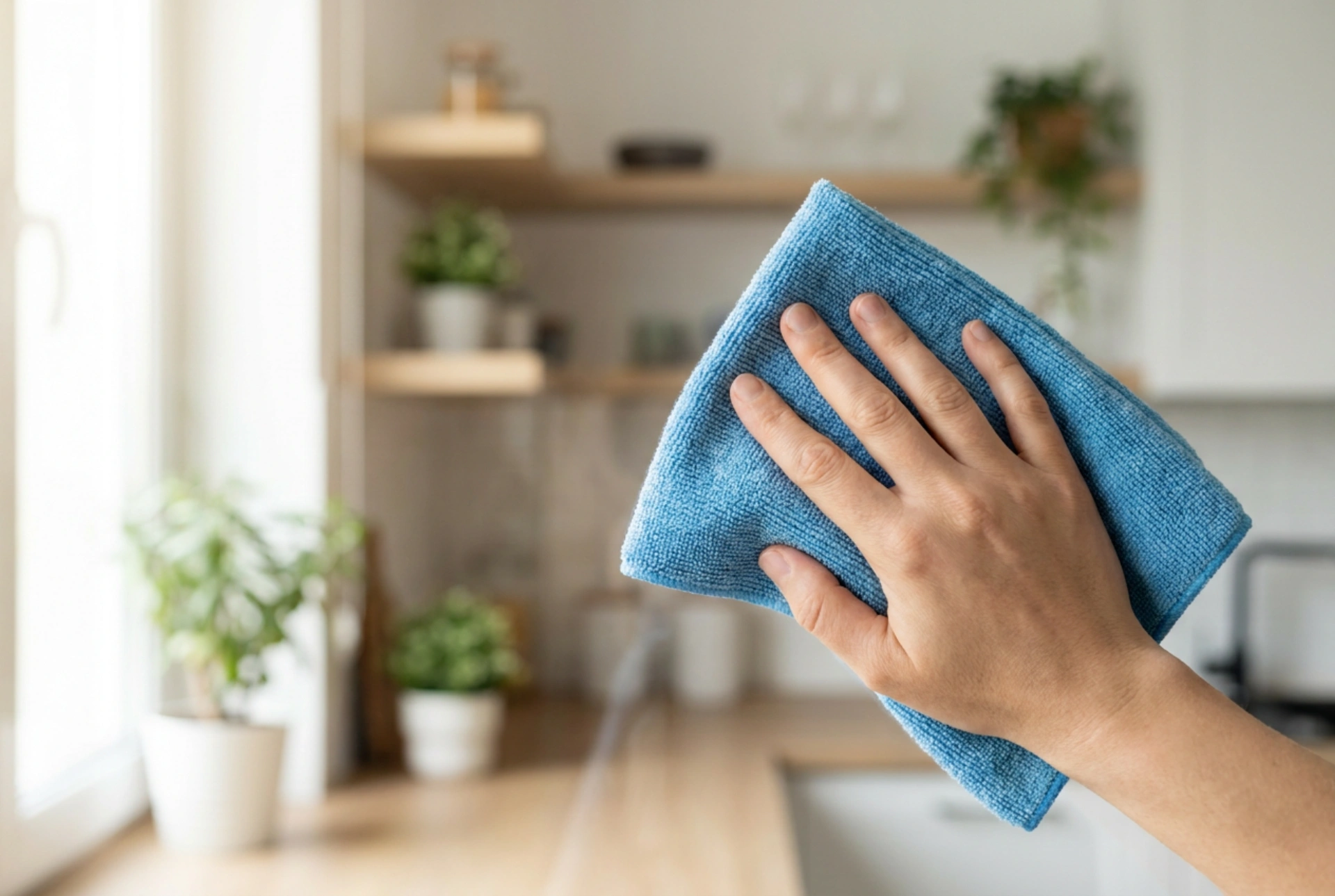
Even the best chemical formula will fail without the correct application method. The standard wiping motion often redistributes dissolved grease rather than removing it. To prevent this, employ the two-cloth technique. The first microfiber cloth, damp with the cleaning agent, works to chemically loosen and suspend the dirt. The second, bone-dry microfiber cloth immediately follows to lift the suspended residue before the solvent evaporates. The structure of the fabric is critical: a waffle-weave microfiber is ideal for the initial wipe because its pockets trap larger dirt particles, while a tight, flat-weave microfiber is best for the final buffing pass to eliminate streaks. Always clean in a cross-hatch pattern—wiping horizontally on the inside and vertically on the outside—so you can instantly identify which side a streak is on.
Managing Environmental Factors
Temperature and sunlight play a major role in the success of the cleaning process. Never clean car glass in direct sunlight or when the glass is hot to the touch. High temperatures cause the solvents and water in the cleaning agent to evaporate prematurely. This leaves behind concentrated surfactant residues and dissolved grime on the surface, causing stubborn streaks that are incredibly difficult to buff out. Always work in the shade or a garage, ensuring the glass is cool, which allows the chemical agents sufficient dwell time to dissolve the greasy film completely.