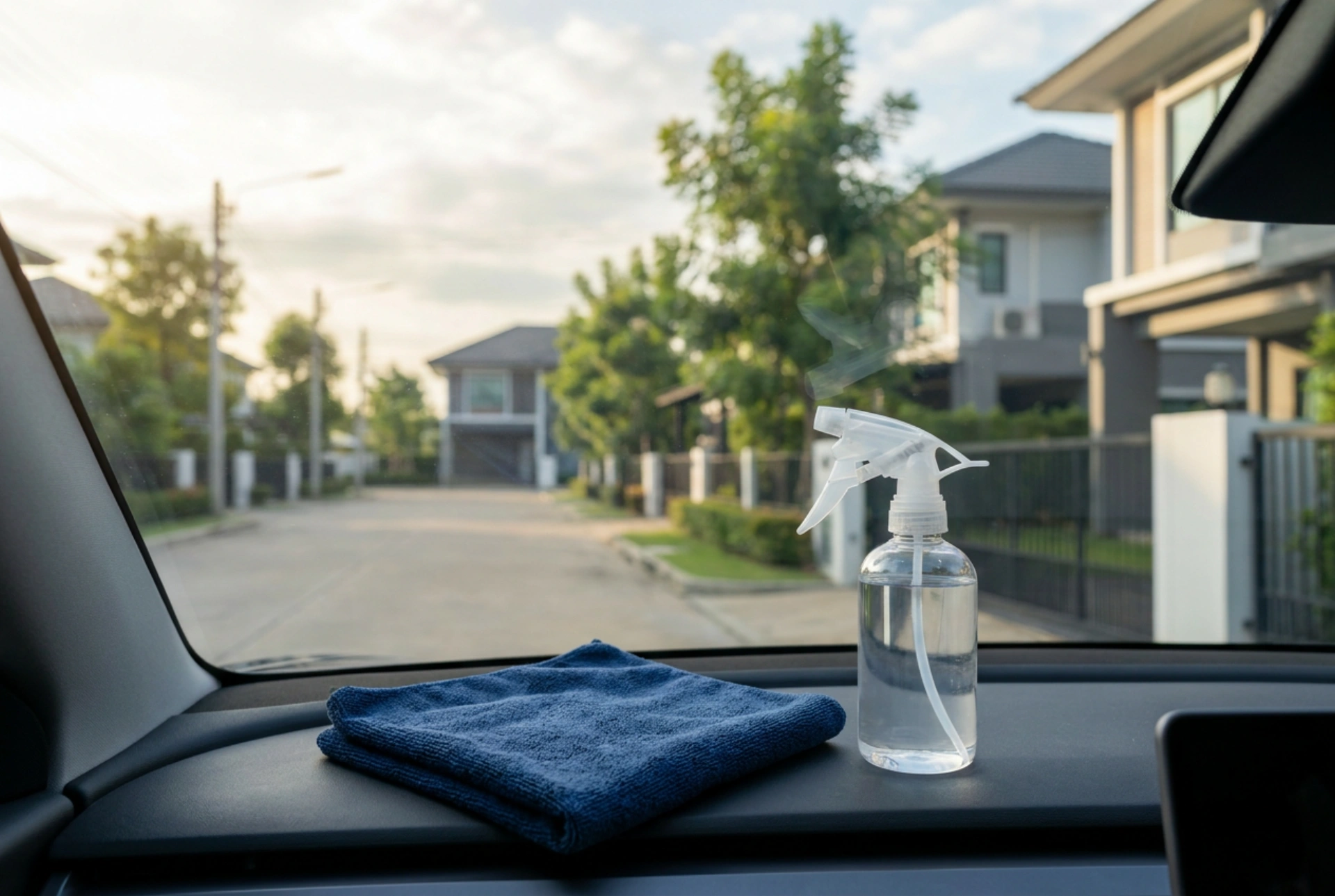


Achieving perfectly clear car windows requires understanding the physical and chemical factors that cause streaks and condensation. Road grime, plastic outgassing from the dashboard, and humidity create a stubborn film that compromises visibility and safety.
The Chemistry of Glass Contamination
The interior and exterior of automotive glass face completely different types of dirt. Exterior glass accumulates road film, which consists of oily residues, exhaust particulates, and mineral deposits from rain and tap water. Interior glass, on the other hand, collects a hazy layer composed of dust, skin oils, and plasticizers evaporating from the vehicle's synthetic dashboard materials. This oily interior film is highly hydrophilic, meaning it attracts moisture from the air, creating the perfect environment for condensation and fogging.
Why Traditional Glass Cleaners Fail
Many household glass cleaners contain heavy soaps, perfumes, and dyes. While these additives make the product smell pleasant, they leave behind microscopic surfactant residues on the glass surface. When you wipe the glass, these residues are smeared across the surface, creating visible streaks under direct sunlight. Furthermore, these leftover surfactants act as surfactant-binding sites that trap moisture, accelerating the fogging process inside the cabin. To prevent this, professional glass cleaning relies on volatile solvents that evaporate completely without leaving solid residues behind.
The Dual-Action Solution: Alcohol and Distilled Water
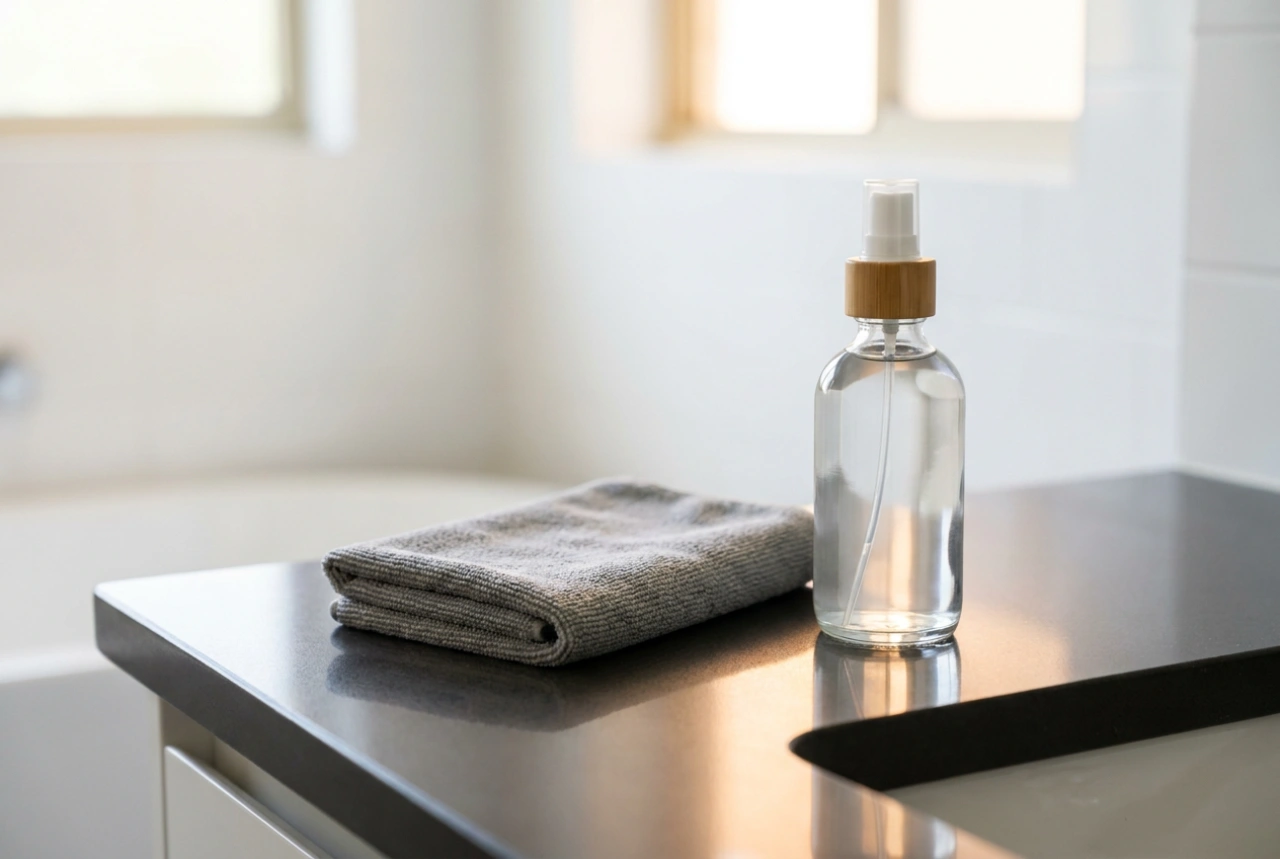
The most effective homemade cleaning solution for automotive glass utilizes isopropyl alcohol (IPA) and distilled water. Isopropyl alcohol is an excellent organic solvent that dissolves non-polar substances like oils, grease, and plasticizer residue. Mixing isopropyl alcohol with distilled water in a one-to-one ratio creates a highly effective cleaner. Distilled water is crucial because municipal tap water contains dissolved minerals like calcium and magnesium, which leave white spots on the glass as the water evaporates. The high volatility of the alcohol accelerates the drying process, leaving no time for streaks to form.
The Physical Technique: Waffle Weave and Dual Cloths
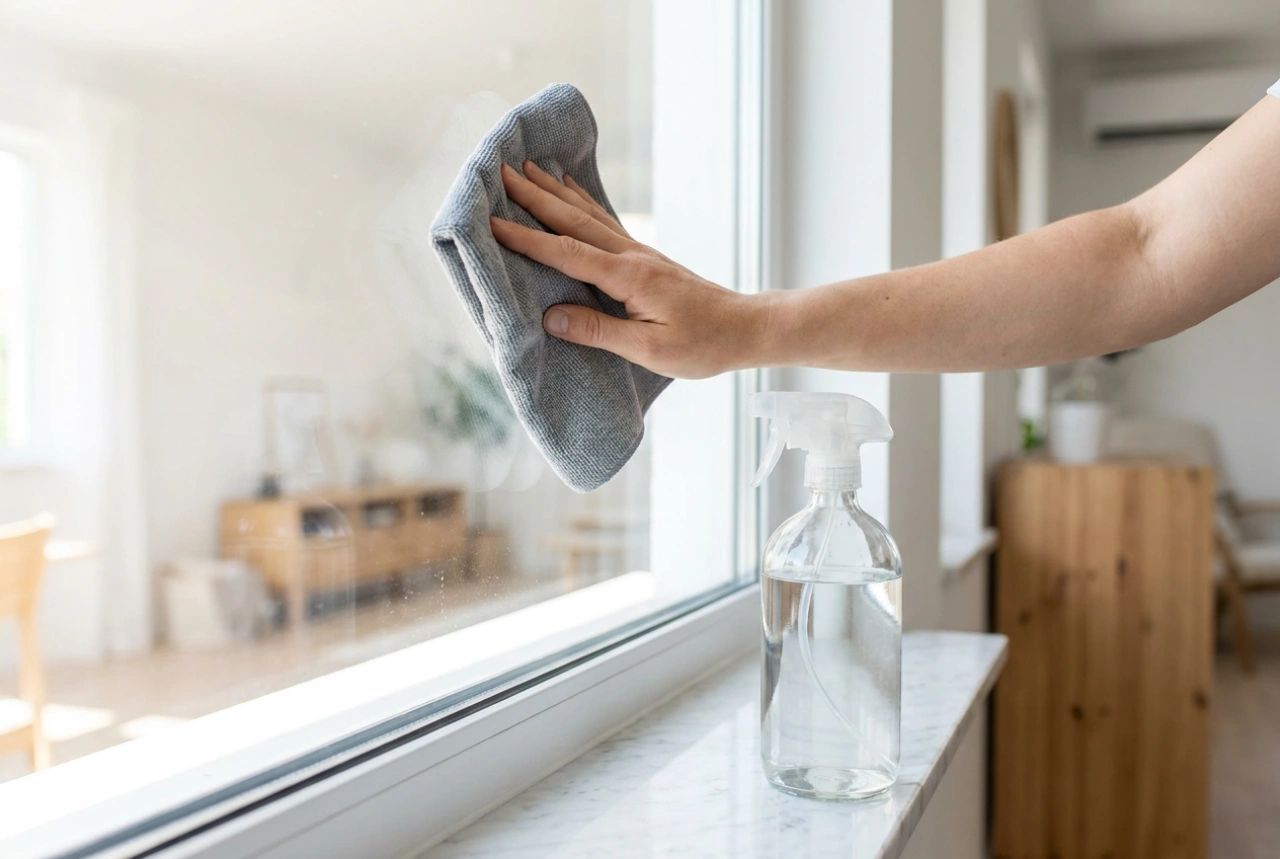
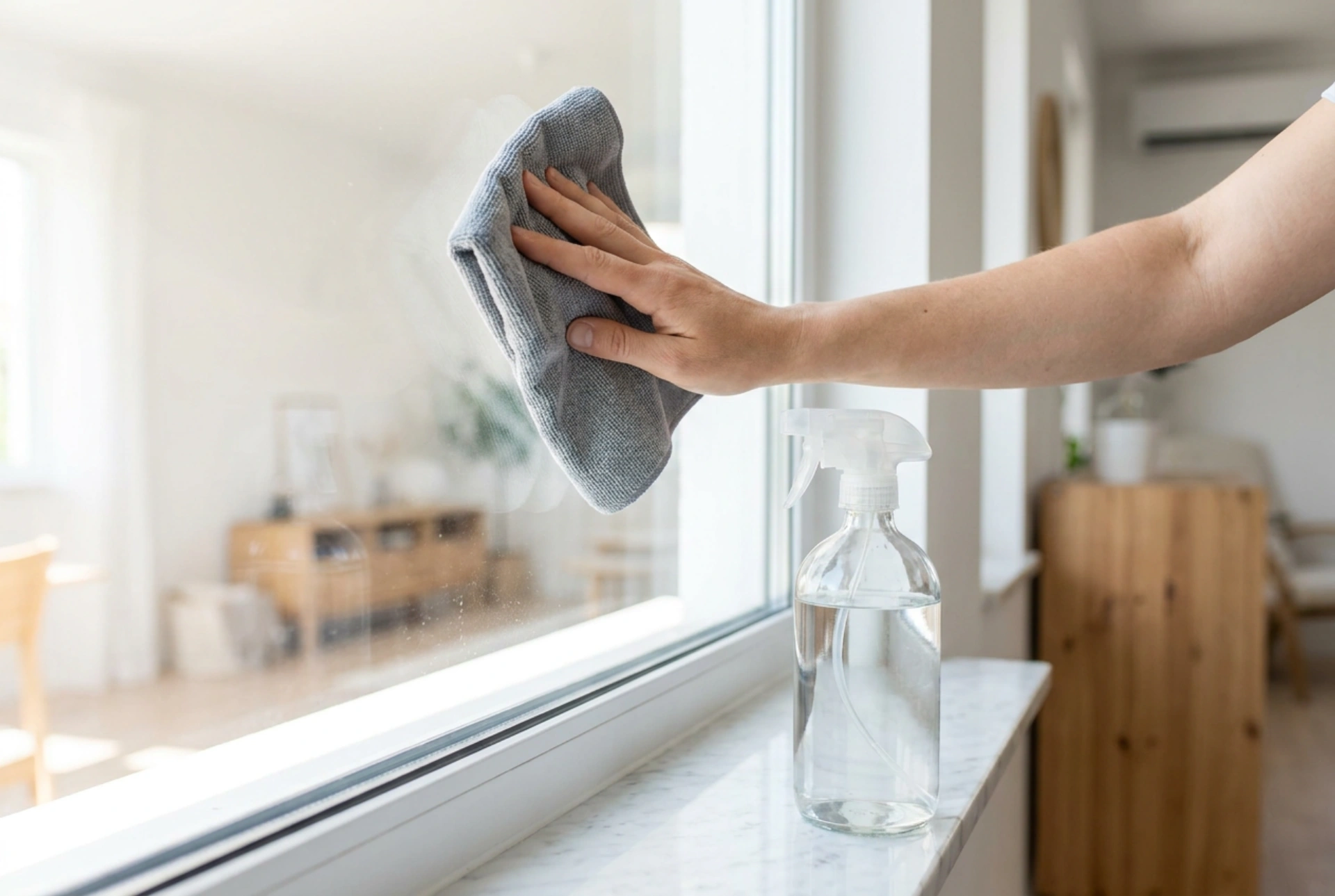
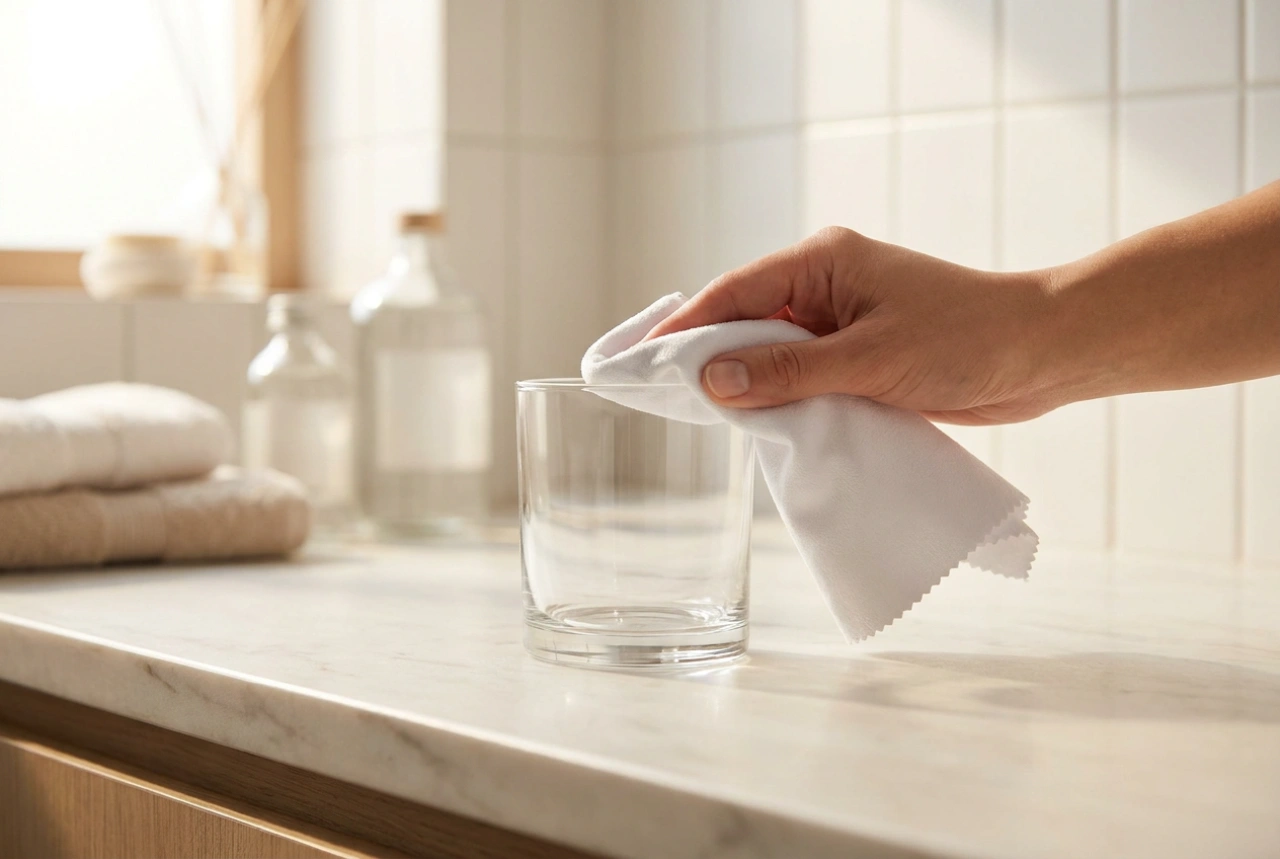
Using the right chemical formula is only half the battle; the physical mechanical action of cleaning determines the final clarity. Avoid standard plush microfiber cloths, as their fluffy loops can trap debris but also release lint onto the glass. Instead, utilize waffle-weave microfiber cloths specifically designed for glass. The pocketed structure of a waffle-weave towel physically scrapes dirt off the glass and holds it away from the surface while minimizing friction. Always use the two-cloth method: spray the alcohol-water solution onto the first cloth (never directly onto the glass to prevent overspray on the dashboard), wipe the glass thoroughly to loosen and lift the dirt, and immediately follow with a second, completely dry microfiber cloth to buff the surface to a streak-free finish.
Eliminating Interior Fogging and Condensation
Fogging occurs when warm, humid air inside the car meets the cold surface of the windshield, reaching the dew point and condensing into microscopic water droplets. Clean glass is the best natural defense against fogging because water requires nucleation sites—such as dust or dirt particles—to condense. When the glass is chemically clean, water molecules cannot easily bind to form droplets, spreading instead into an invisible, flat layer. To further enhance this effect, you can apply a specialized anti-fog treatment. These products work by lowering the surface tension of the glass, preventing water droplets from forming beads. Alternatively, a tiny amount of pure glycerin or high-quality liquid dish soap (applied sparingly and buffed off completely until invisible) can create a microscopic hydrophobic barrier that repels moisture.