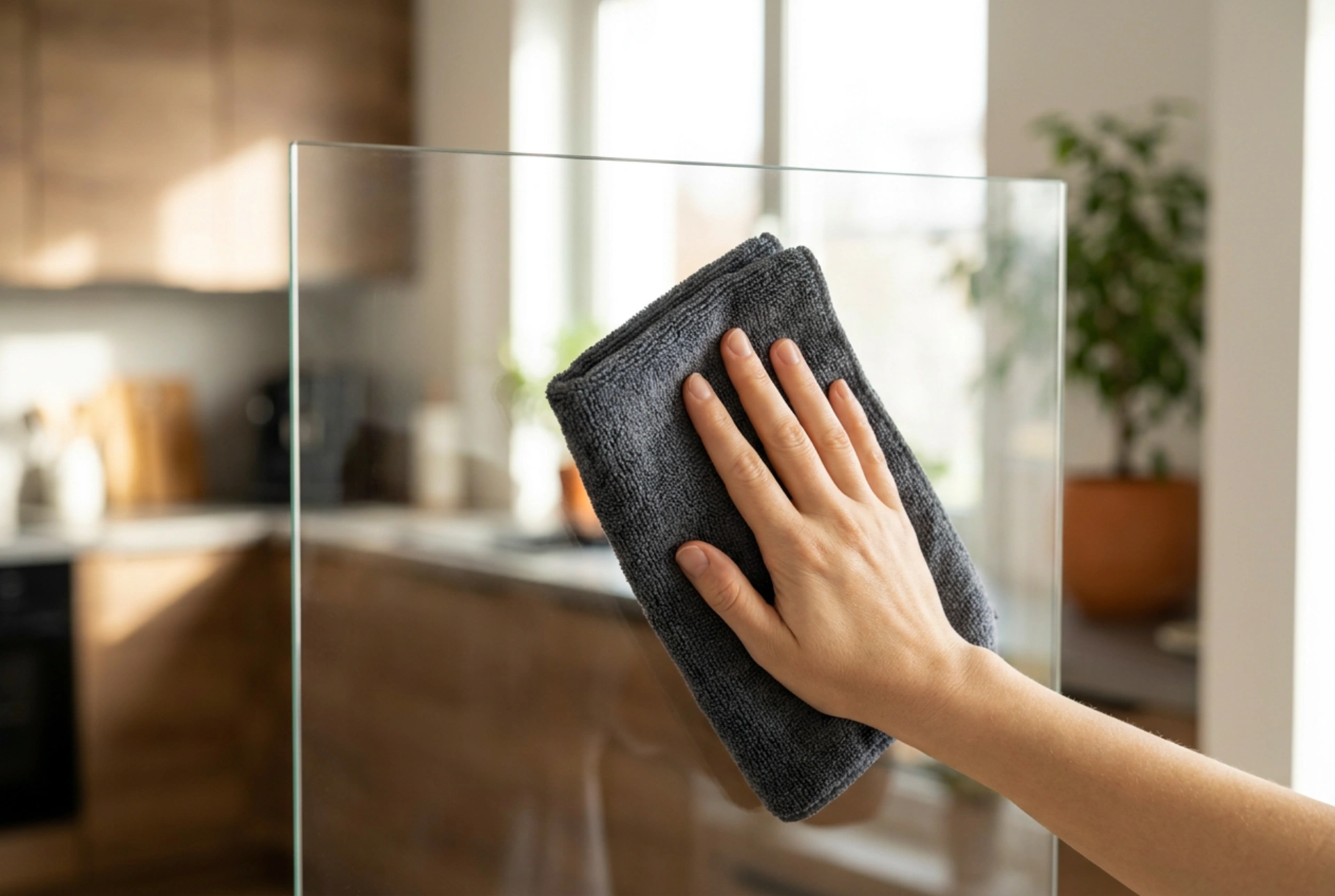


Achieving perfectly clear, streak-free windows depends entirely on maintaining the physical structure of your microfiber cloths and using the correct wiping motion. Over time, improper washing clogs the microscopic channels between the fibres, turning a high-performance cleaning tool into a source of smears.
The Physics Behind Microfiber Cleaning Action
To understand why microfiber is superior for glass cleaning, we must look at its physical structure. High-quality microfiber is a blend of polyester and polyamide polymers. During manufacturing, these fibres are split chemically, creating a star-shaped polyamide core surrounded by polyester wedges. This structural arrangement produces two distinct cleaning mechanisms: lipophilic attraction and capillary action.
Polyester is inherently lipophilic, meaning it attracts organic compounds, oils, and grease, such as fingerprints and atmospheric soot. Polyamide is hydrophilic, pulling water and water-soluble minerals into the structure. When these fibres are split, they create millions of microscopic voids. As you wipe a surface, these channels act as capillary tubes, drawing liquid and dirt up and away from the glass. This is fundamentally different from cotton, which has round, hollow fibres that merely push liquid and grime across the surface, leaving a thin film that dries into visible streaks.
The Mechanics of a Streak-Free Wipe
The key to streak-free glass is moisture control. If a microfiber cloth is too wet, the microscopic capillary channels become flooded. When the cloth cannot absorb any more liquid, it leaves behind micro-droplets of water on the glass. As these droplets evaporate, the dissolved minerals in your tap water (primarily calcium and magnesium carbonates) recrystallize, forming tiny, visible spots.
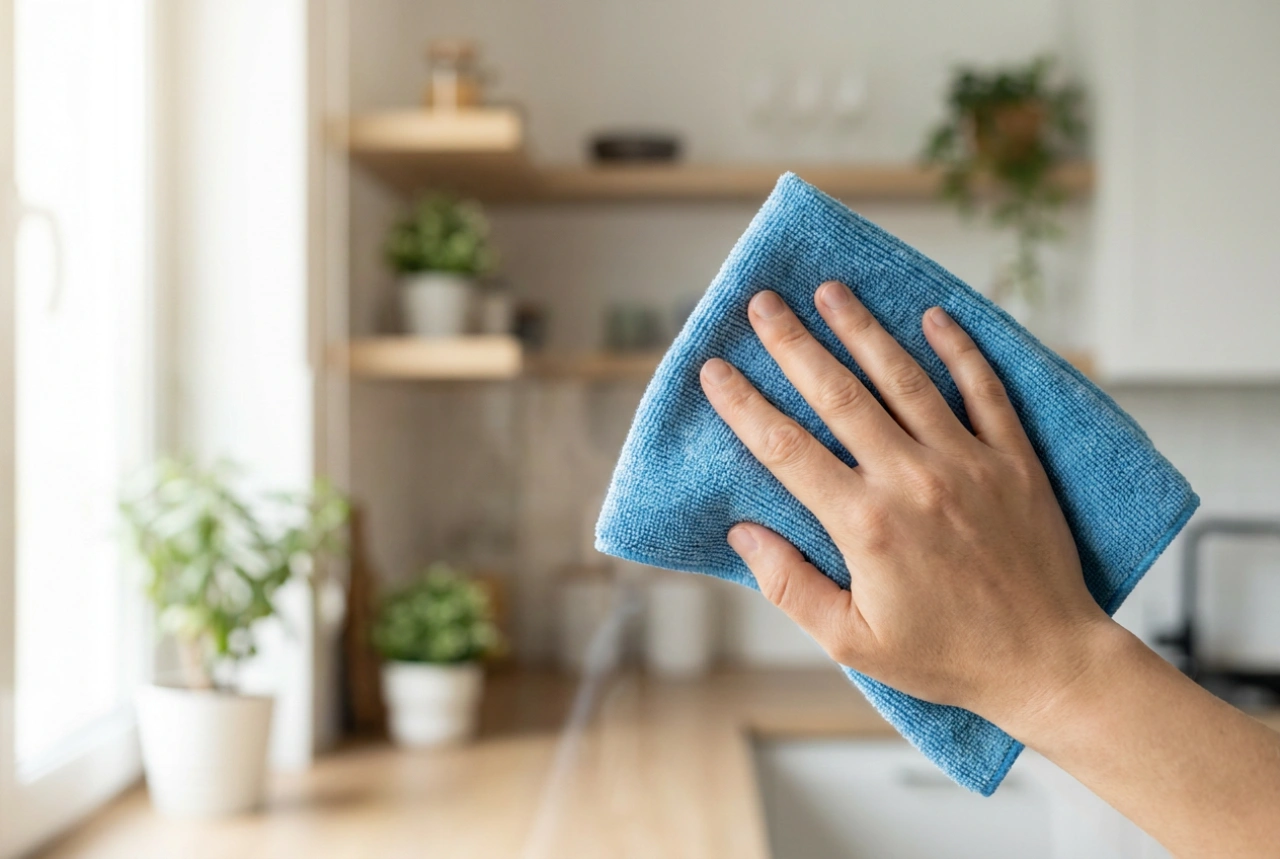
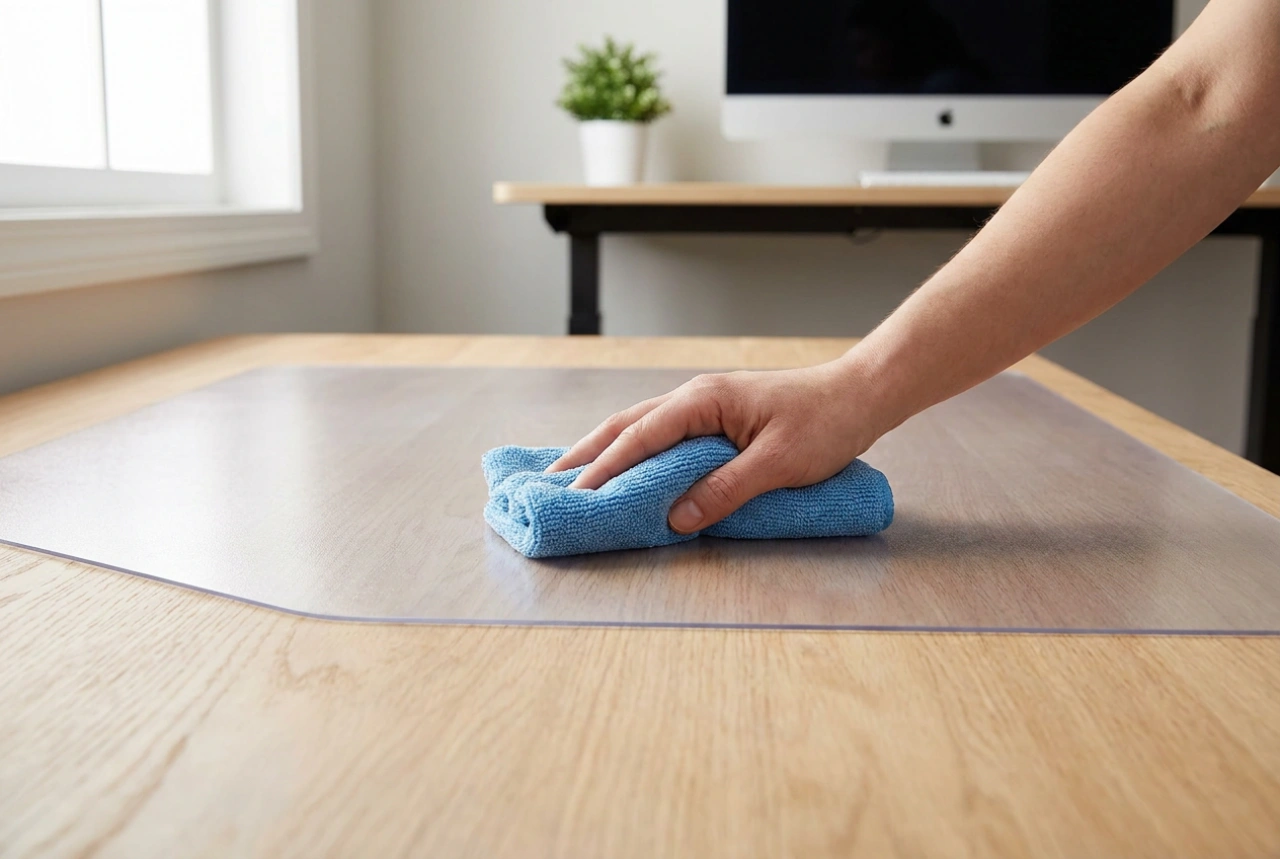
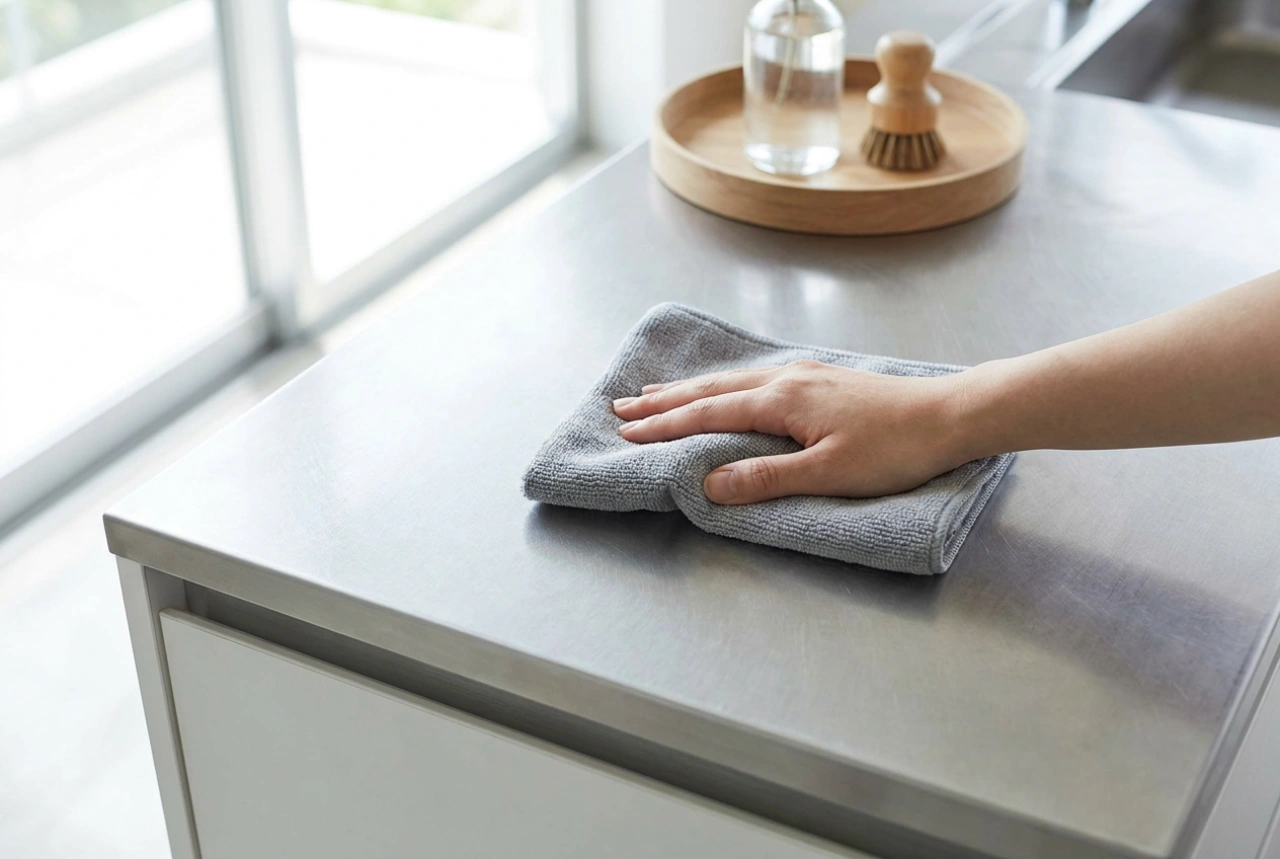
To avoid this, use a dry-to-damp technique. Spritz the glass lightly with plain water or a dilute solution of isopropyl alcohol, rather than soaking the cloth. Fold the microfiber cloth in half, and then in half again, creating eight clean, flat quadrants. Hold the cloth flat under your hand, applying even pressure across your palm. Wipe in a continuous, overlapping S-pattern from top to bottom. This systematic movement ensures that lifted particles are trapped inside the cloth and not redeposited. Once a quadrant becomes damp or soiled, flip to a fresh, dry face. This maintains the high capillary tension required to pull moisture clean off the glass.
How to Wash Microfiber to Preserve Capillary Forces
Inappropriate laundering is the primary cause of streak-prone microfiber. Standard detergents and laundry practices can permanently ruin the unique physical properties of synthetic split fibres. To maintain their efficiency, you must follow strict chemical guidelines.
First, never use fabric softeners or cationic surfactants. Fabric softeners work by depositing a thin, lubricating layer of positively charged lipids over the fibres to make them feel soft. On microfiber, this coating clogs the microscopic capillary channels and neutralizes the natural negative charge of the polyester. This completely destroys the cloth's ability to absorb water and attract dust. Second, avoid powdered detergents. Undissolved powder grains lodge themselves inside the split channels, acting as abrasives that can scratch delicate glass during subsequent uses. Instead, wash microfibers with a simple, liquid detergent that contains no optical brighteners or perfumes.
Set your washing machine to 60°C. This temperature is high enough to melt and emulsify accumulated oils, grease, and skin lipids trapped in the polyester wedges, yet safe enough to prevent the synthetic polymers from melting or warping. Lastly, never use chlorine bleach. Sodium hypochlorite oxidizes and weakens the polyamide core, causing the fibres to break down, lint, and lose their structural integrity.
Drying and Regenerating the Electrostatic Charge
Once washed, microfiber cloths require proper drying to restore their performance. When dry, microfiber relies on electrostatic forces to attract and hold dry dust particles. As the synthetic fibres rub against each other, they build up a negative static charge that acts like a magnet for positively charged dust.
Before drying, shake each cloth vigorously. This physical movement opens up the flattened fibres and restores their split structure. Air drying in a clean, dust-free environment is ideal. If you use a tumble dryer, select a low-heat, delicate cycle. Avoid high heat, as synthetic polymers can reach their glass transition temperature, causing the microscopic tips of the fibres to fuse together. Once fused, the cloth loses its capillary action forever and will smear glass. Finally, store your clean microfiber cloths in a sealed container to prevent them from absorbing airborne dust and grease before their next use on your windows.