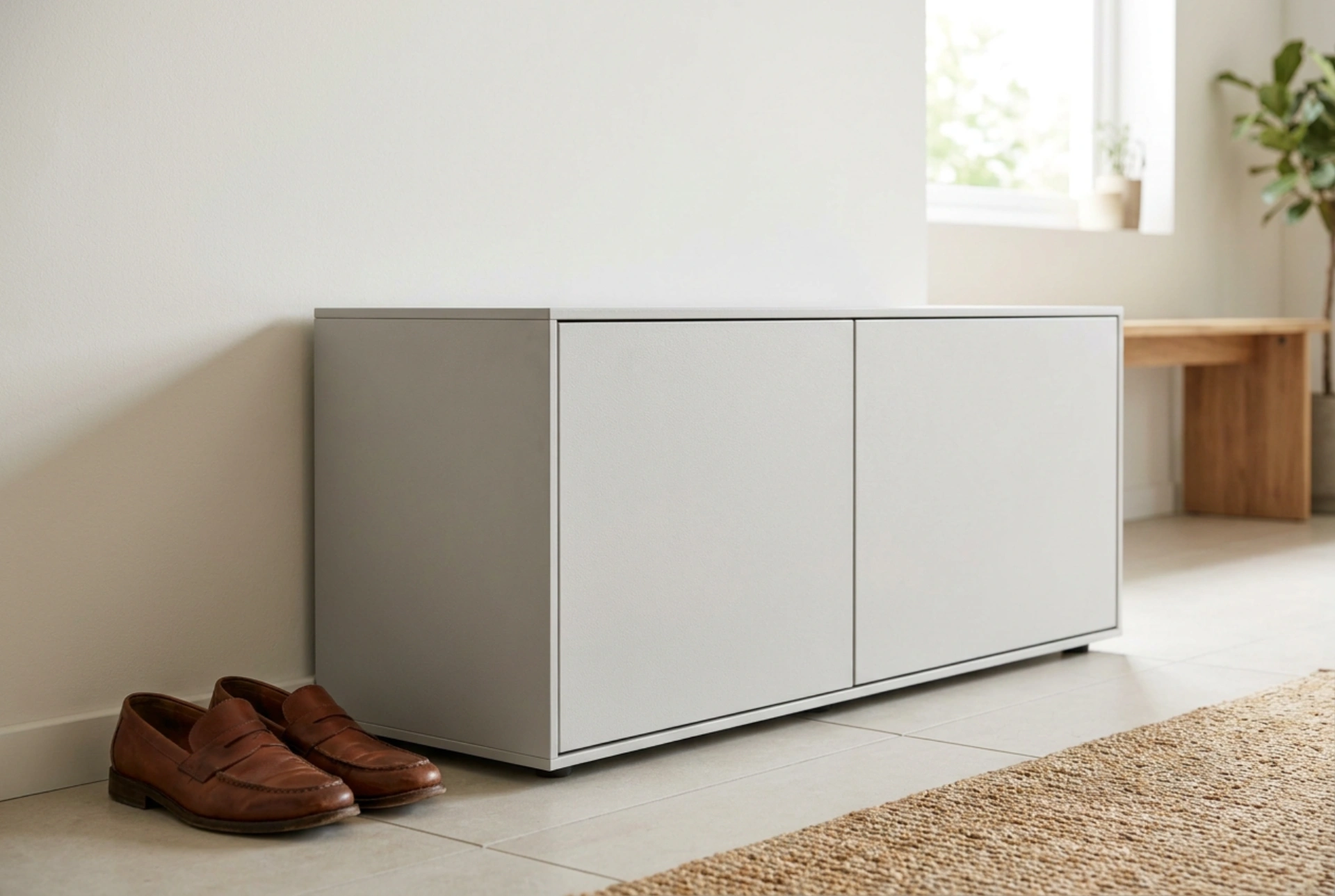


Entryways are high-humidity zones where outdoor moisture, wet footwear, and temperature fluctuations constantly interact. Choosing the correct storage material is essential to prevent structural degradation of the furniture and the formation of mould on stored footwear.
The Material Science: Polymers vs. Hygroscopic Wood
Traditional shoe cabinets made of medium-density fibreboard (MDF) or natural wood are highly hygroscopic. They readily absorb water vapour from the air, leading to swelling, warping, and the breakdown of structural adhesives. In contrast, synthetic polymers such as polypropylene (PP) and acrylonitrile butadiene styrene (ABS)—the primary materials in plastic shoe cabinets—are completely hydrophobic. The molecular structure of these plastics contains no polar groups that can attract or bind water molecules. Consequently, a plastic cabinet will never rot, swell, or structurally weaken when exposed to the high relative humidity of a damp hallway.
The Condensation Trap and Microclimates
While plastic is impervious to water damage, its non-porous nature introduces a different thermodynamic challenge: condensation. When warm, humid air enters a cold plastic cabinet, the temperature of the air drops below its dew point. Because the plastic cannot absorb any of this excess moisture, water droplets condense directly onto the inner surfaces of the cabinet. If this moisture is trapped in a dark, unventilated compartment, it creates an ideal microclimate for fungal spores (such as Aspergillus and Penicillium) to colonise. Leather, canvas, and organic adhesives used in shoes provide the perfect organic substrate for these moulds to feed upon, leading to irreversible damage to your footwear.
Optimizing Airflow and Thermodynamic Balance
To prevent condensation inside a plastic shoe cabinet, you must address air stagnation. Airflow is the primary mechanism for moisture evaporation. Look for or modify units to include ventilation grilles or rear gaps. Passive ventilation works on the principle of thermal convection; as warm air rises, it pulls cooler, drier air through the bottom vents, carrying moisture out of the top. If your cabinet is completely sealed, you can mechanically introduce airflow by drilling small, uniform ventilation holes near the top and bottom of each compartment, ensuring a continuous pressure-driven exchange of air.
Protocol for Preparing and Storing Footwear
Never place wet or damp shoes directly into a plastic cabinet. Wet shoes introduce liquid water that quickly evaporates inside the enclosed space, rapidly raising the relative humidity to 100%. Follow this order of operations:
- Pre-drying: Allow footwear to dry completely in a well-ventilated, open area for at least twelve hours before storage.
- Moisture Absorption: Place reusable desiccant sachets containing silica gel or anhydrous calcium chloride inside the shoes or cabinet corners. These substances chemically adsorb water molecules from the air, maintaining a low relative humidity.
- Material Separation: Ensure leather shoes do not directly touch the plastic walls, as any localized condensation can transfer directly to the leather fibres.
Decontamination and Maintenance Techniques
Regular sanitation of plastic surfaces prevents the build-up of organic dust and skin cells, which serve as nutrients for mould. To clean the cabinet, prepare a sanitising solution using 70% isopropyl alcohol or a mild oxygen-based bleaching agent diluted in warm water. Avoid chlorine bleach as it can degrade certain polymers over time. Wipe the surfaces using a microfibre cloth in single, unidirectional strokes; circular wiping patterns merely redistribute fungal spores across the surface. Ensure the plastic is completely dry before restocking the cabinet.