

Structuring your wardrobe around physical dynamics, material properties, and ergonomic access patterns transforms daily dressing into a seamless, efficient routine. By understanding how gravity, friction, and airflow affect different textiles, you can design a high-efficiency storage system using shelves and drawers.
The Physics of Fabric Storage: Hanging vs. Folding
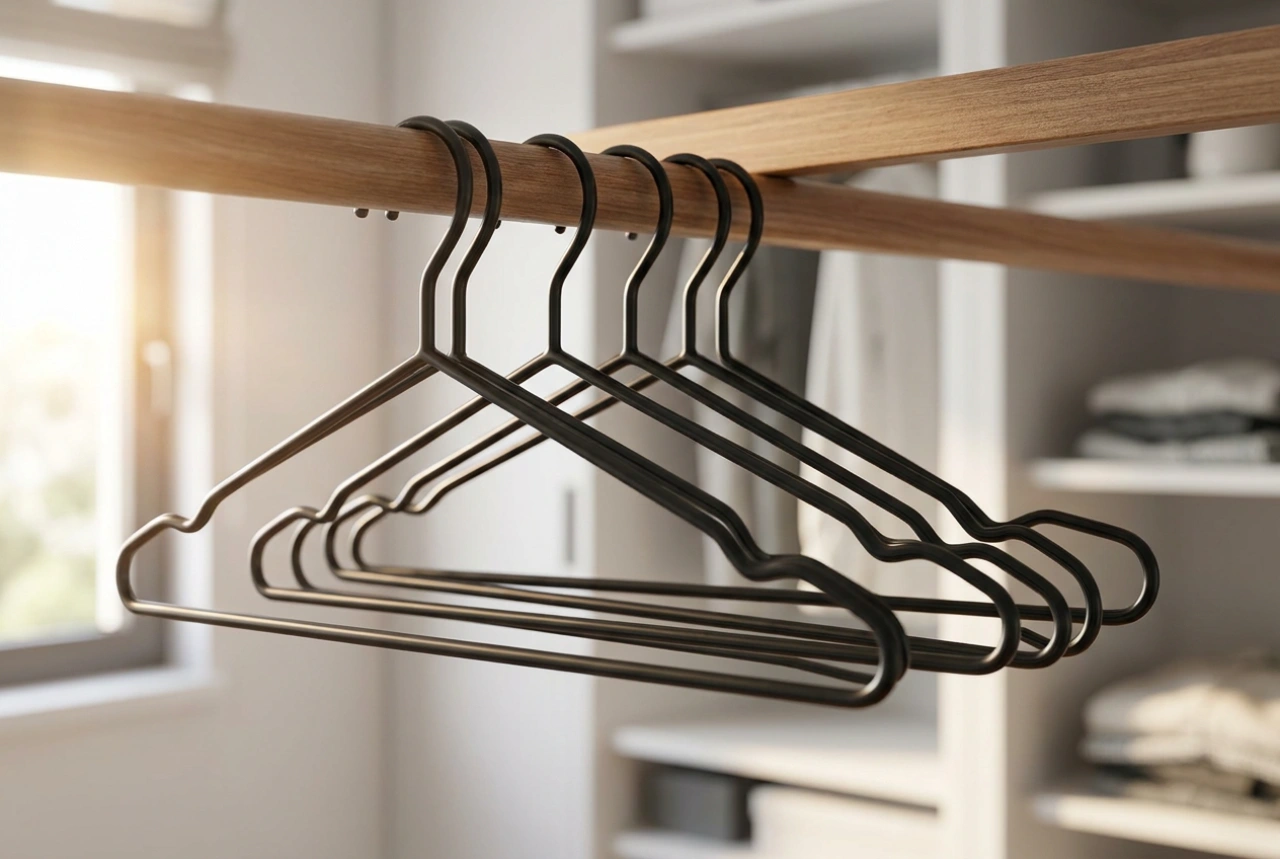
Every garment reacts differently to gravity depending on its structural weave. Knitwear, such as wool, cashmere, and heavy cotton sweaters, features a looped yarn structure. When hung on a hanger, the weight of the garment pulls downwards, concentrating stress on the narrow shoulder points. This causes irreversible stretching and fiber deformation over time. Therefore, knitwear must always be stored flat on shelves or inside drawers to distribute its weight evenly.
Conversely, woven fabrics like linen, denim, and cotton shirts are constructed using interlocking warp and weft threads. These materials possess high tensile strength and resistance to vertical stretching. Hanging these items allows gravity to act beneficially, gently pulling out micro-creases and maintaining the garment’s tailored drape. Understanding this fundamental division of textiles prevents premature wear and preserves the shape of your daily wardrobe.
The Geometry of Drawers: Optimising Friction and Visibility
Traditional horizontal stacking in drawers creates a physical bottleneck. When clothes are piled on top of one another, the weight of the upper layers compresses the lower items, increasing surface-to-surface friction. Extracting a single t-shirt from the bottom of a stack drags adjacent garments with it, disrupting the order and introducing unwanted creases. This compression also traps residual moisture, which can degrade delicate natural fibers.
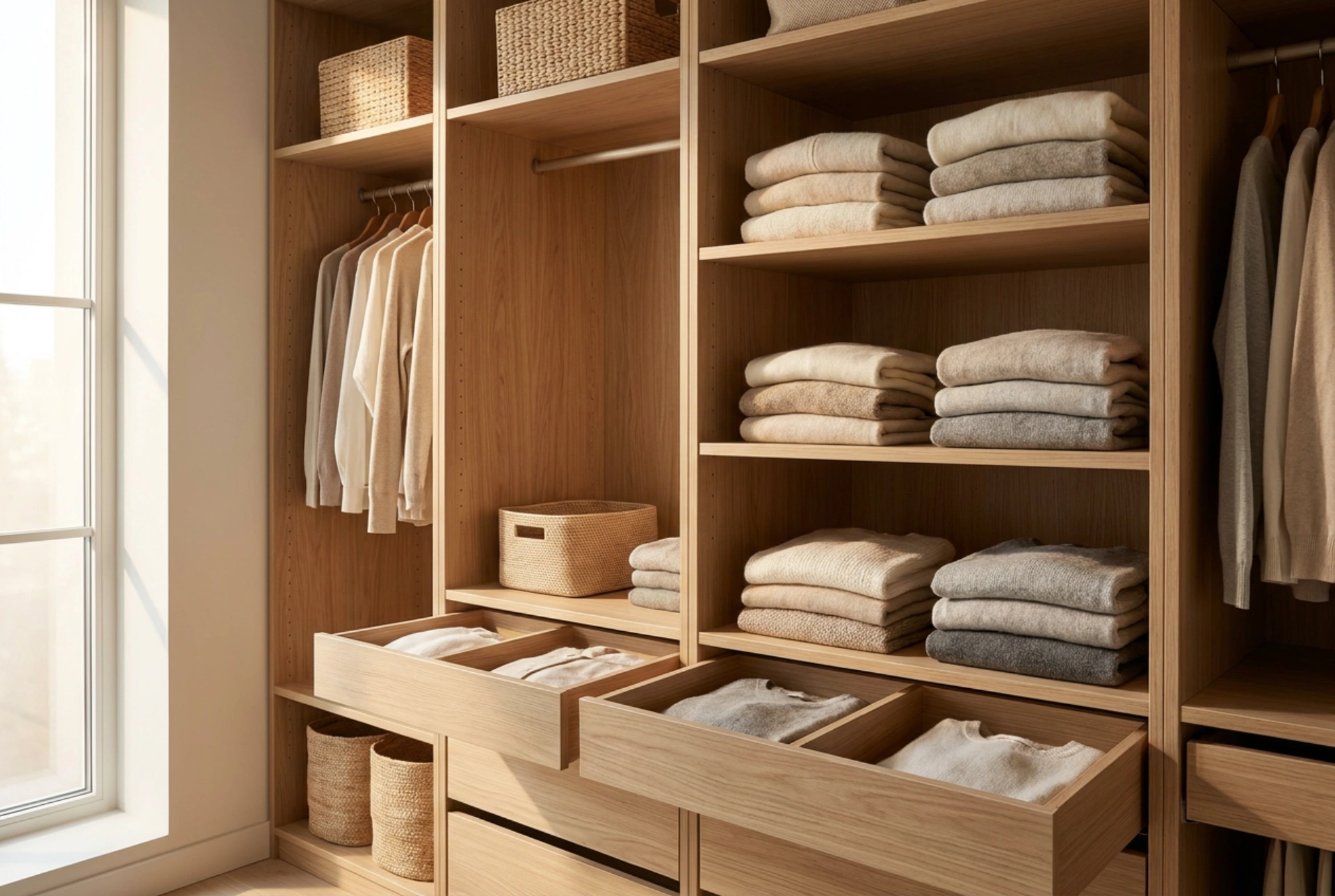
The solution lies in vertical folding, often referred to as the filing method. By folding garments into compact, self-supporting rectangular packets and arranging them front-to-back rather than bottom-to-top, you equalise the pressure within the drawer. This spatial arrangement offers several physical benefits: it minimises friction during retrieval, ensures 100% visibility of all items, and maintains uniform air distribution. To achieve a stable fold, bring the outer edges of the garment inward to form a neat rectangle, then fold it in halves or thirds until it can stand upright on its own edge.
Shelf Dynamics: Airflow and Mass Management
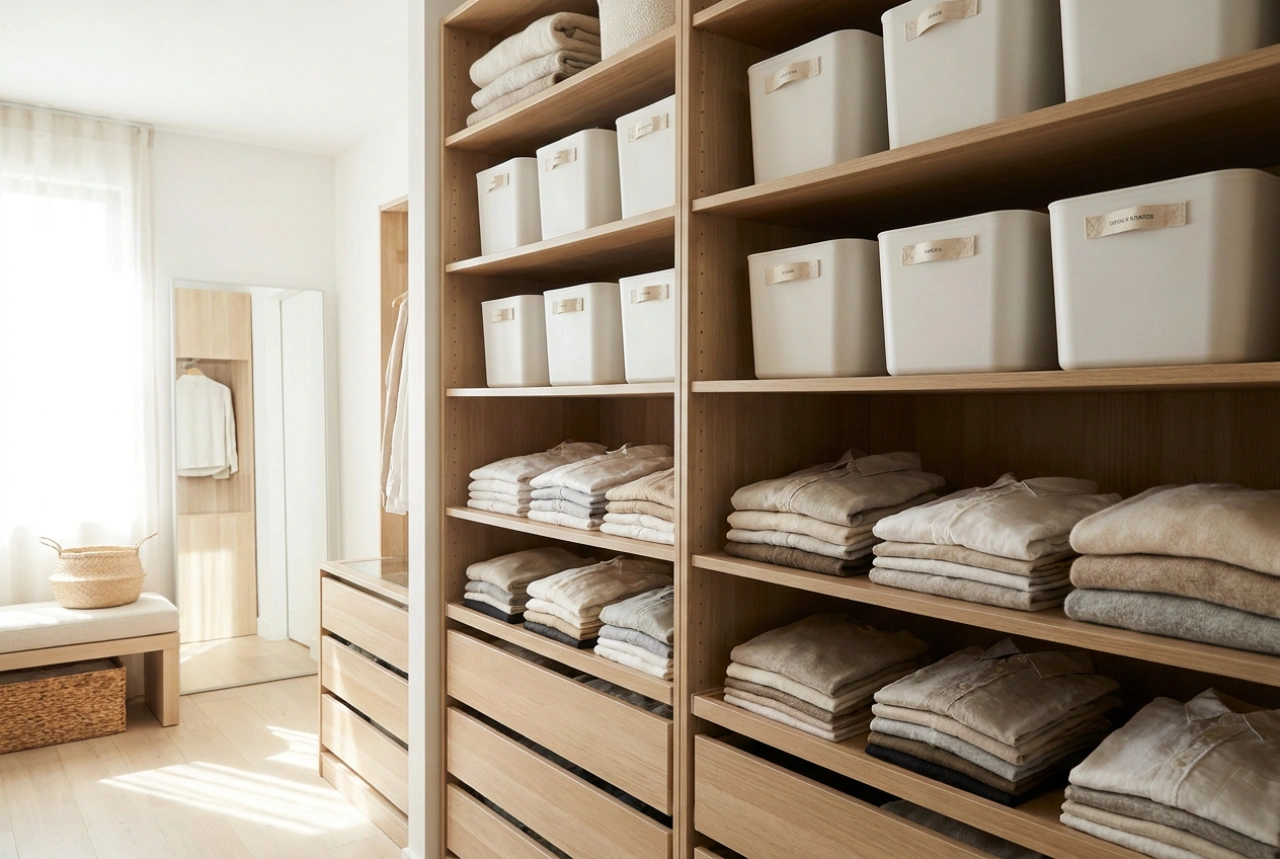
Shelves provide excellent structural support for heavy, bulky garments like denim jeans and thick winter sweaters, but they require careful mass management. Stacking garments too high creates excessive downward force, crushing the fibers at the bottom of the pile. Furthermore, dense stacks restrict airflow. Natural fibers require a microclimate with passive ventilation to prevent the accumulation of ambient humidity, which can lead to musty odours.
To maintain optimal fiber health, limit shelf stacks to a maximum of four or five items. Group garments by material weight, placing heavier denim at the base and lighter cottons or linens on top. Leave at least five centimetres of clearance between the top of the stack and the shelf above to facilitate air circulation. Using wooden shelves can also help regulate moisture, as natural wood absorbs and releases microscopic levels of humidity far better than synthetic laminates.
The Ergonomic Rotation: Zoning Your Wardrobe
An efficient wardrobe system respects the human body's natural range of motion. The space between your knees and your shoulders represents the primary zone of accessibility, requiring the least physical effort to reach. This zone should be dedicated to daily essentials, such as undergarments, everyday t-shirts, and activewear. Deep, low-level drawers are ideal for heavier items like trousers and knitwear, while high-overhead shelves should be reserved for seasonal storage and lightweight, infrequently used items.
- Active Zone (Chest to Waist): Everyday shirts, trousers, and frequently worn knitwear.
- Low Zone (Below Waist): Heavy denim, shoes, and storage boxes for seasonal accessories.
- High Zone (Above Shoulders): Out-of-season garments, spare linens, and lightweight travel gear.
By aligning your storage methods with the physical properties of your clothes and the ergonomics of your body, you create a self-sustaining system that preserves your clothing and streamlines your daily routine.