

Adjusting drawer dividers to accommodate small, loose items requires a basic understanding of mechanical stability, friction, and spatial planning. By customising your drawer configuration systematically, you can permanently eliminate the shifting and clumping of items that occurs during daily use.
The Physics of Drawer Disarray: Inertia and Kinetic Friction
Every time a drawer is pulled open or pushed shut, its contents are subjected to linear acceleration and deceleration. According to Newton's first law of motion, objects inside the drawer will resist changes to their state of motion. When the drawer suddenly stops, small items continue moving forward until they collide with the drawer wall or other objects. This kinetic energy is what causes organised spaces to rapidly descend into chaos.
To counteract this physical force, you must manipulate two key variables: friction and space. Increasing the coefficient of friction on the drawer floor prevents items from sliding easily. This is best achieved by installing a high-friction, non-adhesive elastomeric liner. Once the liner is in place, creating snug, customised compartments with adjustable dividers restricts the distance an item can travel, effectively absorbing the kinetic energy before the item can gain significant momentum.
Step-by-Step Spatial Calibration and Measurement
Before installing any adjustable organiser, precise physical measurements are essential. Wood and composite drawer materials can expand or contract slightly depending on seasonal relative humidity, so measurements must be highly accurate.
- Internal Width and Depth: Measure the internal dimensions of the drawer box at both the front and the back, as some drawers are slightly out of square. Use the smallest measurement.
- Vertical Clearance: Measure the height from the drawer floor to the lowest point of the cabinet frame above the drawer. Leave at least a 5mm clearance gap to ensure the organiser or dividers do not snag when the drawer is operated.
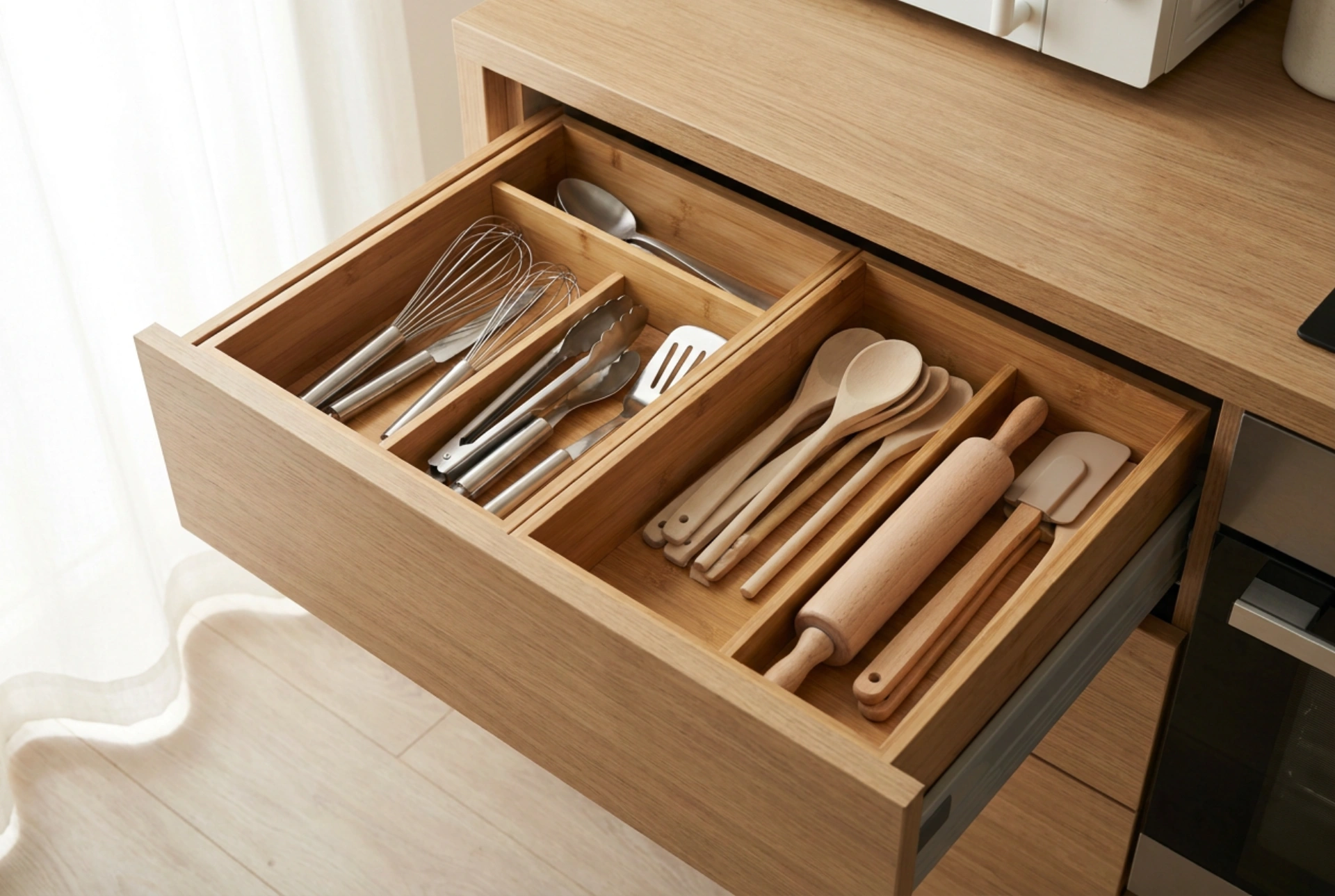
- Dividing the Grid: Group the items you intend to store by their physical dimensions and frequency of use. Avoid designing generic, equal-sized square compartments. Instead, map out a custom grid that mirrors the shapes of your tools.
Configuring Tension-Based and Interlocking Dividers
Adjustable drawer organisers typically use either spring-loaded tension bars or interlocking slot-and-groove grids. Each type requires a specific installation technique to ensure long-term structural integrity.
Tension-Loaded Dividers
Spring-loaded dividers exert lateral outward pressure against the front and back walls of the drawer. While highly stable, excessive tension can cause thin drawer bottoms to bow or separate from the side panels over time. To prevent this mechanical failure, ensure the rubber or foam pads on the ends of the dividers are clean and free of dust. Position the dividers so they press against the structural frame of the drawer rather than thin, unsupported panels. When releasing the spring mechanism, guide the divider slowly into place to avoid sudden impact stress on the wood joints.
Interlocking Grid Systems
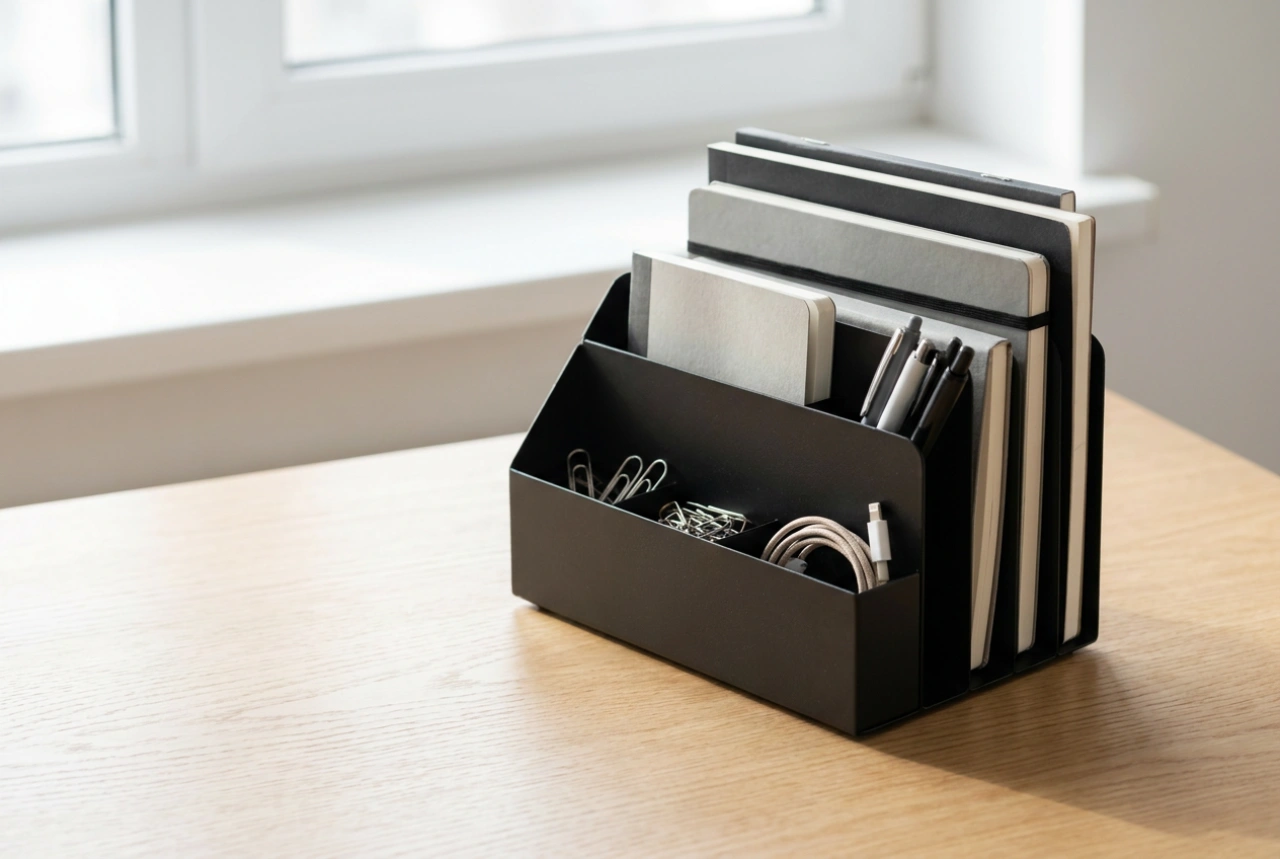
For highly customisable layouts, interlocking plastic or wooden slats allow you to build precise sub-compartments. When assembling these grids, always build from the perimeter inwards. This provides structural reinforcement to the inner slats. If storing micro-items like screws, paperclips, or small cosmetic bottles, ensure the interlocking joints fit flush with the drawer liner to prevent flat items from sliding underneath the dividers.
Material Compatibility and Environmental Maintenance
The environmental conditions of the room dictate the ideal material for your adjustable dividers. In high-humidity zones like kitchens and bathrooms, wooden dividers will absorb moisture from the air, causing them to expand. If fitted too tightly during a dry season, this expansion can warp the drawer tracks or split the drawer joints in summer. To prevent this, apply a thin coat of mineral oil or beeswax to wooden dividers to seal the grain, or opt for inert materials like acrylic or recycled polymers that are entirely unaffected by humidity changes.
To maintain your organised system, inspect the tension of the dividers and clean the non-slip liner bi-annually. Over time, dust and microscopic debris settle on high-friction surfaces, reducing their coefficient of friction. Wiping down the liner and divider pads with a damp microfibre cloth and a mild surfactant will restore their grip, keeping your customised layout completely secure.