

Balancing storage between a vertical wardrobe and a horizontal dresser requires a systematic approach based on physical ergonomics and material science. Strategically assigning items to each unit based on access frequency, weight distribution, and fabric characteristics optimizes spatial efficiency while preserving the structural integrity of both your belongings and your furniture.
The Geometry of Space: Vertical vs. Horizontal Storage
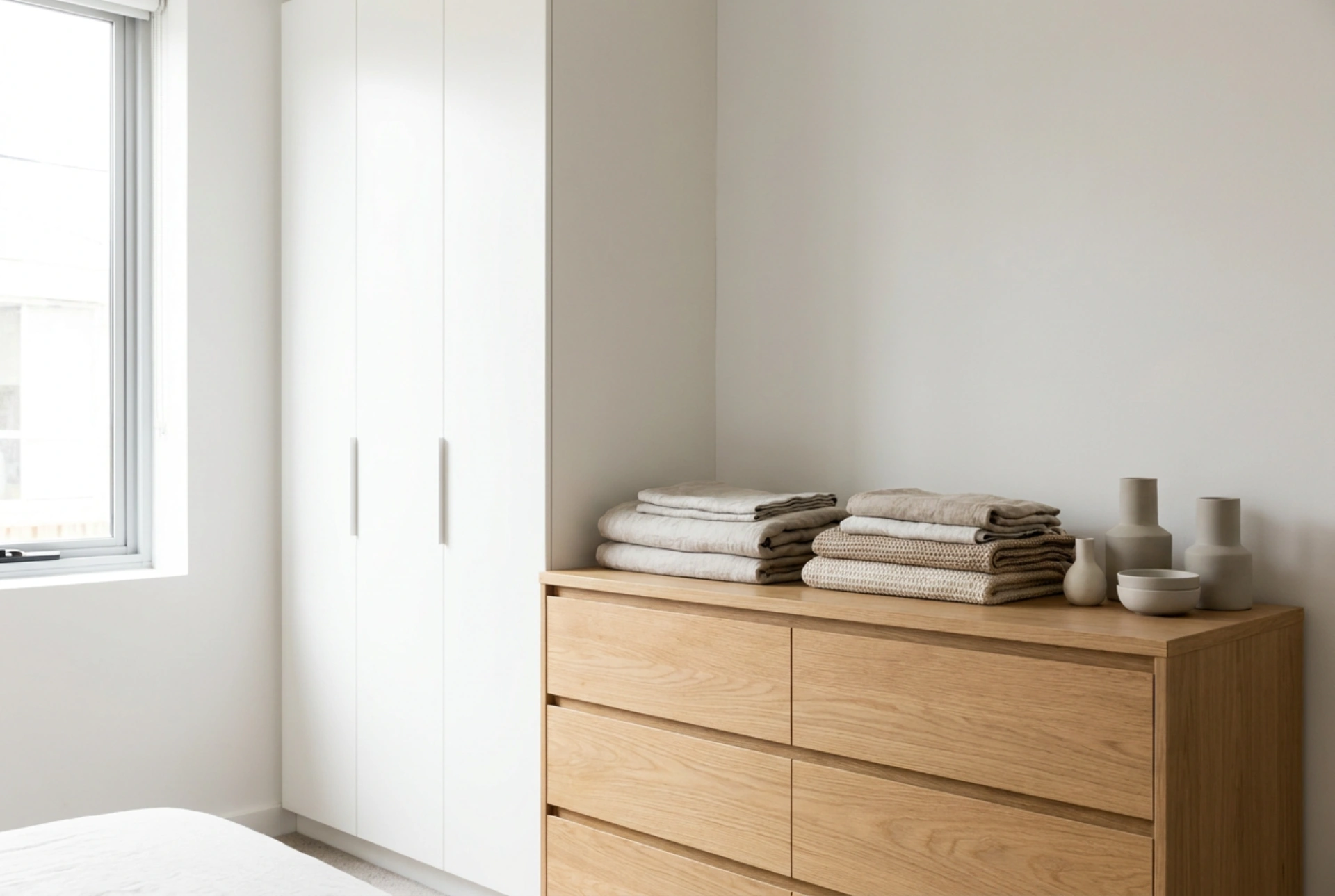
To divide storage effectively, you must first understand the structural differences between a wardrobe and a dresser. A wardrobe utilizes vertical volume, making it highly efficient for hanging items that require gravity to maintain their shape. Suspension prevents the bending of stiff fibers and minimizes structural creasing in woven fabrics. On the other hand, a dresser utilizes horizontal, segmented drawers. Drawers are designed for containment and compression, making them ideal for items that can be folded without losing their physical integrity. By matching the physical properties of your items to the structural orientation of the furniture, you prevent fabric fatigue and maximize volume density.
Mapping Ergonomic Zones for Daily Access
Organizing your living room storage requires mapping items to specific physical accessibility zones. The primary zone—ranging from hip to shoulder height—is the most accessible and should contain items used daily. The dresser naturally fits into this primary and secondary zone, allowing you to pull drawers open and view contents from above without bending excessively. The wardrobe spans from the floor to the ceiling, encompassing all three accessibility zones. Use the middle section of the wardrobe for high-frequency hanging items, while reserving the top shelves (tertiary zone) and bottom floor space (low secondary zone) for heavy, seasonal, or rarely used items. This distribution reduces physical strain and streamlines daily retrieval routines.
Optimizing the Wardrobe for Fabric Integrity
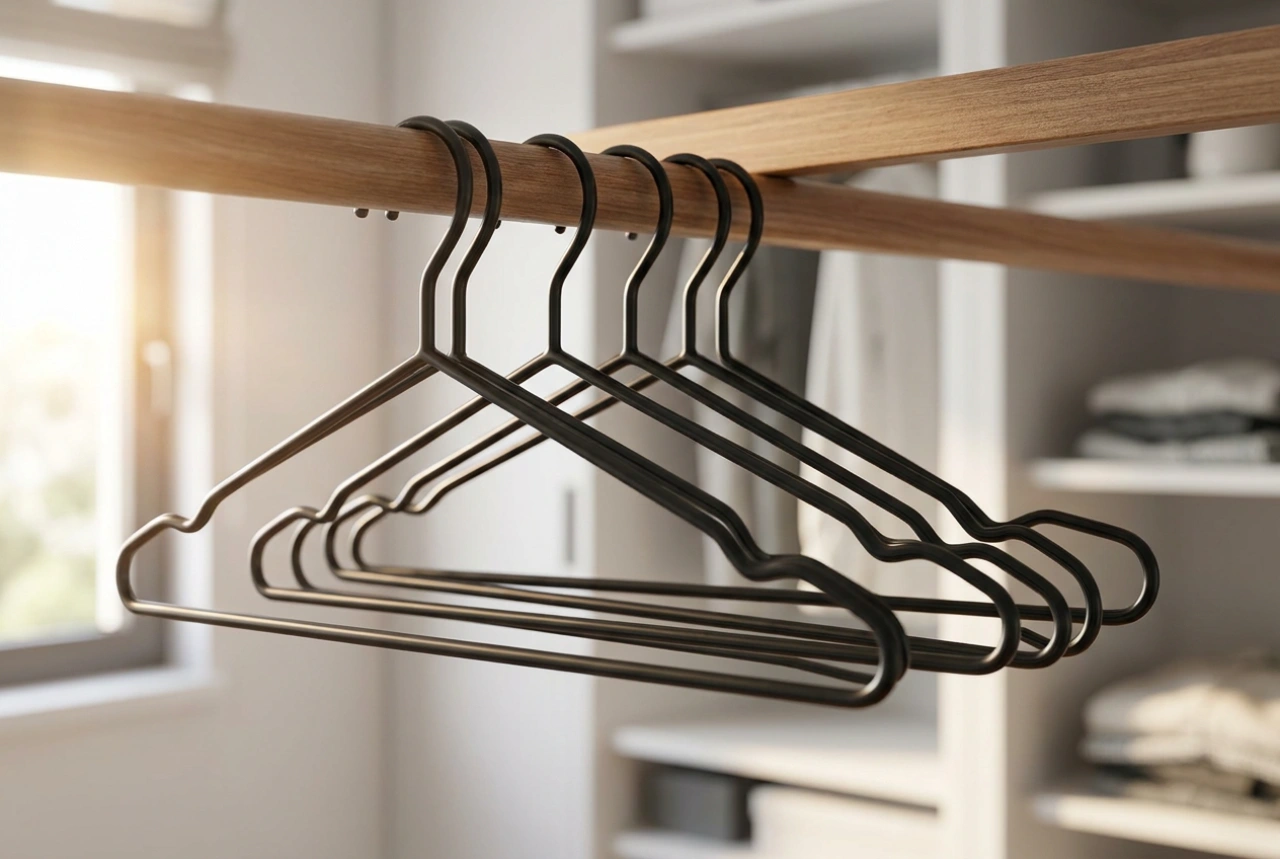
The wardrobe should be reserved for items that suffer from fiber distortion when subjected to prolonged folding and compression. Woven textiles, such as linen, wool, and heavy cotton, have structural memory; folding them creates sharp creases that weaken the yarns over time. Hanging these garments allows gravity to naturally pull the fibers straight, extending their lifespan. When organizing the wardrobe, group items by length to free up floor space underneath for modular storage boxes. Crucially, maintain a gap of approximately two centimeters between hangers. This spacing prevents friction when retrieving items and ensures adequate air micro-circulation, which is vital for preventing moisture accumulation and mold growth in closed environments.
The Physics of Drawer Storage: Compaction and Visibility
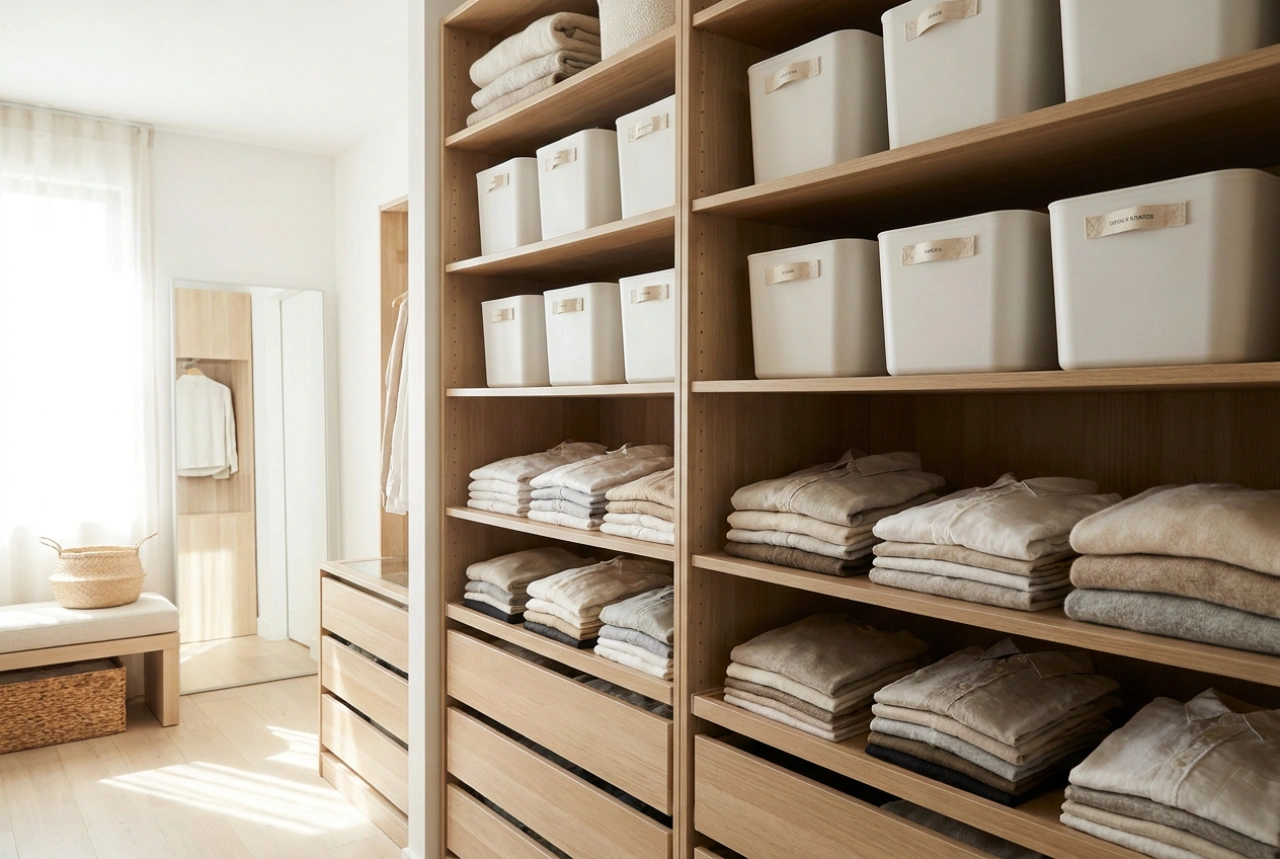
Drawers are highly efficient for storing elastic, knitted, or small items that do not require suspension. However, traditional vertical stacking—where items are piled on top of one another—creates a structural disadvantage. The weight of the upper layers compresses the bottom items, causing deep creases and making them difficult to extract without disrupting the entire stack. To solve this, utilize the filing method, where folded items are placed vertically, side-by-side, like files in a cabinet. This horizontal arrangement distributes gravity evenly across all items, prevents fabric compaction, and provides complete visual access immediately upon opening the drawer. Use shallow drawers for smaller accessories and deeper bottom drawers for bulky knits or household linens.
Structural Load and Microclimate Management
The physical placement of items affects the longevity of your furniture. High-density items, such as heavy winter textiles, photo albums, or reserve linens, should always be placed at the base of the wardrobe or in the lowest drawers of the dresser. Placing heavy loads on upper shelves or top drawers can cause the wood or composite materials to bow over time, compromising the alignment of doors and drawer runners. Furthermore, ensure your furniture is positioned to allow proper thermal dynamics. Keep a small gap of one to two centimeters between the backs of the units and the living room walls. This gap prevents thermal bridging—a phenomenon where temperature differentials cause moisture to condense on cold walls behind large furniture, risking mold development.