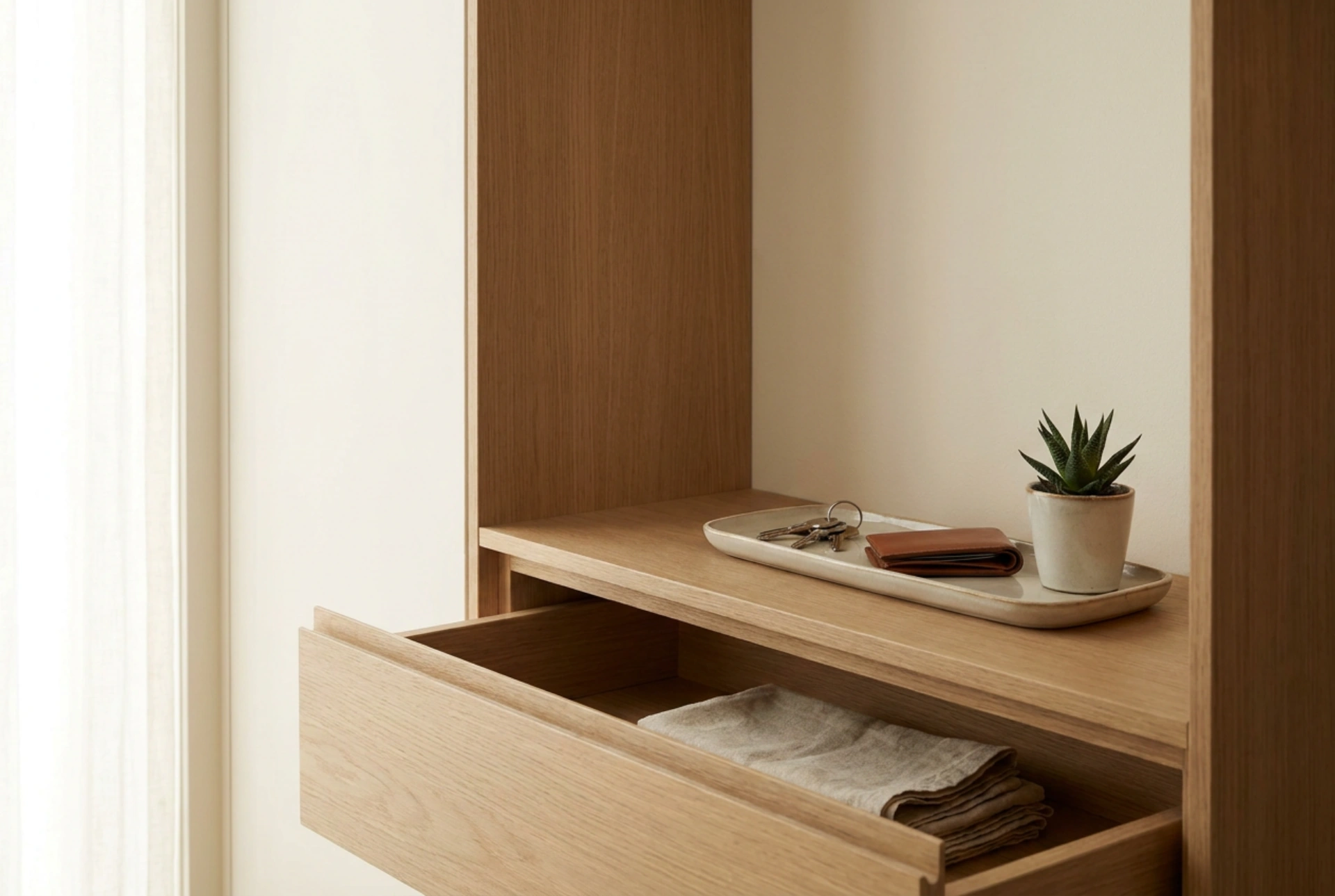


Hallway wardrobes serve as the primary transition zone of the home, where high daily traffic demands a highly structured approach to storing both large outerwear and small, easily misplaced essentials. Designing an efficient modern wardrobe requires a deep understanding of spatial ergonomics, material properties, and mechanical accessibility to prevent clutter from accumulating on visible surfaces.
The Ergonomics of the Transition Zone
An effective wardrobe design divides vertical space into distinct functional zones based on human reach envelopes. The most critical area for daily essentials—such as keys, wallets, and mail—lies between 70 cm and 140 cm from the floor. This is known as the high-frequency interaction zone, where items can be deposited or retrieved without bending or stretching. Designing within this zone minimises physical effort and establishes intuitive household habits.
Integrating a recessed niche or an open shelf at this height creates a natural drop zone. To optimise this space, the depth should be kept between 30 cm and 40 cm. Any deeper, and small items risk being pushed into dark, inaccessible corners, falling outside the natural line of sight. Placing shallow drawers directly below this open niche allows for rapid sorting of items while keeping them concealed from direct view, maintaining a clean architectural aesthetic.
Material Science in High-Traffic Storage
The materials chosen for hallway storage must withstand constant physical contact and resist wear from hard, sharp objects like metallic keys, coins, and zippers. Standard melamine-faced chipboard (MFC) can easily scratch under repeated impact. Instead, high-pressure laminates (HPL) or lacquered MDF with micro-textured matte finishes are preferred. These surfaces scatter light, making micro-scratches and fingerprints far less visible than on high-gloss panels.
For the interiors of small drawers and organising trays, tactile materials play a crucial role in noise reduction and surface preservation. Lining drawers with high-density wool felt or natural cork serves a dual purpose. It creates high surface friction, preventing delicate items like sunglasses from sliding around when the drawer is operated, and acts as an acoustic dampener, absorbing the sharp metallic vibrations of keys being dropped into the compartment. Furthermore, natural cork contains suberin, a natural substance that repels moisture and prevents rot, protecting the wood structure from damp keys or umbrellas.
Mechanical Precision and Drawer Design
The functionality of small-item storage relies heavily on the quality of the moving parts. Heavy-duty, full-extension runners with integrated soft-close mechanisms are essential for shallow drawers. Full-extension hardware ensures that the entire depth of the drawer is visible and accessible, preventing the rear portion of the drawer from becoming a dead space. When calculating drawer load capacity, even small-item drawers should be rated for at least 15 kg to withstand the downward pressure of a user leaning on the open drawer.
- Dowel and groove joints: Ensure structural rigidity of internal dividers under repeated horizontal forces.
- Push-to-open mechanisms: Maintain a minimalist aesthetic by eliminating handles, though they require precise spring tension adjustment to prevent accidental opening.
- Adjustable compartment dividers: Removable wooden or acrylic interlocking grids allow the internal layout to be adapted as seasonal storage needs change, preventing small items from shifting.
Optimising Visibility and Vertical Dividers
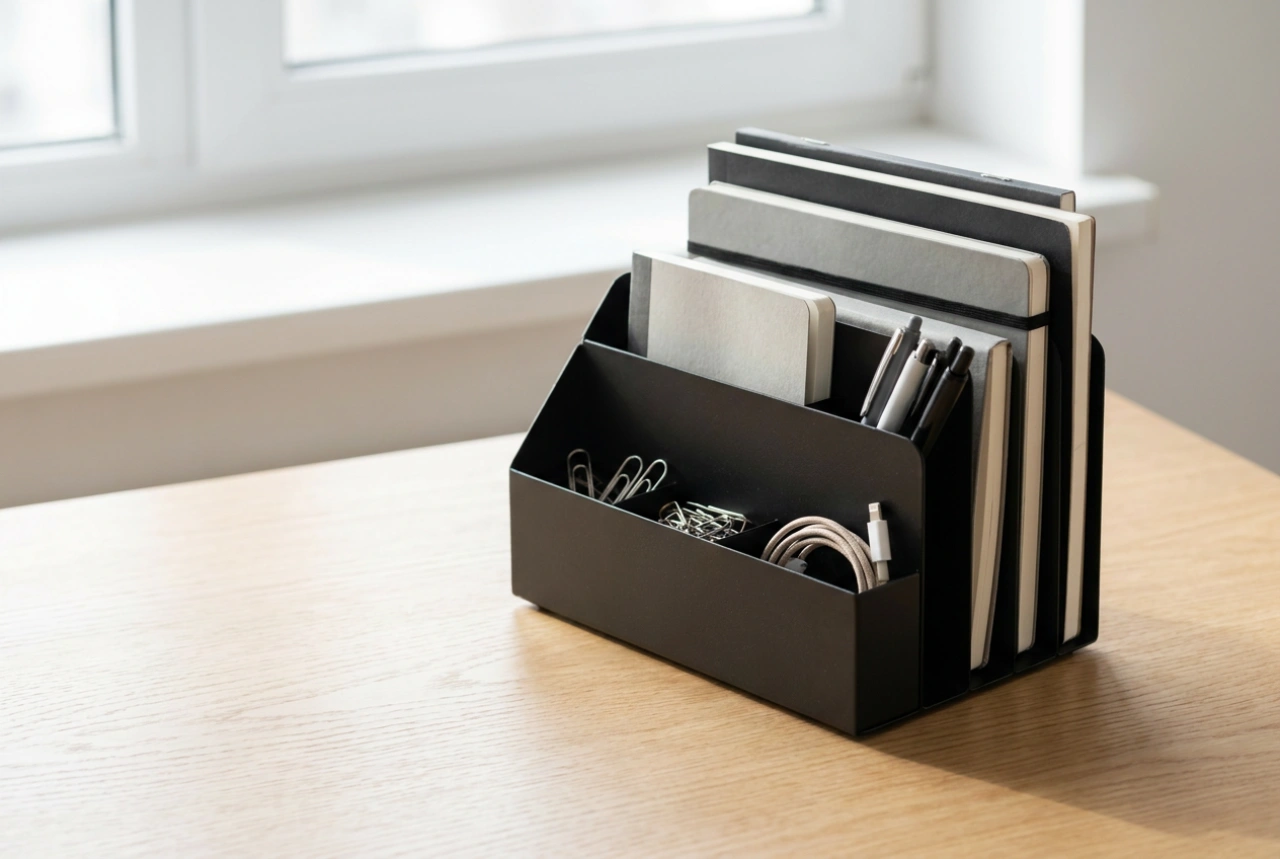
Small items are easily lost in deep shadows. Incorporating low-voltage LED strip lighting into the underside of upper shelves or inside deep drawers dramatically improves usability. When designing these systems, specify routed channels with diffused covers to eliminate glare and distribute light evenly across the storage trays. This physical integration prevents the light source from mechanical damage during daily use. Additionally, implementing vertical dividers within upper compartments allows documents and mail to be sorted upright, utilising gravity to keep papers organised and preventing the horizontal accumulation of paper clutter.