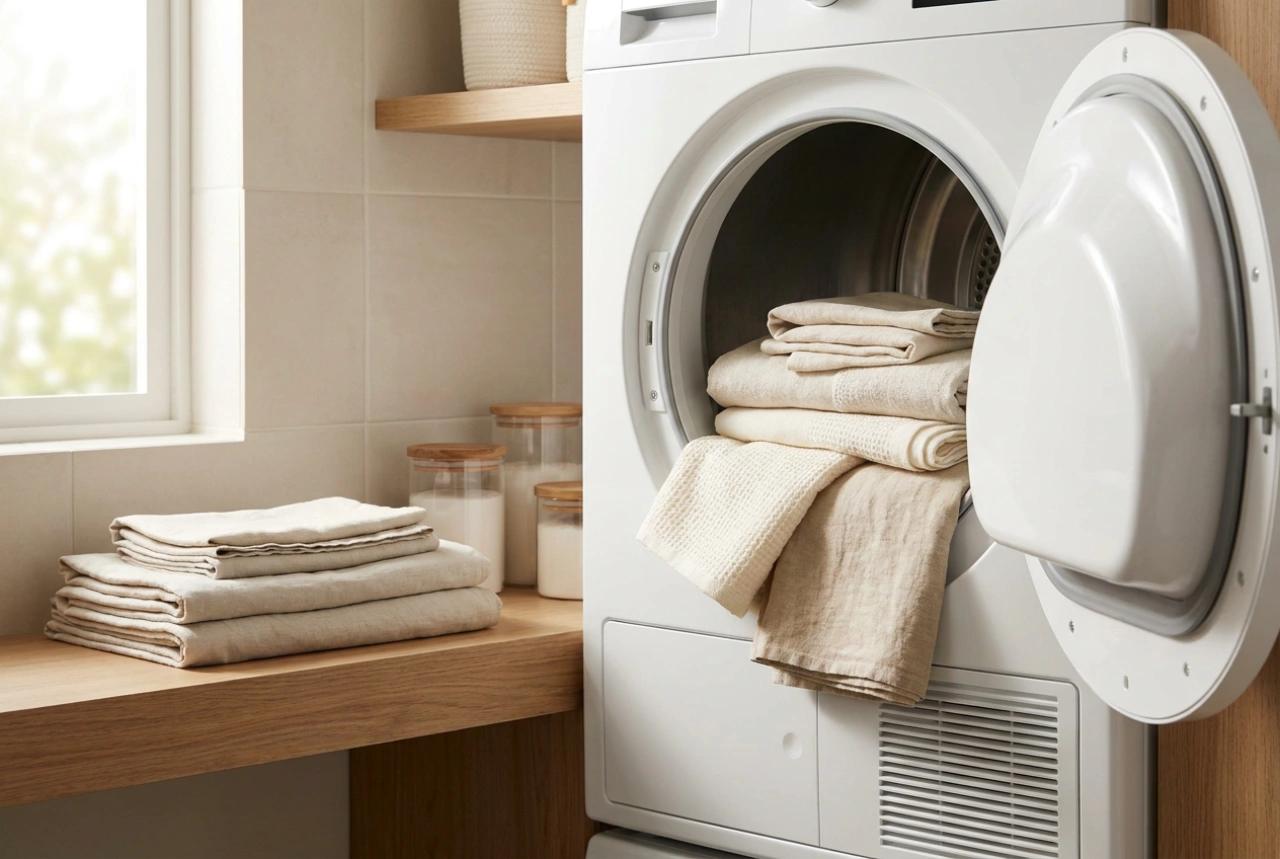


Damp, enclosed, and frequently exposed to organic soil, washing machines present the ideal microclimate for the proliferation of bacteria and mould. Over time, a combination of undissolved detergents, fabric softeners, and mineral deposits creates a persistent biofilm that emits musty odours and compromises laundry hygiene.
Understanding the Anatomy of Drum Odour
The primary culprit behind a smelly washing machine is biofilm—a structured community of microorganisms embedded in a self-produced slimy matrix. Fabric softeners, which are typically formulated with tallow-derived cationic surfactants, coat the internal surfaces of the outer tub. This waxy layer acts as a nutrient source for bacteria like Pseudomonas and fungi. When you wash consistently at low temperatures (30°C or 40°C), these microorganisms survive and multiply. Furthermore, dissolved calcium and magnesium ions in hard water precipitate as limescale, creating a rough, porous surface. This mineral scaffolding anchors biofilms, making them highly resistant to simple rinsing.
The Two-Step Chemical Treatment: Dissolution and Oxidation
To completely eradicate these stubborn deposits, a dual-action chemical approach is highly effective. However, these steps must be executed sequentially to avoid neutralising the active agents.
Phase 1: Acidic Limescale Dissolution
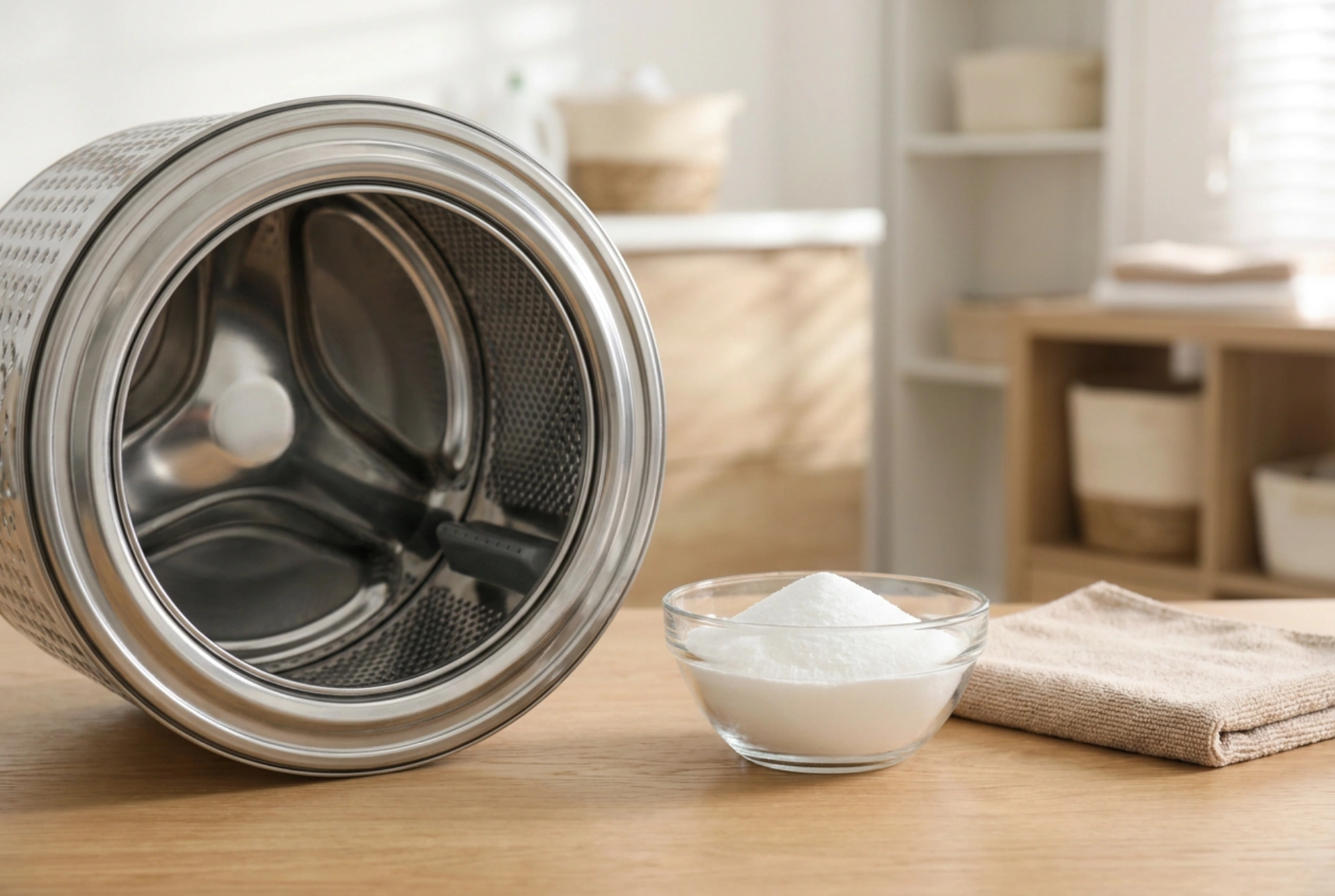
Citric acid is an excellent biodegradable chelating agent that reacts with calcium carbonate (limescale) to form soluble calcium citrate. This process strips away the structural home of the biofilm. Pour 150 grams of pure citric acid powder directly into the empty stainless steel drum. Select a service cycle or a standard cotton cycle at 90°C or 95°C. High temperatures accelerate the chemical kinetics of the reaction, ensuring rapid dissolution of mineral crusts on the heating element and behind the drum.
Phase 2: Alkaline Oxidation
Once the mineral scale is dissolved, the remaining organic residues and fungal spores must be neutralised via oxidation. Sodium percarbonate (commonly sold as oxygen bleach) is ideal for this purpose. When dissolved in water above 60°C, it decomposes into sodium carbonate and hydrogen peroxide. The hydrogen peroxide releases active oxygen, which penetrates cell walls, denatures bacterial proteins, and breaks down the lipid chains of organic grime. Add 100 grams of sodium percarbonate to the detergent drawer and run another hot cycle (minimum 60°C) to sanitise the entire system.
Manual Intervention: Gaskets, Drawers, and Filters
Chemical flushes cannot reach areas where water does not circulate under pressure. Manual cleaning of these stagnant zones is mandatory.
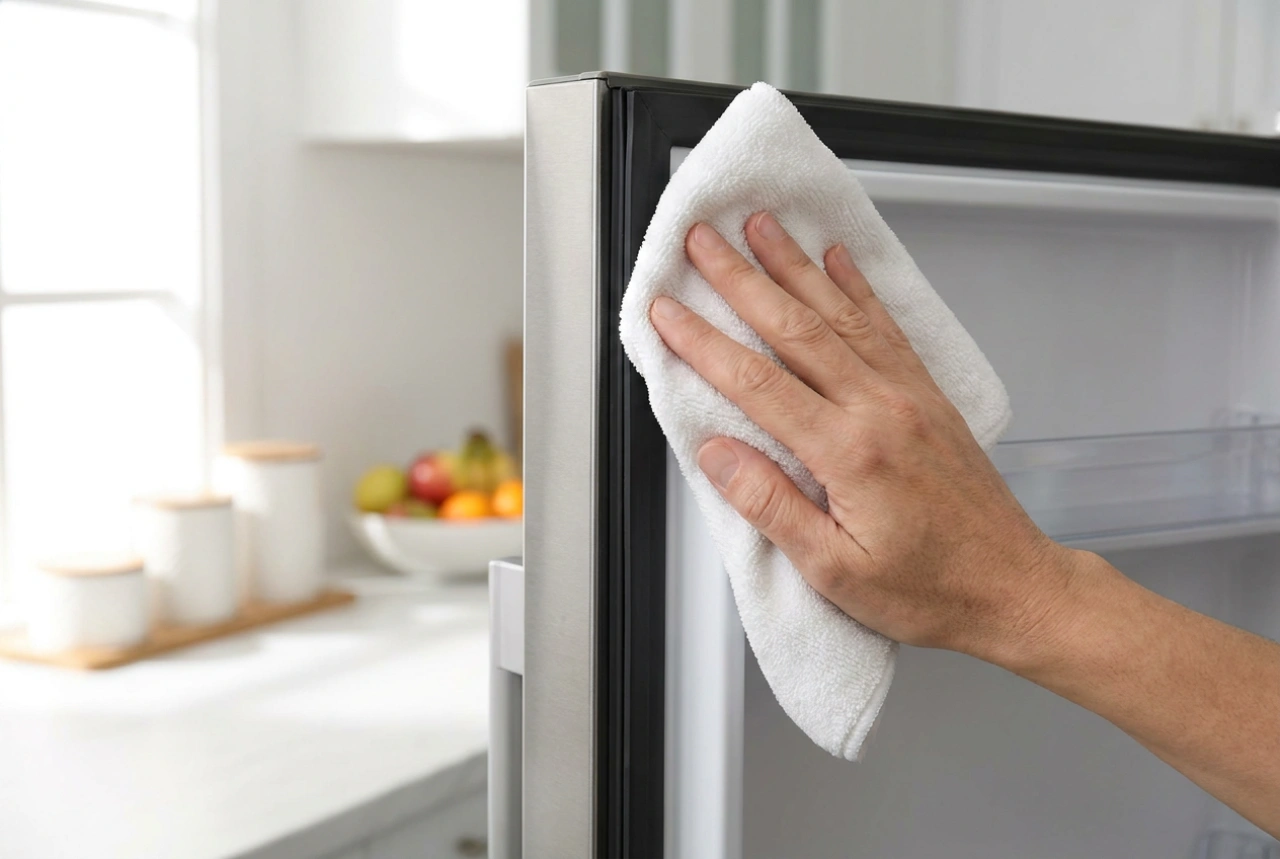
- The Door Gasket: The rubber bellows seal contains deep folds designed to flex during spinning. Water and lint pool here, creating a dark, anaerobic environment. Pull the folds back and wipe them thoroughly with a microfibre cloth dampened in a warm solution of sodium carbonate. Avoid using harsh abrasive pads which can score the rubber and create microscopic crevices for future mould growth.
- The Detergent Drawer: Remove the drawer entirely. Soap scum often builds up in the siphon chamber of the fabric softener compartment. Soak the drawer in warm water with a splash of citric acid to loosen the deposits, then scrub the housing ceiling with a small, stiff brush to clear the water inlet nozzles.
- The Drain Filter: Located behind the bottom flap of the machine, this filter traps loose items, hair, and heavy sediment. Place a shallow tray and towel on the floor, open the emergency drain tube to release trapped water, and unscrew the filter cap. Rinse away the accumulated organic sludge under running water to prevent the pump from recirculating stagnant water.
Preventative Habits for Long-Term Freshness
To prevent the re-establishment of biofilms, alter the internal environment of the machine. Always leave the door and the detergent drawer slightly ajar after every wash. This simple action drops the relative humidity inside the drum below the 70% threshold required for mould spore germination. Additionally, perform at least one high-temperature wash (60°C or higher) every two weeks using a powder detergent, as powders contain oxygen-based bleaching agents that liquid detergents lack, helping to suppress bacterial colonisation continuously.