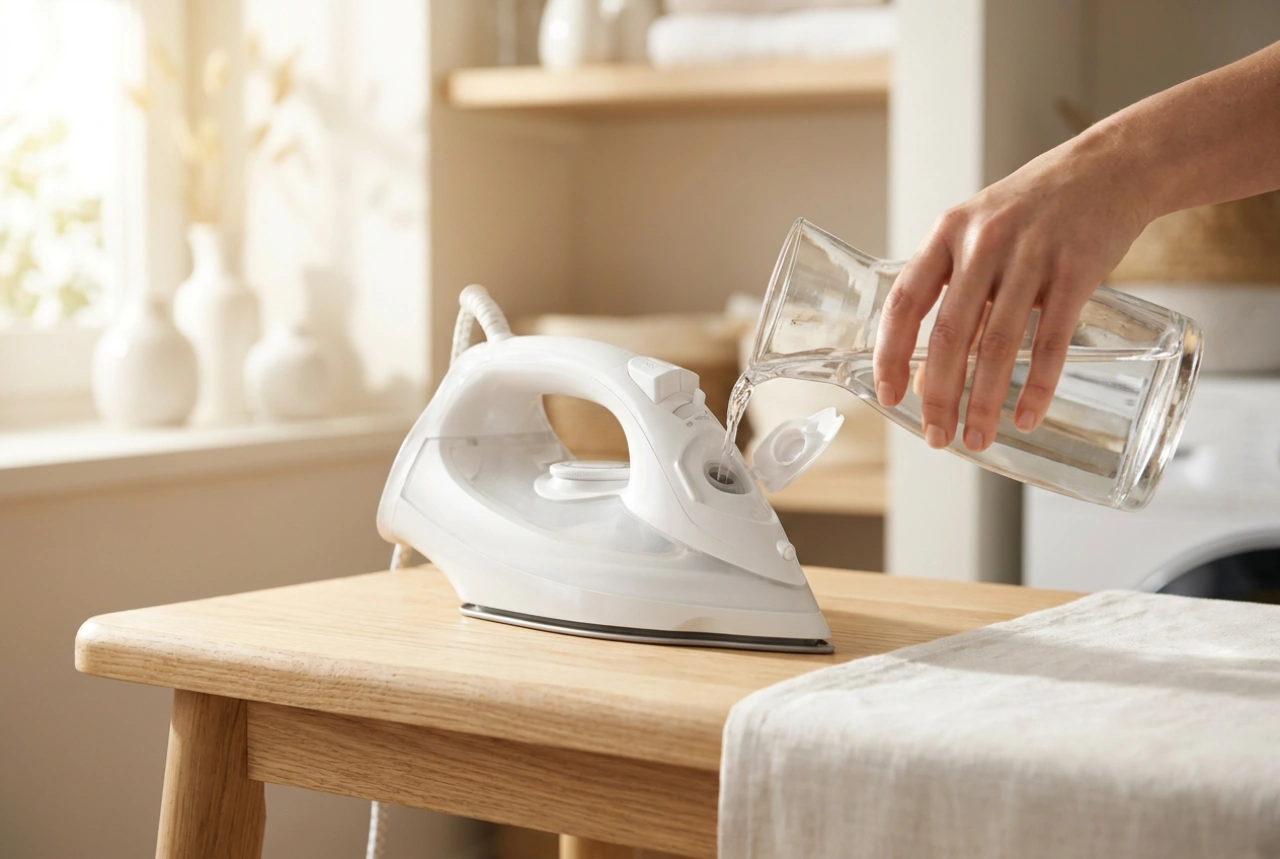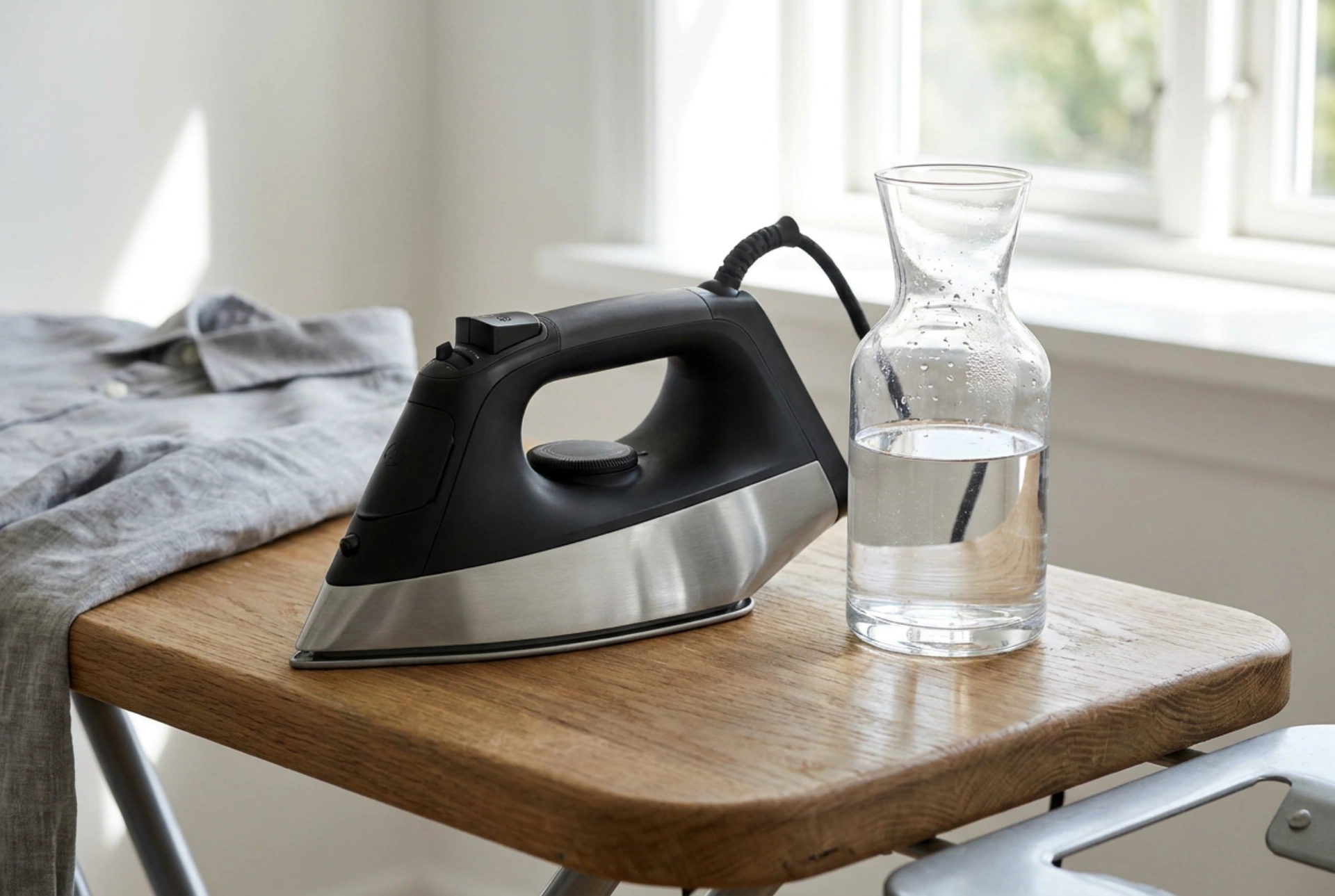


Choosing the correct fluid for your steam iron is essential to prevent internal limescale build-up while avoiding chemical corrosion of the heating element.
Distilled versus Demineralised Water: The Chemical Differences
To understand what goes into your appliance, it is important to distinguish between distilled and demineralised water. While they may seem identical, their manufacturing processes alter their chemical properties. Distilled water is produced through thermal distillation. Water is boiled into steam and then condensed back into a liquid state in a separate container. This process removes almost all impurities, including minerals, bacteria, organic matter, and gases. The result is highly purified water with almost zero electrical conductivity.
Demineralised water, on the other hand, is produced through physical filtration and chemical processes such as ion exchange. Water passes through resin beds that swap mineral ions—specifically positively charged cations like calcium, magnesium, and iron, and negatively charged anions like chlorides and sulphates—with hydrogen and hydroxyl ions. While demineralised water is virtually free of minerals, it may still contain trace amounts of non-ionic organic compounds and microscopic biological elements that do not carry an electrical charge.
The Risk of Limescale and Mineral Deposits
Using standard tap water in a steam iron introduces dissolved minerals directly into the appliance. Tap water contains calcium hydrogen carbonate, which is soluble. However, when heated inside the iron's steam chamber, a thermal decomposition reaction occurs. This converts the soluble hydrogen carbonate into insoluble calcium carbonate, commonly known as limescale. This solid precipitate settles on the internal walls, blocks the microscopic steam vents, and coats the heating element, reducing thermal efficiency and leading to uneven heat distribution.
The Surprising Danger of Pure Distilled Water
It seems logical that using 100% distilled or demineralised water would solve all maintenance issues. However, household chemistry introduces a counter-intuitive problem: aggressive water. Highly purified water lacks dissolved minerals and is chemically unstable. In an attempt to reach chemical equilibrium, this hungry water actively leaches ions from its surroundings, which in this case are the metal alloys of the iron's internal steam chamber, such as aluminium, copper, or brass.
Over time, this constant extraction of metal ions causes micro-corrosion and pitting. When you turn on the steam function, these corroded metal particles detach, causing rust spots on fabrics and permanently damaging the internal seals and heating elements of the appliance.
The Optimal Water Formula for Steam Irons
To balance the risks of limescale scaling and metal corrosion, appliance manufacturers and materials scientists recommend a specific compromise. Unless the manufacturer explicitly states otherwise, the ideal mixture for a steam iron is a 50:50 ratio of standard tap water and distilled or demineralised water.
- Why this works: The tap water introduces enough mineral ions to neutralise the aggressive, corrosive nature of the purified water.
- Preventative balance: Concurrently, the distilled portion dilutes the overall calcium and magnesium concentration, ensuring that any scale formation is negligible and easily managed by the iron's self-cleaning cycle.
- What to avoid: Never use scented iron waters, battery water, or water from condensation tumble dryers. These liquids contain organic compounds, synthetic fragrances, or fabric fibres that burn under high heat, leaving brown, sticky deposits that ruin garments.