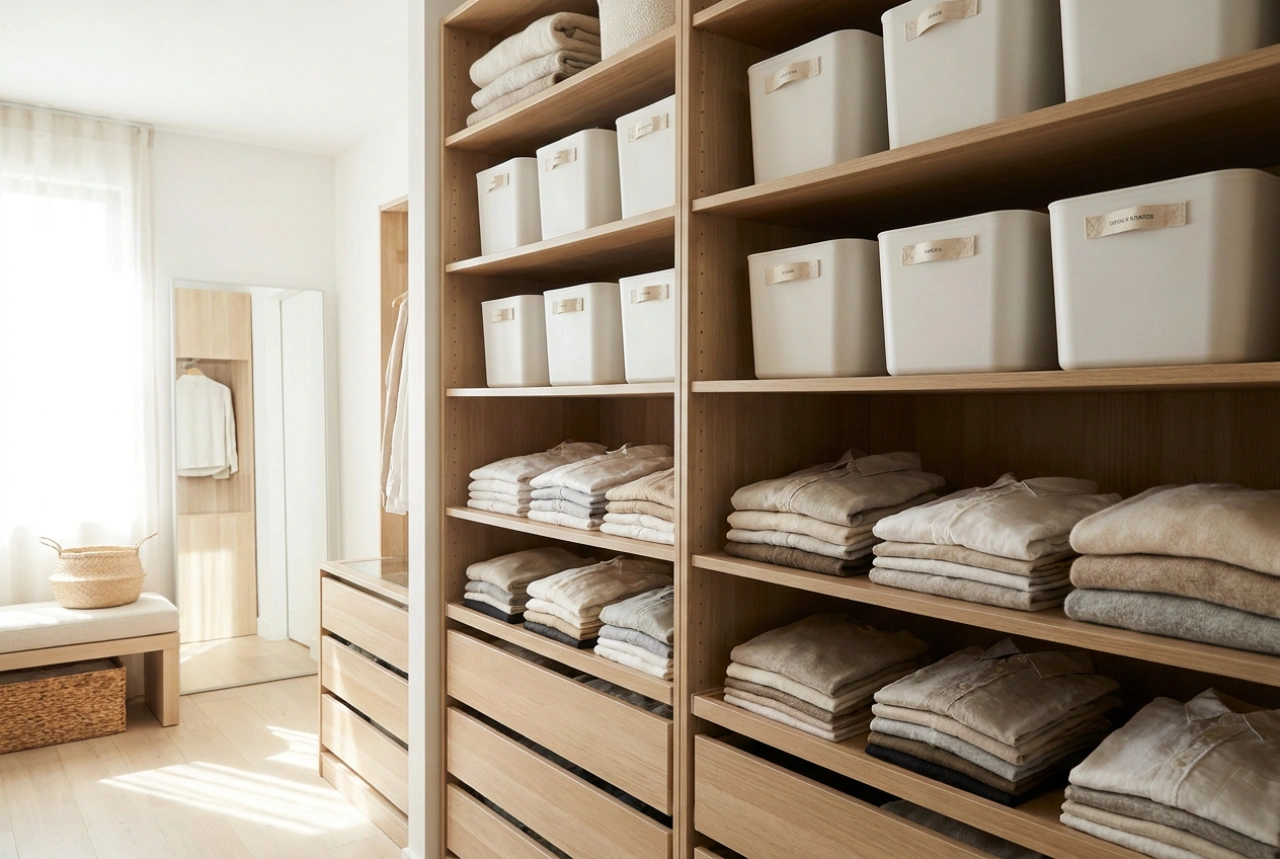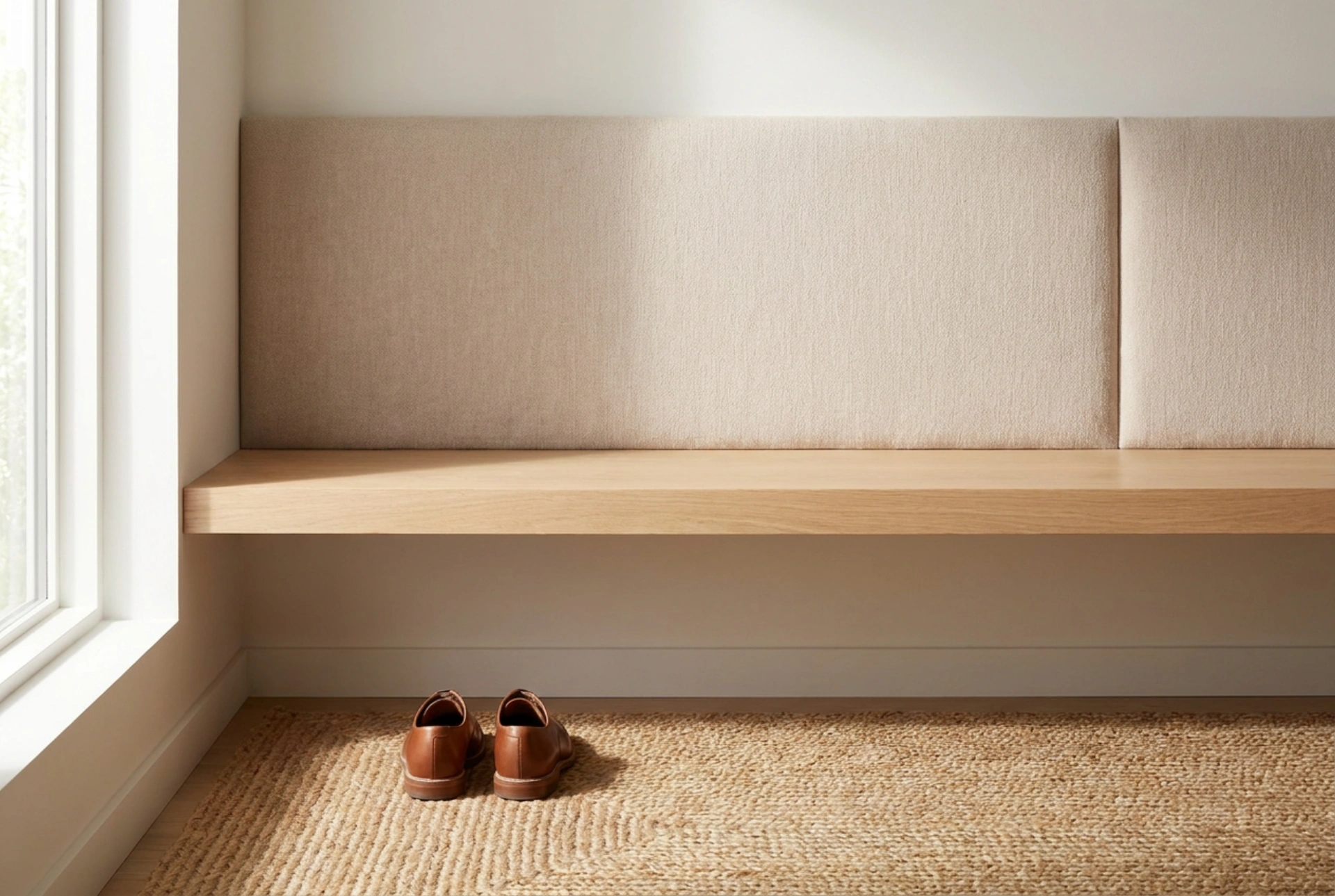


An upholstered hallway wardrobe combined with a dedicated shoe-fitting zone transforms a high-traffic transition area into an ergonomic, acoustically dampened space. By selecting the right fabrics and structural dimensions, you can optimise daily comfort while protecting walls from wear and moisture.
Acoustic and Thermal Physics of Wall Upholstery
Hallways are notorious for hard surfaces like tiles, plaster, and mirrors, which reflect sound waves and create unpleasant reverberation. Installing upholstered panels introduces porous absorbers that disrupt these sound waves. When sound hits the open-cell foam layer beneath the upholstery fabric, the air molecules vibrate inside the microscopic pores, converting kinetic energy into thermal energy and significantly reducing echo. Additionally, these panels serve as effective thermal barriers. Cold outdoor air entering through the front door meets cold masonry walls, which can feel uninviting. The low thermal conductivity of polyurethane foam and dense textiles prevents heat transfer, ensuring the seating wall remains warm and comfortable to lean against.
Textile Chemistry: Resistance to Friction, Water, and Abrasion
The entryway is exposed to moisture, road salt, and physical friction. When selecting fabrics for upholstered panels and benches, material science dictates the durability of the installation. Look for textiles rated highly on the Martindale scale, which measures abrasion resistance through cycles of rubbing. For hallways, a rating of at least 30,000 cycles is essential. Synthetic polymers, such as polyester and polyamide, offer superior tensile strength and resistance to tearing compared to natural fibres. Furthermore, modern upholstery fabrics often undergo hydrophobic surface treatments. These coatings increase the surface tension of the fabric, causing water droplets, slush, and dirt to bead up on the surface rather than penetrating the fibres. This allows for simple mechanical removal before stains can bond chemically with the textile structure.
Ergonomic Dimensions of a Shoe-Fitting Zone
Designing a comfortable shoe-fitting zone requires careful consideration of human biomechanics. The standard sitting height for an adult to tie shoes comfortably is between 40 and 45 centimetres. This height maintains an optimal angle at the knees and hips, reducing lower back strain during flexion. The bench depth should range between 35 and 45 centimetres; anything shallower fails to support the thighs, while a deeper bench makes it difficult to plant feet flat on the floor. For the upholstered backrest, panels should extend at least 60 centimetres above the bench surface to support the thoracic spine and prevent direct contact between outdoor coats and the bare wall behind them.
Structural Integrity: Mounting Systems and Adhesive Science
Securing upholstered panels requires understanding substrate adhesion. For permanent installations, mounting adhesives based on polyurethane or MS polymers provide high green strength and remain flexible after curing. This flexibility is vital, as temperature fluctuations near the entrance cause walls and wooden panel backings to expand and contract at different rates. If you prefer a modular system, heavy-duty hook-and-loop self-adhesive tapes allow for easy removal for deep cleaning or replacement. When applying these tapes, the substrate must be completely degreased and free of dust to ensure maximum molecular contact between the adhesive and the wall surface.
Maintenance and Chemical Care Protocols
Maintaining the structural and aesthetic integrity of upholstered zones requires a systematic approach to cleaning. Dust acts as an abrasive agent that degrades fabric fibres over time when friction is applied. Weekly vacuuming with a soft brush attachment prevents these particles from settling deep into the weave. In the event of organic stains, such as mud, a simple solution of warm water and a neutral surfactant should be blotted, never rubbed. Rubbing pushes the stain deeper into the weave and can distort the pile of the fabric. For stubborn greasy spots, dry solvents or oxygen-based bleaching agents applied sparingly can break down the lipid structures without compromising the synthetic dye bonds of the fabric.