

A child's room requires storage solutions that balance accessibility with absolute physical safety. Choosing and mounting the right wall hooks involves understanding material properties, load distribution, and ergonomic placement to prevent injuries while fostering independent tidying habits.
The Physics of Child-Safe Hook Geometry
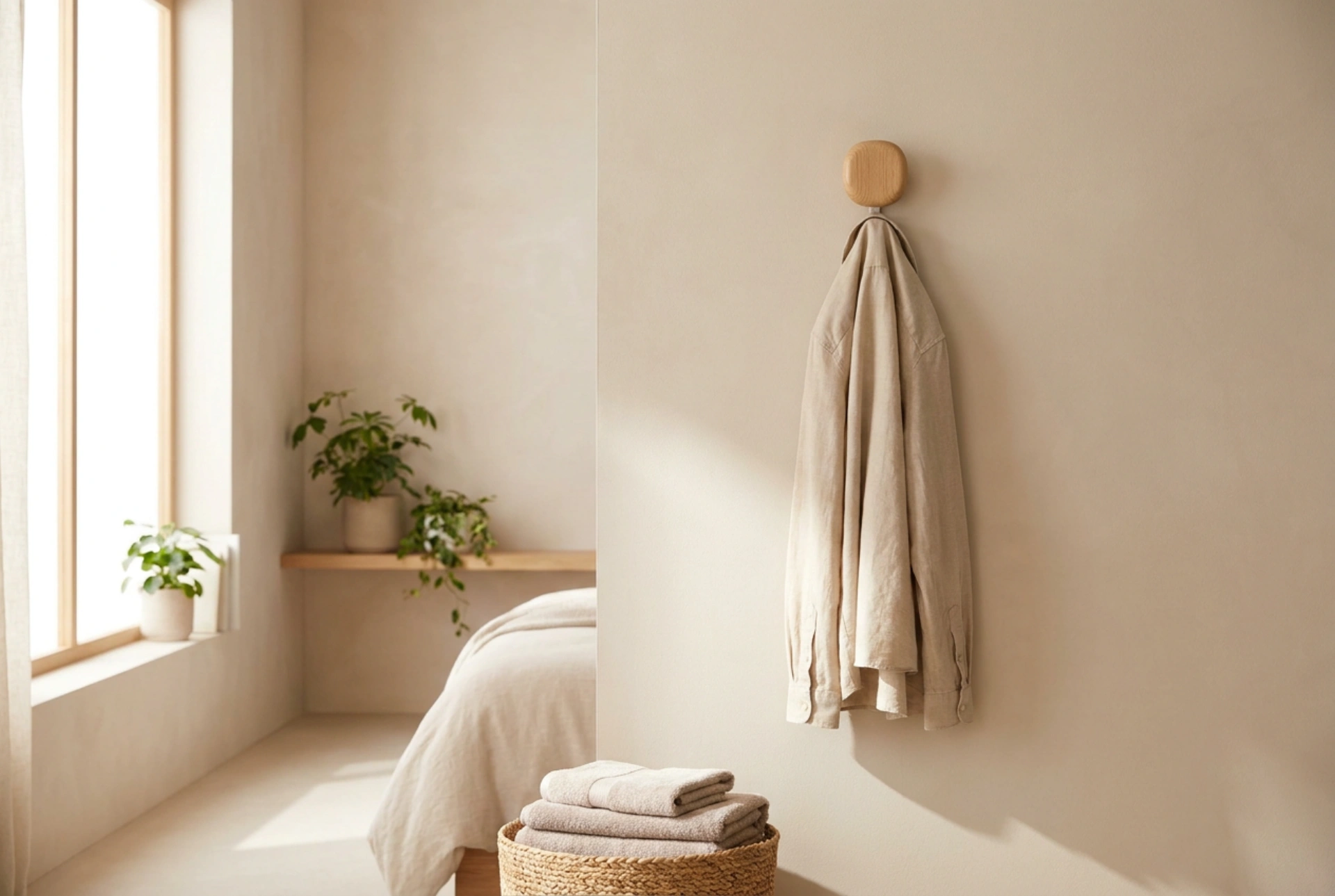
Standard household hooks are often made of rigid metal with sharp, narrow protrusions designed to hold heavy adult garments. In a child's environment, these designs pose significant risks of puncture wounds, lacerations, or blunt force trauma if a child trips or falls against them. Safe wall hooks must prioritise rounded, blunt geometries. Spherical, cylindrical, or wide peg-shaped designs distribute impact forces over a larger surface area, drastically reducing the pressure exerted on delicate skin in the event of an accidental collision.
Furthermore, the protrusion depth should be minimised. A hook that juts out significantly from the wall creates a lever arm that increases torque on the wall anchor, whilst also presenting a physical obstacle. Low-profile pegs made from pliable materials, such as high-density silicone, or smooth-grained hardwoods like beech or maple, offer the ideal physical properties. Hardwood provides natural shock-absorbing characteristics and does not splinter under pressure, ensuring long-term durability and safety.
Materials Science: Choosing Non-Toxic Surfaces
Children frequently touch, lean against, and occasionally mouth objects in their room. Therefore, the chemical composition of wall hooks and their finishes is as critical as their physical shape. Traditional varnishes, solvent-based lacquers, and certain plastics can off-gas volatile organic compounds (VOCs) or contain endocrine-disrupting phthalates. When selecting wooden hooks, look for those finished with natural, food-grade oils, raw beeswax, or certified non-toxic water-based paints.
For metal hooks, avoid alloys containing heavy metals like lead or cadmium, which are sometimes used in cheap cast iron or brass coatings. Brushed stainless steel or anodised aluminium are excellent alternatives; they are inert, highly resistant to corrosion from damp coats, and do not flake over time. If selecting polymer-based hooks, ensure they are constructed from food-safe polymers such as polypropylene, which lacks the plasticisers associated with PVC.
The Mechanics of Secure Wall Anchoring
A safe hook is only as reliable as its connection to the wall. Children rarely hang items gently; they often pull downwards or yank garments off at an angle, applying dynamic, multi-directional forces to the mounting system. Temporary mounting solutions like adhesive strips are unsuitable for high-frequency use in children's rooms because polymer adhesives degrade under fluctuating humidity and constant shear stress, leading to unexpected failure.
For a permanent, safe installation, hooks must be mechanically fastened to the wall structure. The choice of wall plug depends strictly on the substrate:
- Gypsum Plasterboard: Standard expanding wall plugs will fail under dynamic loads. Instead, use self-drilling metal plasterboard anchors or hollow-wall toggle bolts. These distribute the pulling force across a wider surface area on the back of the plasterboard panel.
- Solid Brick or Concrete: Utilise nylon expansion plugs that grip the boreholes through friction. The screw diameter must precisely match the plug specifications to ensure full expansion and maximum pull-out resistance.
Always pre-drill holes of the exact diameter specified by the anchor manufacturer. A loose anchor will slowly erode the surrounding plaster, leading to wobbling and eventual detachment under load.
Ergonomics and the Psychology of Daily Organisation
To encourage children to hang up their clothes, hooks must be mounted at an anatomically accessible height. Placing hooks at adult height creates physical friction, resulting in clothes piled on the floor. The optimal mounting height is roughly level with the child's chest or shoulders—typically between 80 and 110 centimetres from the floor, depending on age. This eliminates the need for stretching or climbing, which could lead to falls.
By reducing the physical effort required to tidy up, you reinforce the habit of immediate organisation. This point-of-use storage method works because it aligns with a child's natural movement patterns. Grouping three to four low-profile wooden pegs horizontally with sufficient spacing (at least 15 centimetres apart) prevents bulky items like winter coats from overlapping, making it easier for small hands to select or hang individual garments without knocking others down.