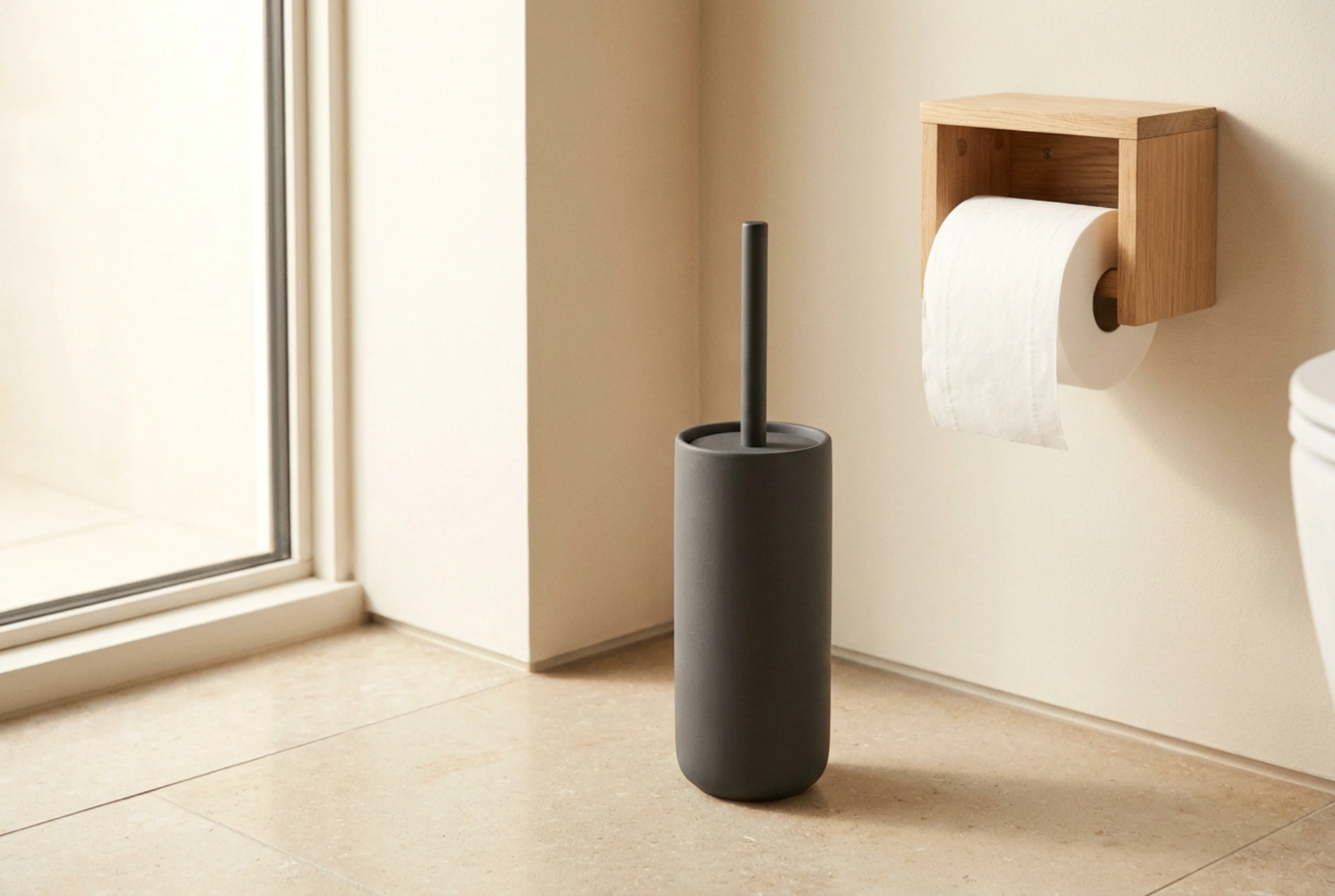


Storing a toilet brush and spare toilet paper in close proximity presents a unique challenge: balancing immediate accessibility with strict hygiene standards. Without a deliberate storage strategy, the high-humidity bathroom environment can lead to moisture transfer, bacterial cross-contamination, and accelerated degradation of paper products.
The Science of Bathroom Microclimates and Moisture Transfer
Every toilet flush generates an aerosol cloud, often referred to as a toilet plume, which can disperse microscopic droplets up to several feet. When toilet paper is stored uncovered near a toilet brush, it acts as a highly absorbent desiccant. Cellulose fibres in toilet paper are hydrophilic; they readily form hydrogen bonds with water molecules in the air. This capillary action draws in ambient moisture and airborne pathogens, compromising the structural integrity of the paper fibres. The result is weakened paper that tears easily, alongside a high-risk environment for mould and bacterial colonies.
Conversely, a toilet brush is inherently damp after use. Storing a wet brush in a sealed, unventilated container leads to stagnant water accumulation. This stagnant reservoir undergoes anaerobic decomposition. Bacteria thrive in the absence of oxygen, producing volatile organic compounds that cause unpleasant, persistent odours. Therefore, the spatial separation of these two items, or the use of engineered barrier materials, is essential to prevent cross-contamination and maintain atmospheric freshness.
Choosing Non-Porous and Hygienic Materials
The materials housing your toilet brush and paper must resist moisture absorption and tolerate regular chemical sanitisation. Glazed ceramics, high-density polyethylene, and powder-coated stainless steel are the premier choices. Glazed ceramics offer a completely vitrified, non-porous surface that prevents bacteria from anchoring in microscopic pores. Powder-coated metals provide excellent corrosion resistance against harsh cleaning agents, while high-density plastics resist physical impact and chemical degradation.
Avoid untreated wood, low-grade plastics, or porous stones. These materials absorb ambient humidity and liquid drips, leading to permanent staining, warping, and deep-seated bacterial colonization that cannot be fully sanitised with standard household chemicals. When selecting a combined storage unit, look for models that isolate the paper compartment completely from the brush housing using an impermeable barrier, such as a solid metal or thick polymer divider.
The Dry-Brush Protocol: Preventing Drips and Odours
To maintain a clean storage area, you must prevent excess water from entering the brush holder. Implementing a strict post-use drying protocol eliminates the problem at its source. After scrubbing the toilet bowl, pinch the handle of the brush under the toilet seat, allowing the brush head to suspend directly over the bowl. Leave it to drip-dry for approximately ten to fifteen minutes before returning it to its holder.
To disinfect the brush and neutralise odours, spray the bristles with a 3% hydrogen peroxide solution during this drying phase. Hydrogen peroxide acts as a powerful oxidising agent, breaking down the cellular walls of pathogens and decomposing into harmless water and oxygen. This process ensures that when the brush is finally returned to its container, it is dry and biologically stable, preventing the formation of stagnant liquid pools.
Strategic Spatial Organisation and Airflow
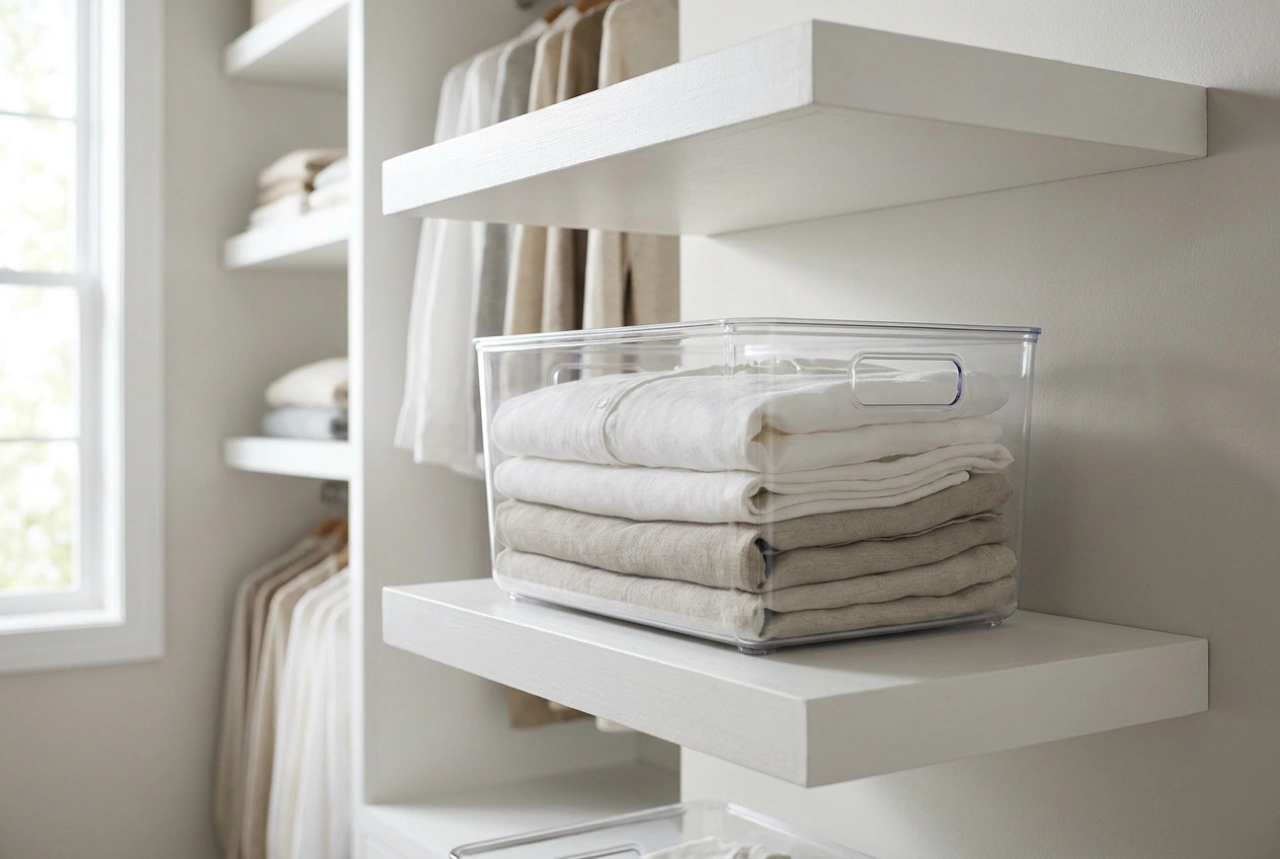
When organising these items, leverage vertical space to prevent physical contact between dry paper and wet cleaning tools. If using a combined storage unit, ensure it features a solid physical divider. Wall-mounted systems are highly effective because they elevate both the brush and the paper off the floor, eliminating dust traps and facilitating easy floor cleaning.
- The Elevation Rule: Always store toilet paper physically higher than the toilet brush holder to prevent accidental drips during brush retrieval. This utilises gravity to protect the dry paper.
- Air Circulation: Choose brush holders with open-air ventilation slots at the top or base. This encourages evaporation through natural convection, preventing the damp air from becoming trapped.
- Drip Tray Management: Select a holder with a removable inner plastic reservoir. Empty this reservoir weekly and sanitise it with a diluted oxygen bleach solution to prevent mineral scaling and biofilm formation.
Long-Term Maintenance and Sanitisation Routine
To keep the storage system pristine, establish a weekly maintenance routine. Empty any collected moisture from the brush reservoir, wash the holder with hot water and a liquid surfactant, and thoroughly dry it. Ensure spare toilet paper rolls are stored in a closed canister or on an elevated shelf at least thirty centimetres away from the toilet bowl to shield them from airborne moisture and aerosols. By controlling moisture and material interaction, you can maintain a highly hygienic, odour-free, and organised bathroom space.