

Commercial-style clothing racks bring a minimalist, boutique aesthetic to home dressing spaces, but without deliberate load management, they quickly succumb to structural bending, visual chaos, and fabric damage. Maintaining the structural integrity and clean appearance of an open metal rack requires a firm understanding of physics, weight distribution, and material science.
The Physics of Load Distribution and Frame Stress
Every free-standing metal rack has a maximum load capacity, typically determined by the gauge of the steel tubing and the quality of the joint connections. When garments are hung haphazardly, they exert uneven gravitational pull, which can cause the horizontal bar to bow or the vertical supports to warp. To prevent structural fatigue, place the heaviest items, such as heavy woollen coats or structured leather jackets, closest to the vertical support pillars. The shear stress on the horizontal bar is significantly lower near the joints than it is in the absolute centre, where the bending moment reaches its peak.
Additionally, pay attention to the centre of gravity. Racks on caster wheels are prone to tipping if the weight is distributed too high or unevenly along the longitudinal axis. To stabilise the unit, store heavier, low-frequency items like storage boxes or heavy footwear on the bottom shelf or base frame. This lowers the overall centre of gravity and provides a counterweight to the garments hanging above.
Managing Material Friction and Air Circulation
Overloading a rack does more than strain the metal; it actively damages your garments. When clothes are packed tightly together, fibers rub against one another with every movement, leading to friction-induced pilling, especially on delicate natural fibers like cashmere, merino wool, and silk. Compressed garments also trap ambient moisture, creating a microclimate that encourages mildew growth and musty odours.
- The Two-Finger Rule: Always leave a gap of at least two to three centimetres (approximately two fingers' width) between each hanger. This physical space allows air to circulate freely, evaporating residual moisture from wear and keeping natural fibers resilient.
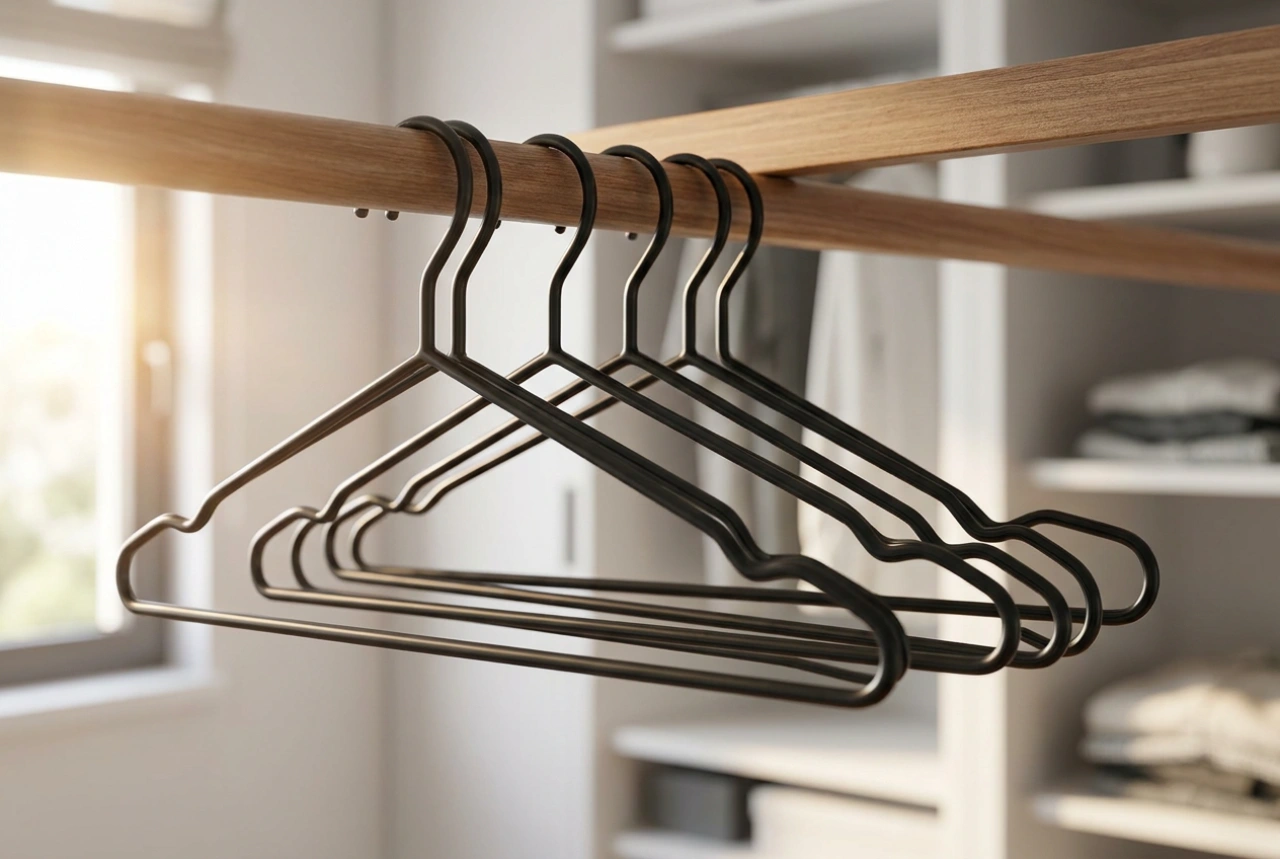
- Hanger Selection: Avoid thin wire hangers, which concentrate the load on a tiny surface area, causing fabric distortion and shoulder bumps. Opt for broad wooden or high-quality contoured hangers that distribute the weight of the garment across a wider surface, mimicking human anatomy.
- Friction Reduction: Wooden and smooth plastic hangers slide easily along the metal bar, reducing the physical effort needed to browse and preventing jerky movements that shake the entire rack structure.
Strategic Curation and the Rotation System
To keep an open rack functional and visually appealing, it must not serve as a permanent storage dump for your entire wardrobe. Instead, treat it as a curated, active zone. Implement a strict seasonal rotation system, keeping only current-season garments on display while storing out-of-season clothes in breathable garment bags inside enclosed wardrobes or under-bed storage containers.
Organise garments by length and weight from left to right. This systematic layout not only creates visual harmony but also simplifies weight tracking. Grouping shorter garments (like shirts and folded trousers) on one side frees up the floor space directly beneath them for storage boxes, while longer items (like coats and dresses) hang unobstructed on the other side, preventing them from bunching on the bottom frame.
Long-Term Maintenance of Metal Racks
Even a well-balanced rack requires periodic maintenance to ensure longevity. Weekly dusting of the horizontal bar is essential; dust particles combined with microscopic oils from human hands can create an abrasive grime that ruins the finish of the bar and transfers to the hooks of your hangers. Clean the metal frame using a soft, dry microfibre cloth, avoiding harsh chemical cleaners that can strip the protective powder coating.
Every few months, check the tension of the screws and connection joints. Natural vibrations from moving hangers and rolling the rack can slowly loosen these fittings. Tighten them using the appropriate hex key or screwdriver to eliminate wobbling. If your rack features caster wheels, inspect them for tangled hair or dust bunnies that can impede smooth rolling and place unnecessary torque on the lower frame during movement.