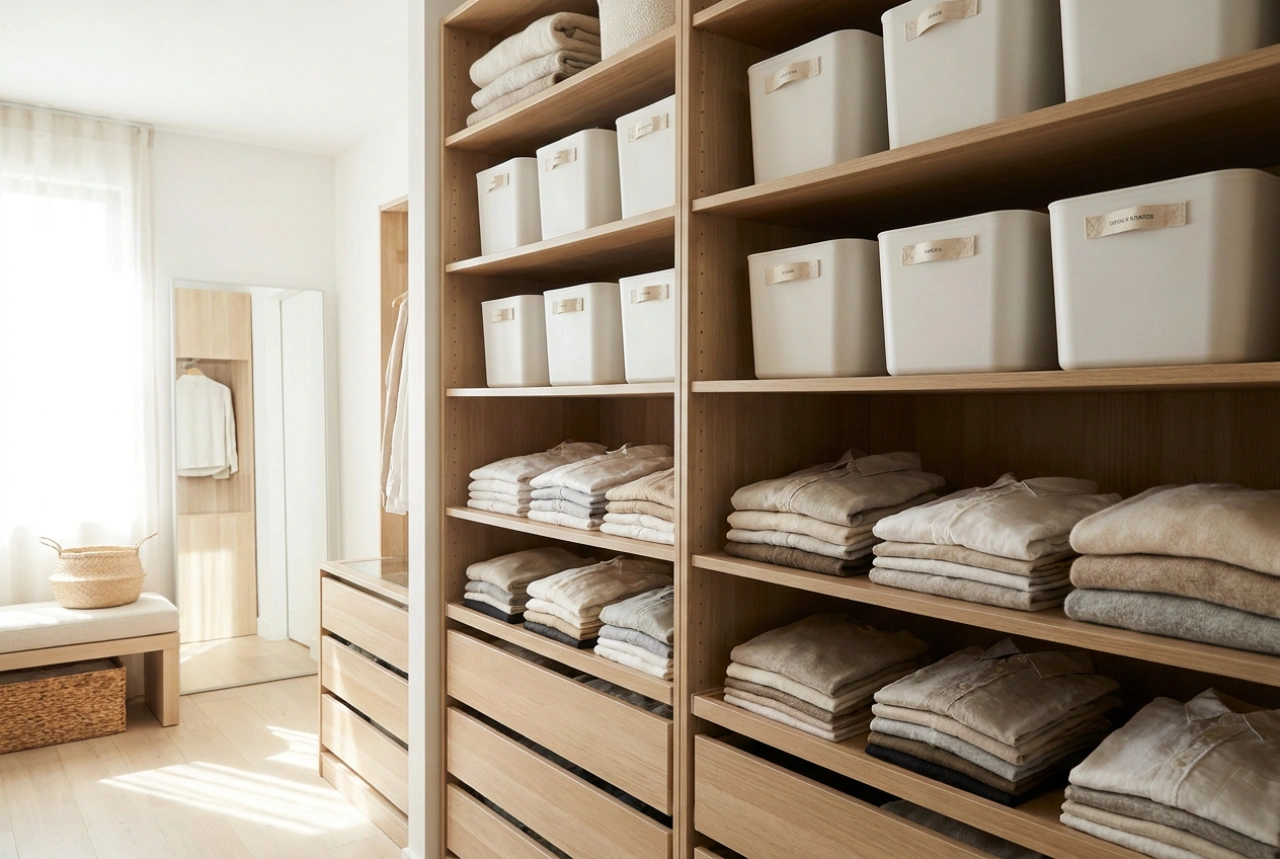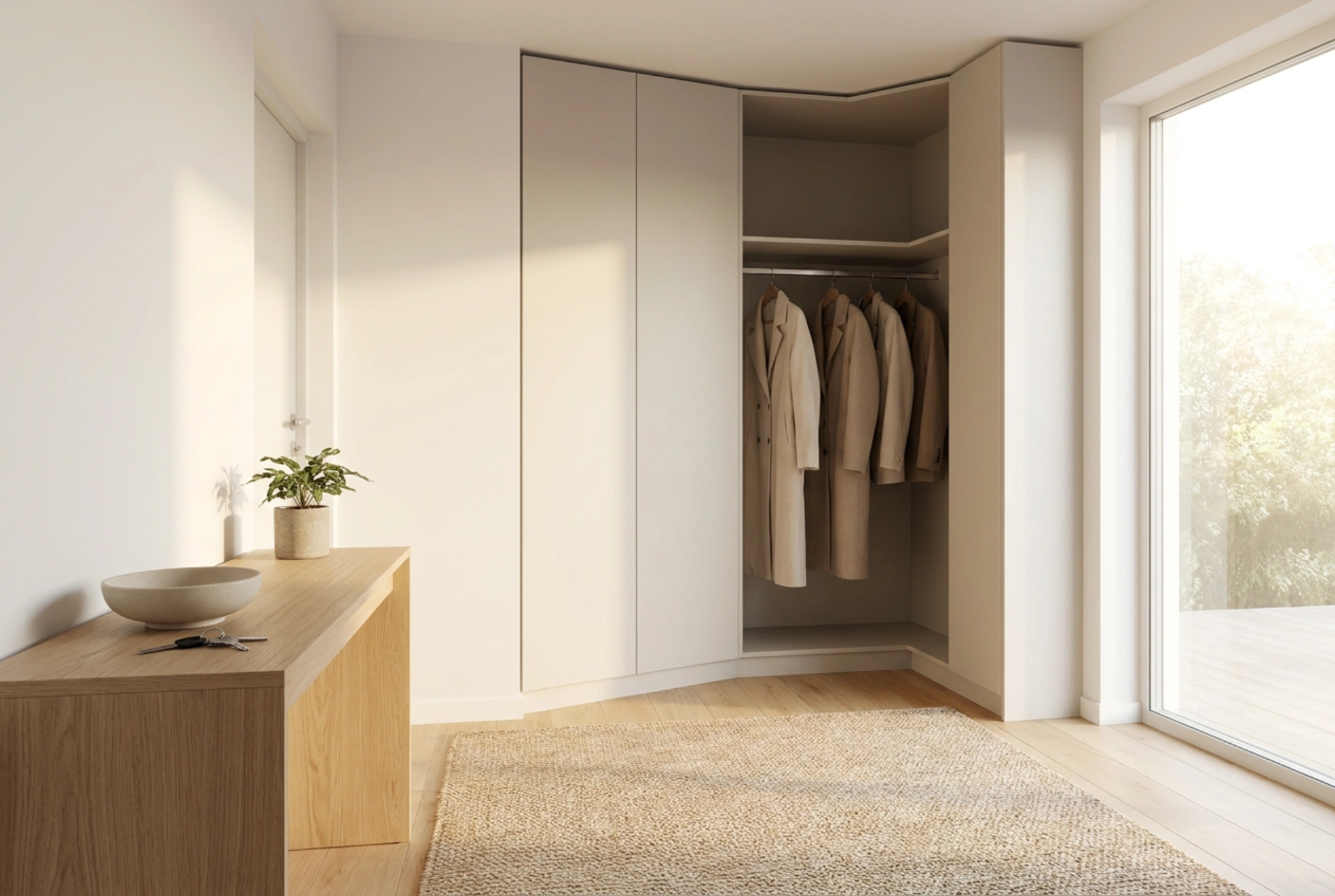


Optimising the entrance zone requires a strategic approach to spatial geometry and moisture management. Corner wardrobes utilise dead space efficiently, acting as a thermal and physical barrier that prevents outdoor dirt and dampness from penetrating the rest of the home.
Maximising Corner Geometry and Air Circulation
The hallway is a high-traffic transition zone subjected to rapid fluctuations in temperature and humidity. Standard linear wardrobes often leave corners underutilised, creating stagnant air pockets where dust and moisture accumulate. A custom or modular corner wardrobe solves this by utilising the intersecting walls, effectively increasing storage volume by up to forty percent compared to standard linear units.
However, storing damp outerwear in enclosed corner structures presents a thermodynamic challenge. When wet coats are placed inside a closed wardrobe, the relative humidity rises rapidly, creating an environment ripe for fungal spores and musty odours. To counteract this, ensure the corner unit features ventilation slots or a breathable back panel. Air must circulate freely; leaving a five-millimetre gap between the wardrobe back and the wall allows convection currents to disperse moisture, preventing localized condensation on cold outer walls.
Material Science of Entryway Storage
Material Science of Entryway Storage
The choice of materials in the entrance area directly affects maintenance frequency and durability. Hallway surfaces must withstand mechanical abrasion from keys, bags, and shoes, as well as chemical exposure from road salt and melting snow. Matte finishes on wardrobe doors are highly effective at diffusing light, making minor scratches and fingerprints less visible than on high-gloss surfaces.
Electrostatic charges also dictate how dust behaves in your entryway. Synthetic laminates can build up static electricity, actively pulling airborne dust particles onto their surfaces. Treating these panels with antistatic agents or selecting natural wood veneers and high-pressure laminates (HPL) reduces this effect. For the interior shelving, non-porous materials such as melamine-faced chipboard are preferred, as they do not absorb moisture from wet gloves or hats and can be wiped clean without swelling.
Ergonomic Organisation and Gravity-Based Zoning
An organised hallway relies on physical zoning based on gravity, frequency of use, and moisture levels. Dividing the corner wardrobe into distinct vertical tiers prevents cross-contamination between dirty footwear and clean outerwear.
- The Lower Zone (Wet and Heavy): Wet shoes should never sit directly on wood-based shelves. Use heavy-duty, raised polypropylene trays with ridges. The ridges elevate the soles, allowing air to flow underneath the shoes, accelerating evaporation through natural convection while catching salty runoff and grit.
- The Mid Zone (High-Frequency Active Storage): Hang heavy coats on sturdy wooden or wide plastic hangers to maintain garment shape. Wire hangers concentrate weight on a narrow line, distorting fabrics. Ensure a minimum spacing of three centimetres between hung items to facilitate air movement.
- The Upper Zone (Dry and Seasonal): Reserve the deep, less accessible corner apex for seasonal items sealed in breathable vacuum bags or canvas boxes. Storing woollen items with natural cedar blocks repels pests without synthetic chemicals.
Managing Dirt Vectors at the Threshold
The primary source of hallway clutter is a lack of defined landing zones for pocket items. Implementing a hard-surfaced console bowl or a dedicated wooden tray near the wardrobe entrance creates a physical boundary for keys, coins, and phones. This prevents these metallic objects from scratching the delicate surfaces of the wardrobe. By establishing an immediate transition zone, you isolate external contaminants to a small, easily sanitised radius, preserving the structural integrity of your corner wardrobe and surrounding floorboards.