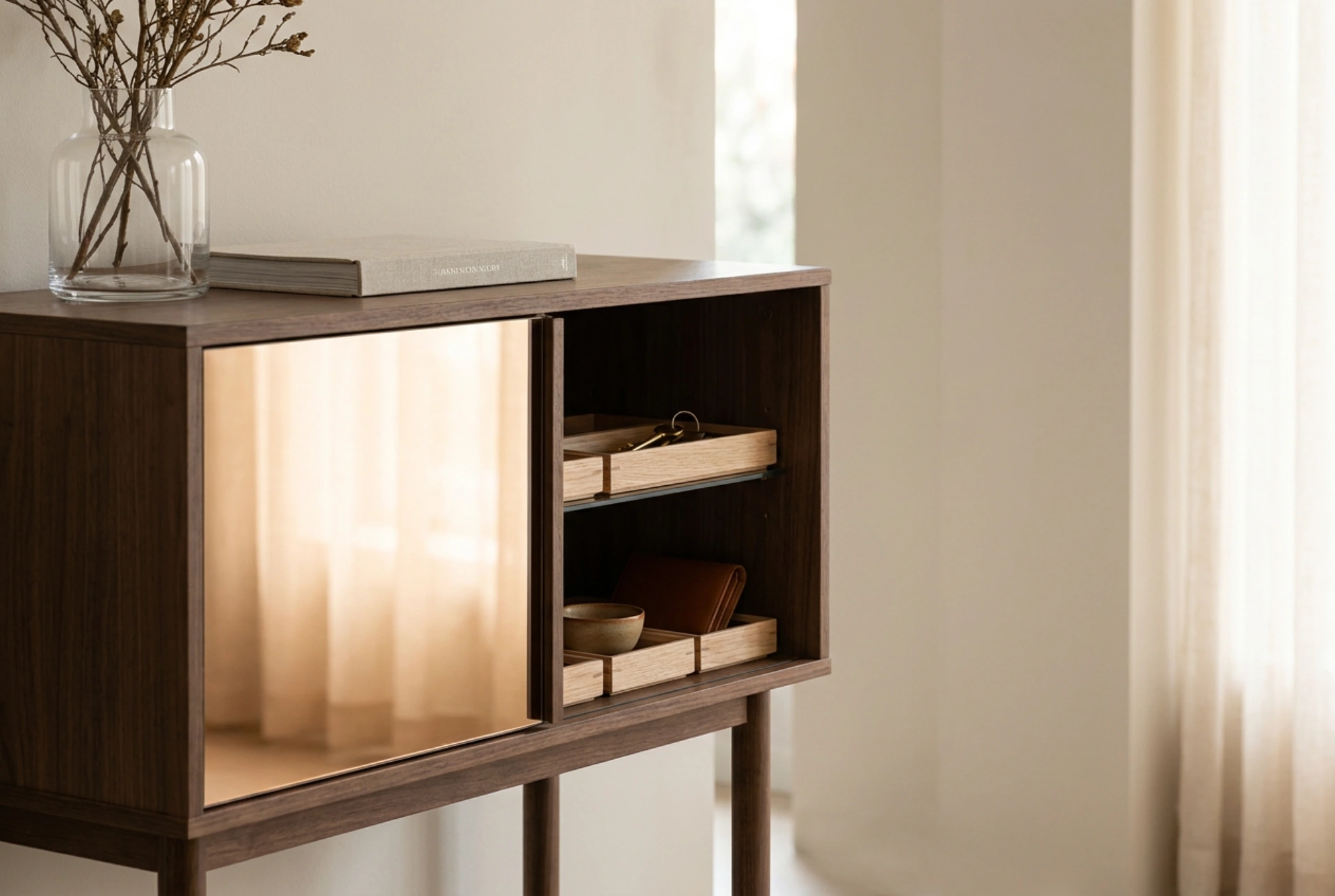


Transforming a mirrored hallway cabinet into an efficient hub for daily essentials requires more than just tossing keys onto an open shelf. By applying basic principles of ergonomics, material science, and spatial organization, you can turn this transition zone into a frictionless gateway that streamlines your daily departures and arrivals.
The Materials Science of the Drop Zone
The primary challenge of storing daily items like keys, loose coins, and metal-framed sunglasses inside a mirrored cabinet is physical wear. Mirrors and glass shelves are highly susceptible to micro-scratches caused by the high-velocity impact of metal. To mitigate this risk, you must introduce shock-absorbing, high-friction materials into the cabinet's interior.
- Felt and Wool Liners: Placing dense wool felt liners at the bottom of trays dampens kinetic energy, absorbs the sound of dropping keys, and prevents sliding.
- Ceramic and Hardwood Trays: Unfinished or oiled wooden trays provide a natural tactile grip, preventing items from shifting when the cabinet door is swung open.
- Silicone Inserts: High-grip silicone coasters are ideal for heavier items, providing a high coefficient of friction that keeps wallets and phones securely in place.
Leveraging Light and Reflection for Visibility
Mirrored cabinets serve a dual purpose: they provide a functional surface for personal presentation and bounce ambient light to make narrow hallways feel more spacious. Within the cabinet, you can harness this reflective physics to improve visibility. A mirrored door reflects external light sources back into the cabinet interior when opened at specific angles.
To optimize this effect, position your cabinet perpendicular to the primary light source of the hallway, such as a window or a ceiling-mounted fixture. This ensures that when the door is opened, light is redirected deep into the shallow shelves, illuminating small items without the need for complex electrical installations. Additionally, choosing light-colored, reflective interior surfaces (such as white laminate or polished birch) further scatters light, eliminating dark corners where small items like black key fobs easily disappear.
Ergonomics and the Order of Operations
An organized cabinet must align with the natural physical movements of your body as you enter and exit the home. This requires a strict vertical zoning system based on the frequency of use and the physical height of the users.
The chest-to-eye-level zone, roughly between 1.2 and 1.6 meters from the floor, is the high-value interaction area. This is where active daily essentials—such as house keys, car fobs, and wallets—should reside. Placing these items here minimizes bending or stretching, creating a seamless muscle-memory routine. Lower shelves, which require bending, are best reserved for seasonal accessories, such as gloves or sunglasses cases. Upper shelves, requiring a reach, should hold items used only occasionally, such as shoe care kits or spare house keys.
Implementing a magnetic strip on the inside wooden frame of the cabinet is a highly efficient way to utilize vertical space. By sticking steel key rings directly to a magnetic bar, you free up flat shelf space and keep keys at eye level for immediate retrieval.
Managing the Microclimate of Closed Storage
Closed mirrored cabinets trap air, creating a microclimate that can accumulate moisture and dust. When you return from the rain, keys, pocket knives, and metal accessories carry trace amounts of water and atmospheric pollutants. Storing these directly in a sealed environment can accelerate the oxidation of metals and degrade leather goods.
To maintain a healthy internal climate, ensure your cabinet has adequate ventilation, or practice a strict dry-entry rule. Never place wet items directly into the cabinet. If damp items must be stored, utilize porous ceramic bowls or small packets of silica gel hidden inside trays to actively absorb excess ambient humidity. Regularly cleaning the interior shelves with a microfiber cloth dampened with a simple water and isopropyl alcohol solution will remove skin oils and dust, preventing the buildup of sticky residues that attract grime.