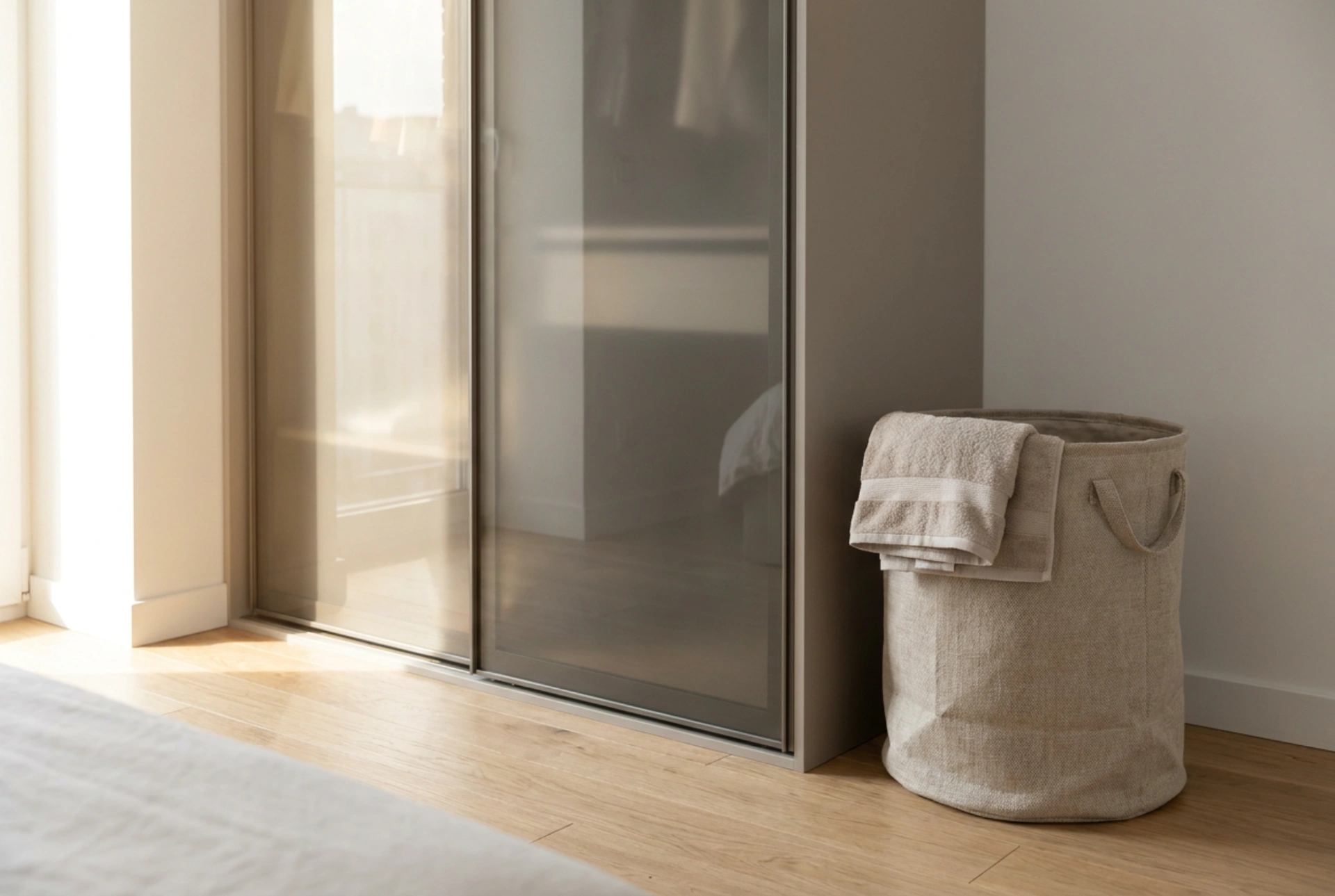


Maximising bedroom functionality relies on spatial physics, light manipulation, and efficient storage design. A sliding mirrored wardrobe serves as a dual-purpose architectural element that enhances perceived room volume while streamlining daily storage organization.
The Physics of Reflection: Expanding Visual Space
Mirrors do not merely reflect images; they manipulate the physics of light within an enclosed environment. In a standard bedroom, natural light entering through windows strikes surfaces and is absorbed or diffused depending on the material's albedo. Glass mirrors, backed with a reflective metallic coating, reflect nearly 95% of incident light. By positioning a sliding wardrobe perpendicular or opposite to a window, you redirect daylight deep into dark corners, eliminating shadows that visually shrink a room.
This optical illusion trick double-folds the visual depth of the room. When the human eye perceives the reflected depth, the brain interprets the space as having twice its actual square footage. To maximise this effect, keep the path of the reflected light clear of heavy, light-absorbing furniture like dark velvet armchairs or dense wooden chests.
Maintaining Sliding Mechanisms: Overcoming Friction
The functionality of a sliding wardrobe depends entirely on the smooth operation of its track-and-roller system. Over time, gravity and atmospheric air currents deposit dust, hair, and textile fibres directly into the lower tracks. This accumulation increases the coefficient of friction, forcing the roller wheels to slide rather than roll, which leads to premature wear on both the wheels and the aluminium track.
To maintain mechanical efficiency, follow a strict maintenance sequence twice a year:
- Debris Extraction: Use a narrow crevice tool on a vacuum cleaner to remove loose particles from the tracks.
- Deep Cleaning: Wrap a microfibre cloth damp with warm water over a flat-head screwdriver to scrape out compacted grime from the deep grooves.
- Dry Lubrication: Apply a thin layer of dry PTFE or silicone spray to the tracks. Avoid wet oils or standard household lubricants, as their viscous nature acts as a magnet for dust, accelerating the formation of a sticky, abrasive paste.
Chemistry of Mirror Cleaning: Streak-Free Surface Science
Mirrored wardrobe doors are highly susceptible to lipid transfers from fingerprints, dust, and airborne residues. Cleaning these surfaces requires understanding the chemistry of solvents. Standard tap water contains dissolved calcium and magnesium carbonates (hard water), which leave mineral deposits (white spots) when the water evaporates.
To achieve a streak-free finish, utilize an acidic solution, such as diluted acetic acid (distilled white vinegar) mixed 1:1 with demineralized water, or an isopropyl alcohol-based mixture. Acetic acid breaks down alkaline mineral deposits and emulsifies oily fingerprints. Apply the solution directly to a high-density, flat-weave microfibre cloth rather than spraying the glass directly; excess liquid can seep behind the silver backing at the edges, causing oxidation (black spots).
Wipe using an "S" pattern from top to bottom, which ensures that particulates are dragged downward and not redistributed over clean areas. Avoid circular motions, which create static electricity that immediately attracts airborne dust.
Internal Ergonomics: Airflow and Weight Distribution
A functional bedroom wardrobe must be organized to support internal microclimates. Packing clothes too tightly restricts air circulation, leading to stagnant pockets of air where relative humidity can rise. When warm, humid air from the bedroom meets the cooler back wall of a wardrobe, condensation can occur, creating conditions ripe for fungal spores (mildew).
- Zoning by Weight: Place heavy storage boxes and structural drawer units at the base to lower the wardrobe's centre of gravity, preventing structural shifting of the tracks.
- Thermal Gaps: Maintain a 2-3 cm gap between the back wall of the wardrobe and stored items to facilitate continuous air convection.
- Material Sorting: Store natural fibres like wool and cotton in breathable linen storage boxes, avoiding sealed plastic containers which trap latent moisture and accelerate fabric degradation.