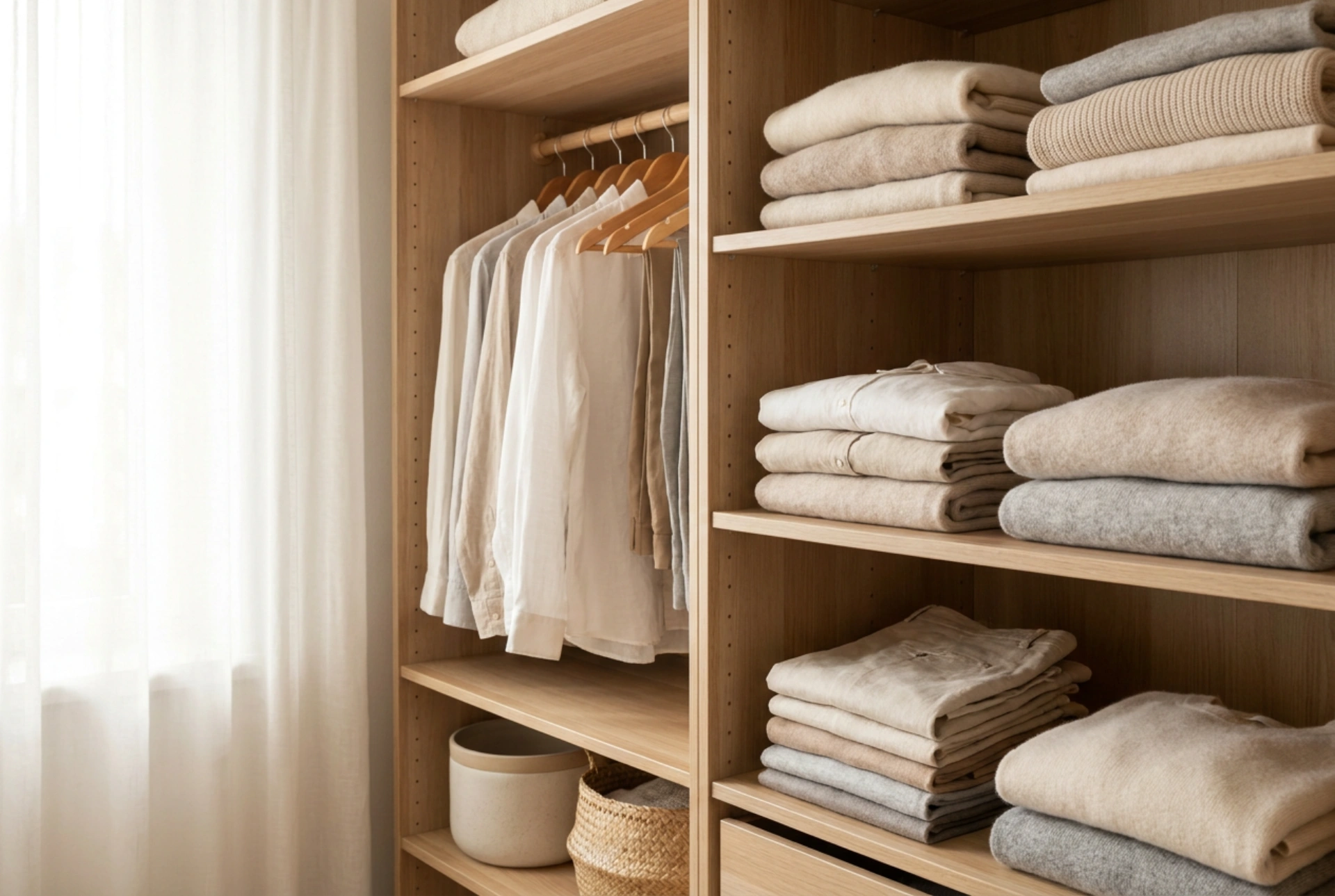


Effective wardrobe shelf allocation relies on ergonomic zones and fabric physics to prevent garment deformation and simplify daily access. By understanding weight distribution, material characteristics, and microclimates, you can design a functional system that preserves clothing fibres and streamlines your routine.
The Ergonomics of Vertical Storage Zones
Organising a wardrobe efficiently requires mapping shelves according to the human body's natural reach and movement. This spatial division creates three distinct accessibility zones that dictate where garments should reside based on daily usage frequency.
The Golden Zone (Hip to Eye Level)
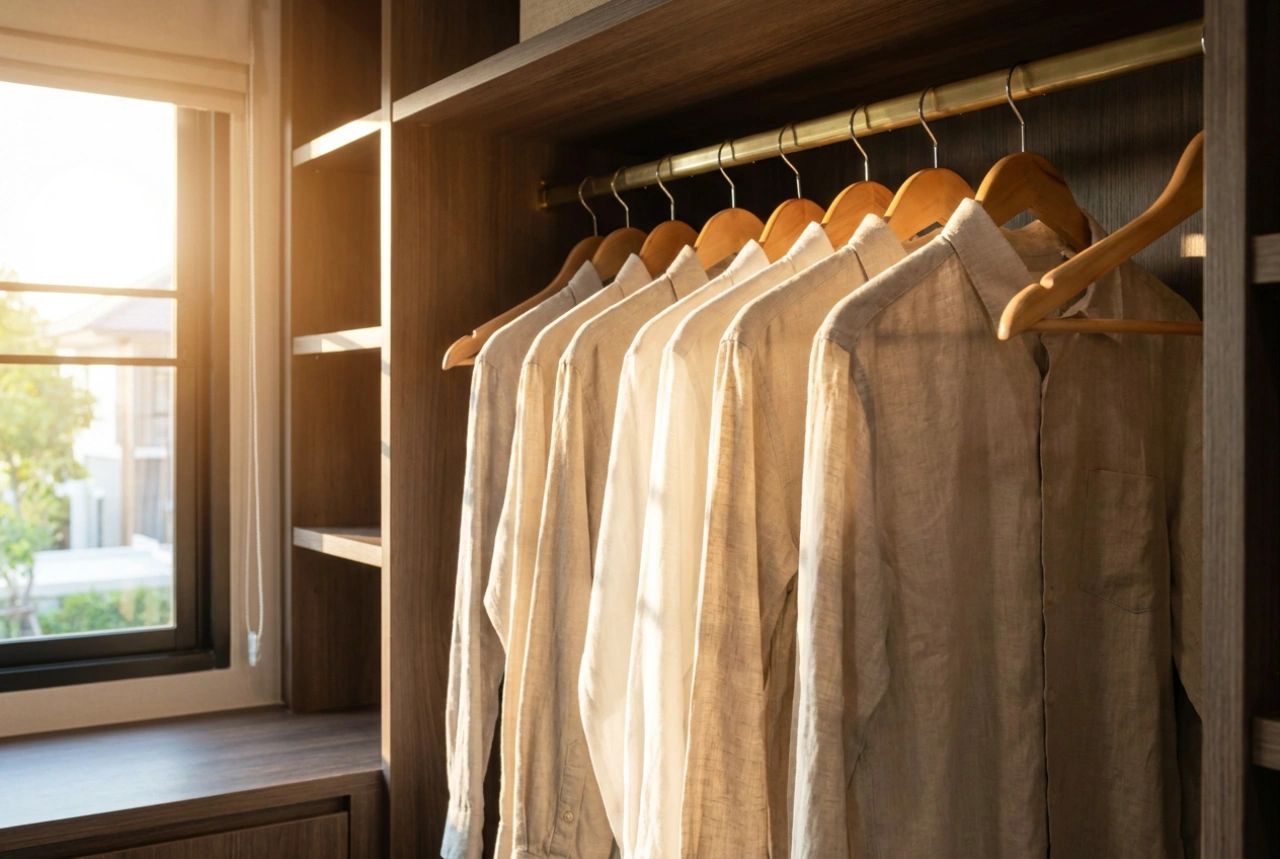
The space between your hips and eyes is the most accessible area, requiring no stretching or bending. Reserve this prime zone for high-rotation items such as daily t-shirts, light knitwear, and trousers. Keeping these items at eye level reduces the time spent searching and prevents the disruption of surrounding stacks.
The High Zone (Above Eye Level)
Shelves located above eye level require an upward reach, making them unsuitable for heavy or daily-use items. Store lightweight, seasonal, or rarely used textiles here, such as summer linens in winter, or spare bedding. Keeping lighter items high up minimises the physical strain of retrieving them and reduces safety risks.
The Low Zone (Below Knee Level)
The lowest shelves require bending or squatting to access. This area is ideal for heavy items, storage boxes, or footwear. Storing heavy denim, thick winter trousers, or bulky accessories near the floor aligns with natural lifting physics, preventing back strain and keeping the wardrobe's centre of gravity low and stable.
The Physics of Fabric Weight and Compression
Textiles are sensitive to pressure and gravity. When stacking clothes, the weight of the upper garments compresses the fibres of those underneath, leading to stubborn creases and structural damage over time.
Determining Optimal Stack Heights
To preserve fabric integrity, limit stack heights based on material density. Heavy knitwear, such as wool or cashmere jumpers, should never be stacked more than three to four items high. The weight of these natural fibres can crush the delicate loft of the garments underneath, causing them to lose their insulating properties. For lighter cotton t-shirts or linen tops, stacks can safely reach six to eight items before the weight causes excessive creasing at the bottom.
Material-First Placement
Always place the heaviest, most structured items at the bottom of a stack and the lightest, most delicate items at the top. This simple order of operations prevents lightweight silk or fine cotton from being crushed and distorted by heavy denim or thick wool. Additionally, storing knits flat on shelves rather than hanging them prevents gravitational stretch, which permanently deforms shoulder seams.
Airflow and Humidity Management within Shelves
A closed wardrobe can easily trap moisture, leading to stale odours and fibre degradation. Proper shelf planning must account for passive ventilation.
The Importance of Breathing Room
Never pack shelves completely tight. Leave at least a two-centimetre gap between the top of a clothing stack and the shelf above it, as well as space at the back of the wardrobe. This boundary layer allows air to circulate freely, regulating humidity and preventing the micro-condensation that attracts dust mites and fabric pests.
Material Interaction with Shelving Surfaces
Unsealed wooden shelves can absorb and release moisture, while laminated or painted surfaces do not breathe. When storing natural fibres like wool, silk, or cotton on synthetic surfaces, consider using breathable linen shelf liners. These liners act as a buffer, absorbing excess moisture and protecting delicate textiles from snagging on rough edges or chemical off-gassing from composite materials.