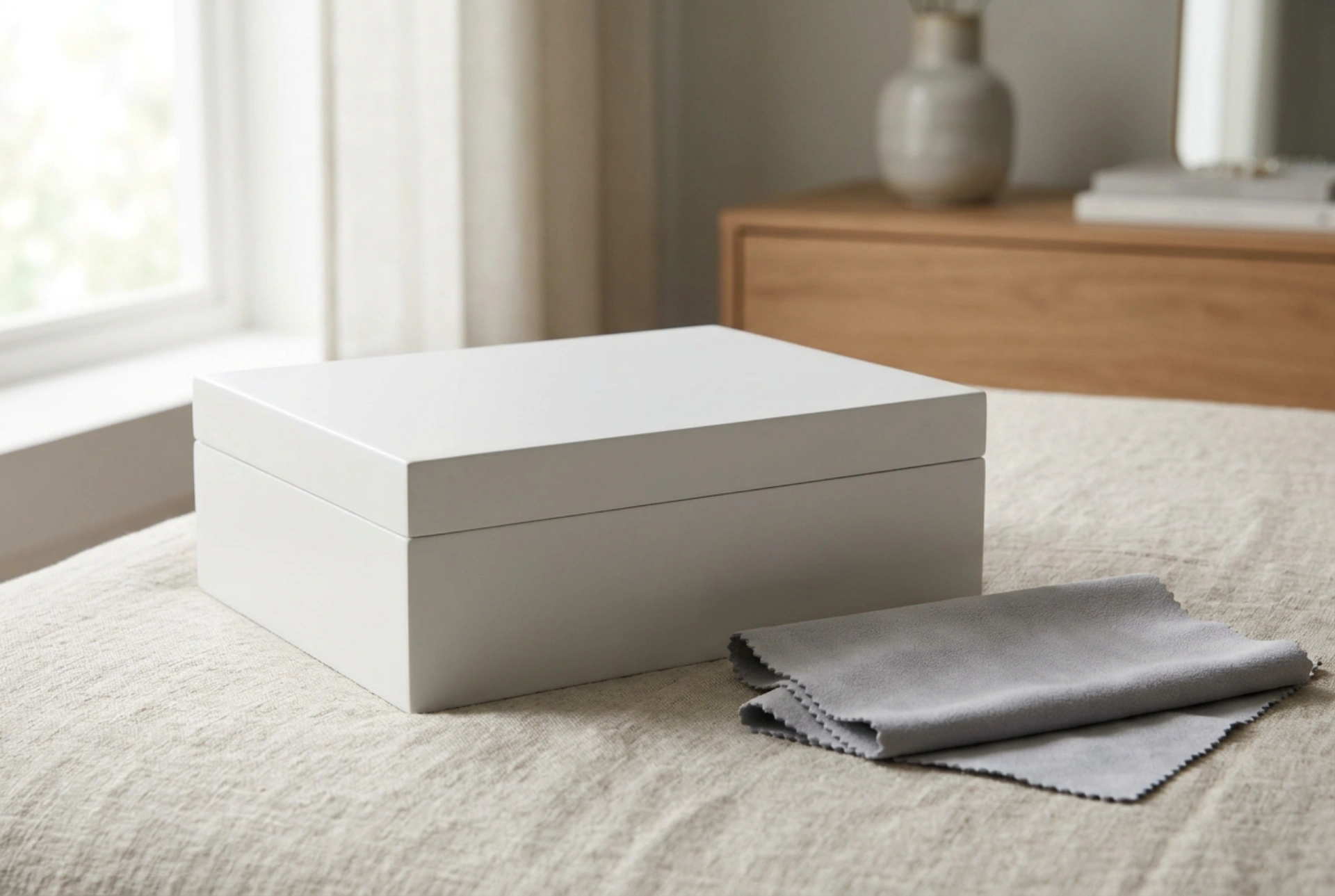


White jewellery boxes add elegance to a dressing table, but their pale, reflective surfaces easily show dust, greasy fingerprints, and environmental yellowing. Maintaining their pristine appearance requires understanding the specific material characteristics of your box and employing targeted, non-abrasive cleaning chemistry.
Identifying the Surface Material
Before applying any cleaning agent, you must determine what your white jewellery box is made of. The most common materials are lacquered wood, polyurethane (PU) synthetic leather, genuine leather, and acrylic. Each reacts differently to moisture and solvents. Lacquered wood has a hard, non-porous finish but is highly susceptible to fine scratches. PU leather is synthetic and tolerates mild moisture but can peel if exposed to harsh alcohol. Genuine leather is porous, requiring lipid-replenishing care, while acrylic can craze or crack if cleaned with aggressive chemical solvents.
The Science of Dust Removal and Electrostatic Charge
Dust consists of organic matter, skin flakes, and mineral particles that cling to surfaces through weak electrostatic forces. Dry dusting with a standard cloth is ineffective; it creates friction, which increases the surface's negative static charge, attracting even more dust immediately afterward. Furthermore, dragging dry dust particles across polished lacquer or acrylic acts like fine sandpaper, leaving microscopic scratches that dull the shine over time.
To safely lift dust, use a high-quality microfiber cloth. The split fibres of microfiber create a vast surface area that traps particles using capillary action and weak van der Waals forces, physically lifting the dust rather than scraping it across the surface. Lightly dampening the cloth with distilled water breaks the electrostatic bond without leaving mineral residue behind. Always wipe in straight, single-direction passes rather than circular motions to ensure particles are lifted off the surface rather than ground back into it.
Degreasing Fingerprints and Sebum
Fingerprints are composed of sebum, an oily substance secreted by the skin containing lipids, waxes, and sweat. Sebum does not dissolve in water alone. To break down these hydrophobic compounds without damaging delicate white finishes, a mild surfactant is required. Avoid commercial glass cleaners containing ammonia, as they can strip lacquer and degrade synthetic leathers.
- Lacquered Wood and Acrylic: Mix a single drop of pH-neutral dishwashing liquid in a bowl of warm distilled water. Dip your microfiber cloth into the solution, wring it out until it is barely damp, and gently wipe the affected areas. Immediately follow with a dry microfiber cloth to prevent water spots.
- Synthetic PU Leather: Use a highly diluted solution of isopropyl alcohol (70% diluted 1:1 with water) on a cotton pad for stubborn spots. Apply very light pressure, as excessive rubbing can dissolve the polyurethane topcoat, causing it to peel or lose its texture.
Preventing and Reversing Yellowing
White polymers and lacquers are highly susceptible to yellowing over time, primarily caused by ultraviolet (UV) radiation and oxidation. UV light breaks down the polymer chains within white finishes, causing a chemical shift that absorbs blue light and reflects yellow. To prevent this, always position your jewellery box away from direct sunlight and heat sources like radiators, which accelerate thermal oxidation.
If mild yellowing has already occurred on synthetic or plastic surfaces, avoid chlorine-based bleach, which can permanently damage the material structure. Instead, employ a gentle oxidation reaction using a diluted oxygen-based bleaching agent (such as sodium percarbonate dissolved in warm water). Apply the solution with a soft cloth, let it sit for two to three minutes to break down the discoloured molecules, then wipe clean with a damp cloth and dry thoroughly.
A Routine Checklist for Longevity
To ensure your white jewellery box remains a beautiful centrepiece for years, adopt a structured cleaning regime based on material science:
- Weekly: Perform a gentle dry dust removal using a clean, dry microfiber cloth, moving in light, unidirectional strokes to prevent dust build-up.
- Monthly: Wipe down the exterior with a damp microfiber cloth moistened with distilled water to neutralise static charges.
- Bi-annually: Inspect the finish for grease accumulation and yellowing, treating any spots immediately with pH-neutral surfactants or oxygen-based cleaning solutions before they bond permanently with the substrate.