

Using a steam generator iron incorrectly can quickly lead to scorched fibers, shiny patches, or mineral stains. Understanding the physical relationship between pressurized steam, heat, and textile structure is essential to achieve professional results safely.
The Science of Steam and Fiber Relaxation
Unlike standard steam irons, a steam generator produces high-pressure steam in a separate boiler. This dry, pressurized steam penetrates deeply into fabric fibers. At a molecular level, textile fibers are held together by hydrogen bonds. Introducing heat and moisture temporarily breaks these bonds, allowing the polymer chains to realign. As the fabric cools and the moisture evaporates, new bonds form in a flat, wrinkle-free configuration. To prevent fiber degradation, you must control the rate of heat transfer. Natural fibers like linen and cotton have high thermal resistance and require intense steam to relax their rigid structures, whereas synthetic fibers like polyester have low melting points and can easily glaze or warp under excessive heat.
Adjusting Parameters for Different Fabric Types
To protect your garments, categorize them by fiber origin and density before adjusting your steam generator settings:
- Synthetics and Blends: Nylon, polyester, and acrylic are thermoplastic materials. High heat will melt the microfibers, causing an irreversible glossy sheen. Iron these at low temperatures, using light, pulsed steam, or hover the iron slightly above the surface to let the steam do the work without direct soleplate contact.
- Silk and Wool: These protein-based fibers are highly sensitive to dry heat and direct friction. Always iron wool on the reverse side or use a clean press cloth. Use a medium temperature with moderate, continuous steam to relax the crimp in wool fibers without crushing them.
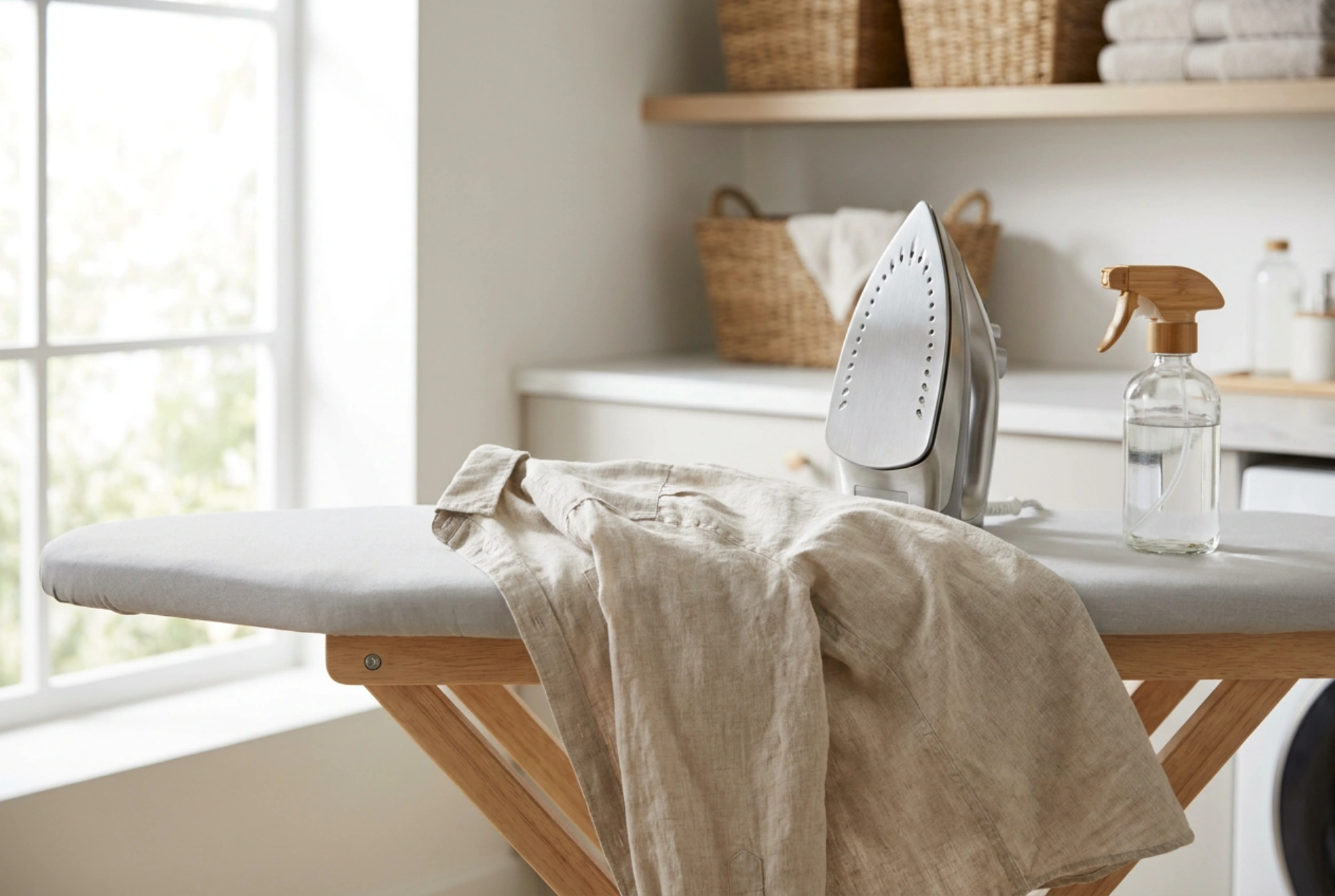
- Cotton and Linen: These cellulosic fibers thrive on high heat and heavy steam. To remove stubborn creases, apply high steam pressure while keeping the fabric taut, allowing the moisture to penetrate the dense weave fully before drying it with a dry pass of the soleplate.
Preventing Mineral Stains and Soleplate Damage
Water quality plays a critical role in the lifespan of both your steam generator and your wardrobe. Tap water contains dissolved minerals, primarily calcium and magnesium ions. Under high temperatures, these minerals precipitate out of the water, forming calcium carbonate (limescale) inside the boiler. When you trigger the steam boost, these scale particles can be ejected through the soleplate vents, leaving brown or white chalky stains on your garments. To prevent this, use a 1:1 mixture of distilled water and tap water, unless specified otherwise by the manufacturer. Regularly flush the boiler to remove accumulated sediment, and clean the soleplate with a soft, non-abrasive damp cloth to prevent starch buildup from melting onto your clean fabrics.
Essential Techniques for Flawless Ironing
How you move the iron determines the finish of the garment. Follow these physical principles for optimal results:
- Directional Motion: Always iron along the straight grain of the fabric. Ironing diagonally or in circular motions stretches the warp and weft threads, permanently distorting the shape of the garment.
- The Dry Pass: After applying a burst of steam to relax the fibers, make a second pass over the same area without steam. This dry pass removes the residual moisture, locking the fibers into their new flat state and preventing instant re-creasing.
- Inside-Out Ironing: To prevent the soleplate from creating "shine" on dark cottons, silk, or wool, always turn the garments inside out. This protects the visible face of the fabric from direct thermal contact.