

Washing shoes in a washing machine can restore their fresh appearance, but incorrect settings run the risk of delaminating adhesives and damaging both the footwear and the drum. Understanding the mechanics of spin speed, water temperature, and drum movement is crucial to preserving shoe structure during the cleaning cycle.
The Physics of Spinning and Mechanical Stress
The primary hazard when machine-washing footwear is mechanical impact. During a standard spin cycle, centrifugal forces push the heavy shoes against the perforated walls of the drum. If the spin speed is too high—such as 800 RPM or above—the shoes do not merely slide; they are repeatedly thrown and slammed against the drum lifters. This intense kinetic energy can crack rubber soles, bend internal heel counters, and damage the washing machine's suspension system.
To eliminate these risks, the spin cycle must be strictly limited. The optimal setting is 400 RPM, which provides enough centrifugal force to expel excess water from fabric fibers without generating destructive impact forces. If your machine allows you to turn off the spin cycle completely (the 'no spin' option), this is the safest choice for delicate sneakers, canvas shoes, or knitted running footwear. The remaining water can then be drained manually through gentle pressing.
Selecting the Optimal Washing Programme
Standard cycles designed for cottons are unsuitable for shoes because they employ aggressive drum rotations and prolonged agitation. Instead, you must select programmes that mimic gentle hand washing. Look for these cycles on your appliance control panel:
- Wool: This programme uses a 'cradle' motion, where the drum sways gently side-to-side rather than completing full rotations, minimising friction.
- Delicates or Hand Wash: These cycles utilize a higher water level. The extra water acts as a hydraulic cushion, absorbing physical shocks and allowing the shoes to float rather than strike the metal drum walls directly.
- Specialist Shoe Programme: Some modern machines feature a dedicated shoe cycle. This is pre-programmed with low temperatures, high water levels, and a deactivated spin cycle.
Temperature and Chemistry: Protecting Adhesives
Most modern athletic and casual shoes are assembled using thermoplastic adhesives that bond the upper material to the sole. These adhesives begin to soften at temperatures as low as 40°C. Washing shoes at high temperatures will dissolve these bonds, leading to sole separation and structural failure.
Always set the temperature to a cold wash or a maximum of 30°C. At this temperature, the adhesive remains chemically stable. When it comes to detergents, avoid powder formulas. Undissolved powder particles can easily become trapped in the mesh, seams, and inner linings of the shoes, leaving white streaks. Opt instead for a mild liquid laundry detergent, which dissolves instantly and rinses out completely even in cold, high-water-volume cycles.
Cushioning and Drum Ballast Techniques
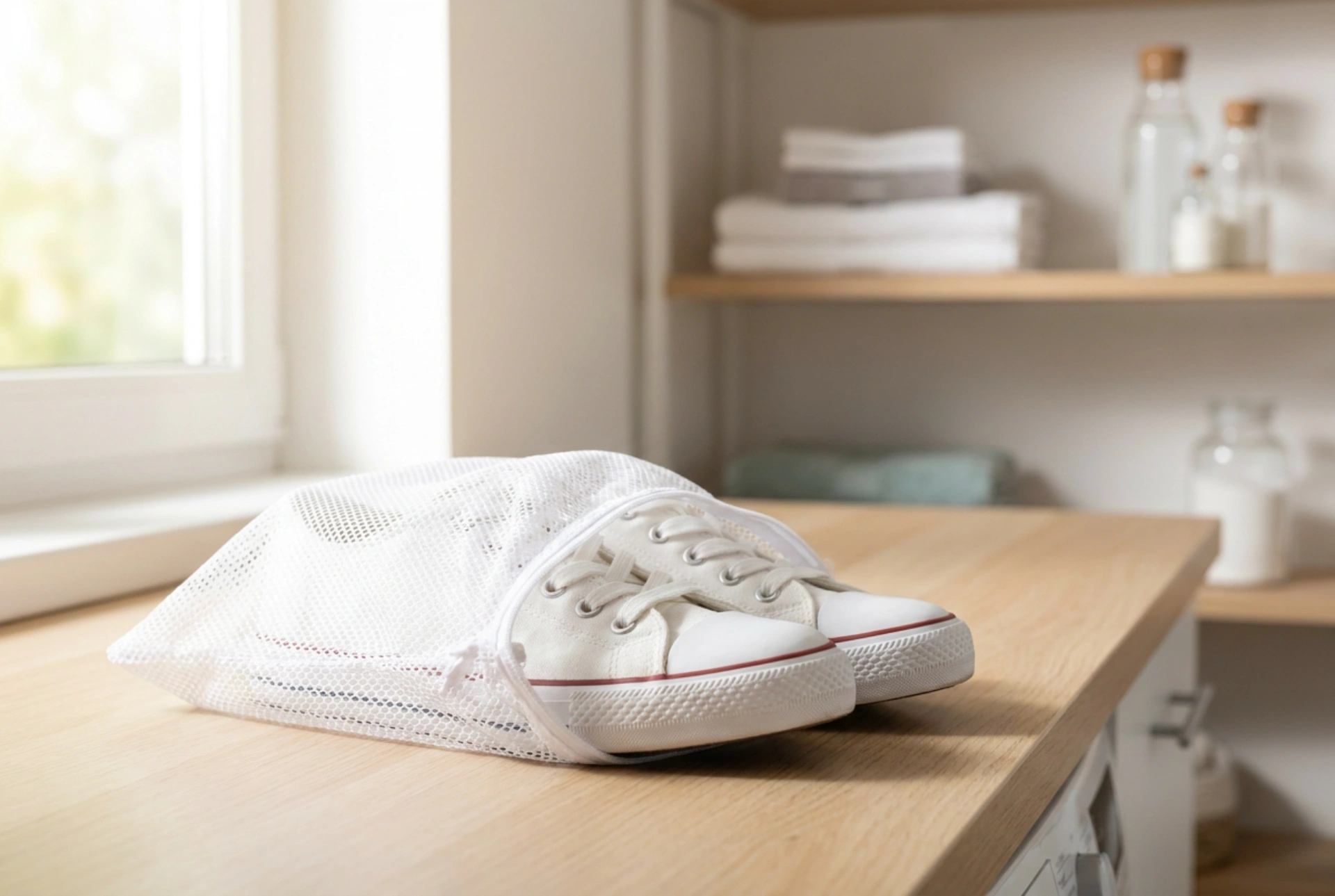
Never wash shoes alone in an empty drum. An unbalanced load causes the drum to wobble violently, which can trigger safety sensors that abort the cycle or cause mechanical wear. To prevent this, always wash shoes inside a specialized mesh laundry bag. The bag keeps the laces contained—preventing them from wrapping around the drum spindle—and reduces direct abrasion on the shoe's upper surface.
To balance the load, add several light, colourfast items to the drum, such as old bath towels or cotton bath mats. These textiles absorb water, adding weight to balance the drum's rotation, and act as physical buffers that dampen the noise and impact of the shoes knocking against the machine walls.
Safe Post-Wash Drying Protocol
Once the cycle is complete, correct drying is just as important as the wash itself. Do not use a tumble dryer, as the high heat and tumbling action will shrink synthetic mesh and warp rubber components. Instead, remove the shoes from the mesh bag and stuff them with clean, unprinted paper towels. This utilizes capillary action to draw moisture out from the inside while helping the shoe retain its natural shape. Avoid using newspaper, as the ink can transfer onto the damp lining. Place the shoes in a well-ventilated room away from direct heat sources like radiators or intense direct sunlight.