

Maintaining the luxurious shimmer of silk requires understanding its unique protein-based structure, which is highly sensitive to chemical and mechanical stress. Standard washing methods often disrupt these delicate fibres, leading to a permanent loss of lustre known as dulling.
The Chemistry of Silk: Why Fibres Become Dull
Silk is primarily composed of fibroin, a natural protein structure bound together by a secondary protein called sericin. Unlike cellulose-based fibres like cotton, protein fibres are highly susceptible to chemical environments. The characteristic sheen of silk comes from the flat, triangular structure of the fibroin filaments, which reflect light like tiny prisms.
When silk is exposed to alkaline environments—such as those created by standard laundry detergents—the high pH causes the protein fibres to swell and rough up. This microscopic swelling disrupts the flat surfaces of the filaments, causing light to scatter in various directions instead of reflecting evenly. Additionally, standard detergents often contain proteases, enzymes designed to break down protein-based stains (like sweat or blood). Inadvertently, these enzymes chemically digest the fibroin fibres themselves, weakening the fabric and permanently stripping its shine. Micro-fibrillation, where individual filaments split due to friction, further contributes to a fuzzy, matte appearance.
Water Temperature and the Danger of Hard Water Minerals
Temperature plays a critical role in preserving the structural integrity of silk. High temperatures (above 30°C) weaken the hydrogen bonds holding the protein chains together, making the fibres highly vulnerable to stretching, warping, and breaking. Always use cool or lukewarm water to ensure the proteins remain stable.
Furthermore, dissolved minerals in hard water, particularly calcium and magnesium ions, present a significant threat. These minerals easily bind to the negatively charged sites on the silk proteins, creating a microscopic, insoluble salt film on the surface of the fabric. This mineral buildup acts as a dulling layer that prevents light reflection. To combat this, soft water should ideally be used, or a chelating agent must be introduced during the rinsing process.
The Safe Washing Protocol: Step-by-Step
To clean silk without risking mechanical or chemical damage, follow a precise sequence of operations that minimises friction and maintains a neutral pH balance.
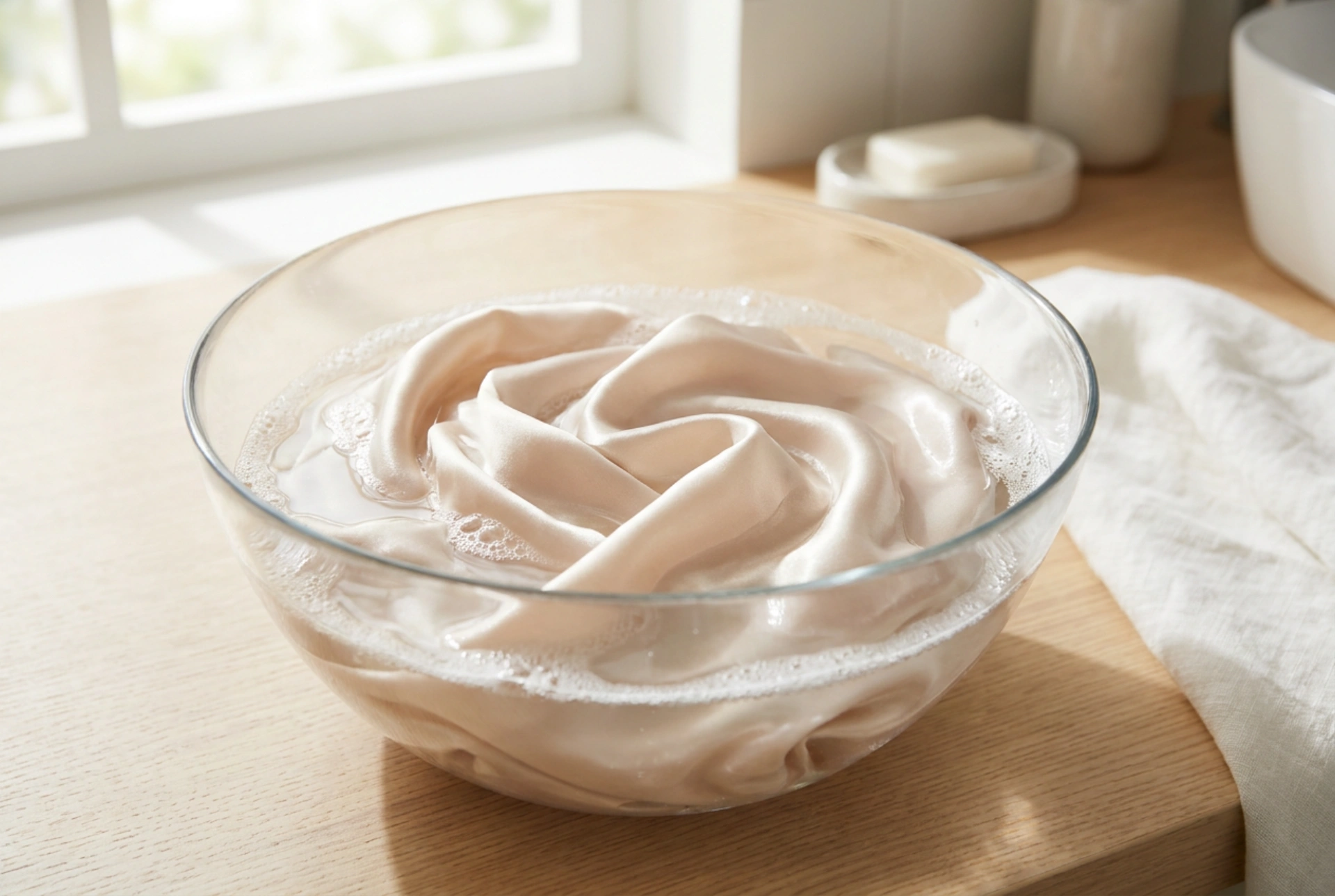
- Prepare the bath: Fill a clean basin with cool water (maximum 30°C). Dissolve a small amount of pH-neutral, enzyme-free liquid detergent specifically formulated for delicate fabrics. Do not use powder detergents, as undissolved granules can physically abrade the fibres.
- Submerge and submerge only: Place the silk item into the water. Instead of scrubbing or rubbing the fabric against itself, gently submerge it and swirl it slowly through the soapy water. Let it soak for no longer than five minutes; prolonged exposure to water weakens protein bonds.
- The acidic rinse: Drain the soapy water and refill the basin with clean, cool water. Add a tablespoon of distilled white vinegar (acetic acid) to the rinse water. The mild acidity of the vinegar serves two vital purposes: it neutralises any remaining alkaline detergent residues and binds to mineral deposits, preventing them from settling on the fibres. This process closes the microscopic scales of the fibroin, instantly restoring the fabric's natural light-reflecting properties.
Drying and Restoring the Sheen Without Heat
The mechanical action of wringing or twisting wet silk is one of the fastest ways to cause micro-fibrillation and ruin the texture permanently. When wet, silk proteins are at their weakest and most susceptible to physical damage.
To extract water safely, lay the wet garment flat on a clean, dry, light-coloured cotton towel. Roll the towel up gently with the silk inside, pressing lightly to allow the cotton to absorb the excess moisture. Unroll the towel and remove the garment. Never use a tumble dryer, as the combination of heat, friction, and tumbling will destroy the protein structure. Instead, hang the garment to air dry on a wide, padded hanger away from direct sunlight. Ultraviolet (UV) radiation breaks down chemical bonds in fibroin, leading to yellowing and brittleness.