

Hanging fabric organisers provide an efficient vertical storage solution that prevents knitwear stretching and maintains the structural integrity of your accessories. Understanding the physics of load distribution and material friction allows you to maximise your wardrobe space while preserving delicate fibres.
The Physics of Hanging Knitwear: Preventing Fibre Elongation
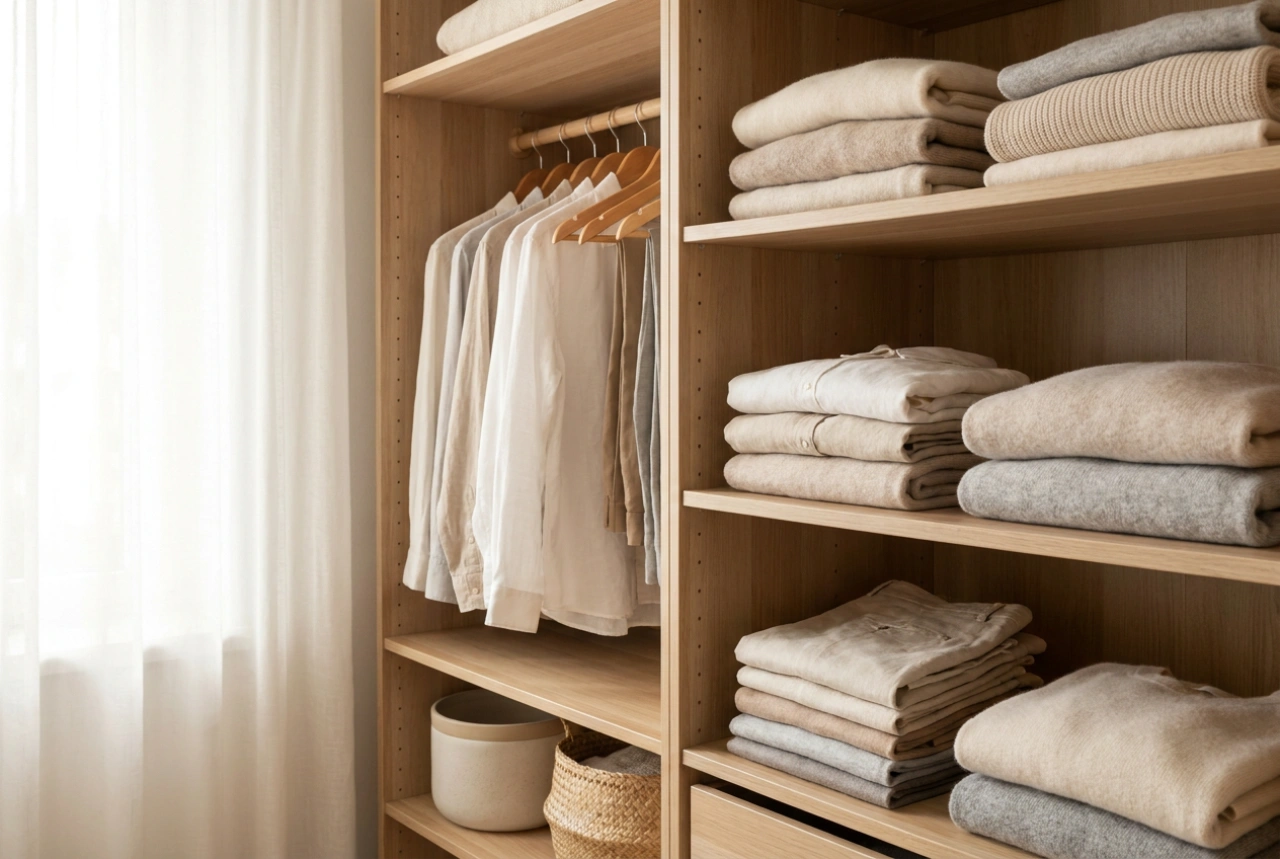
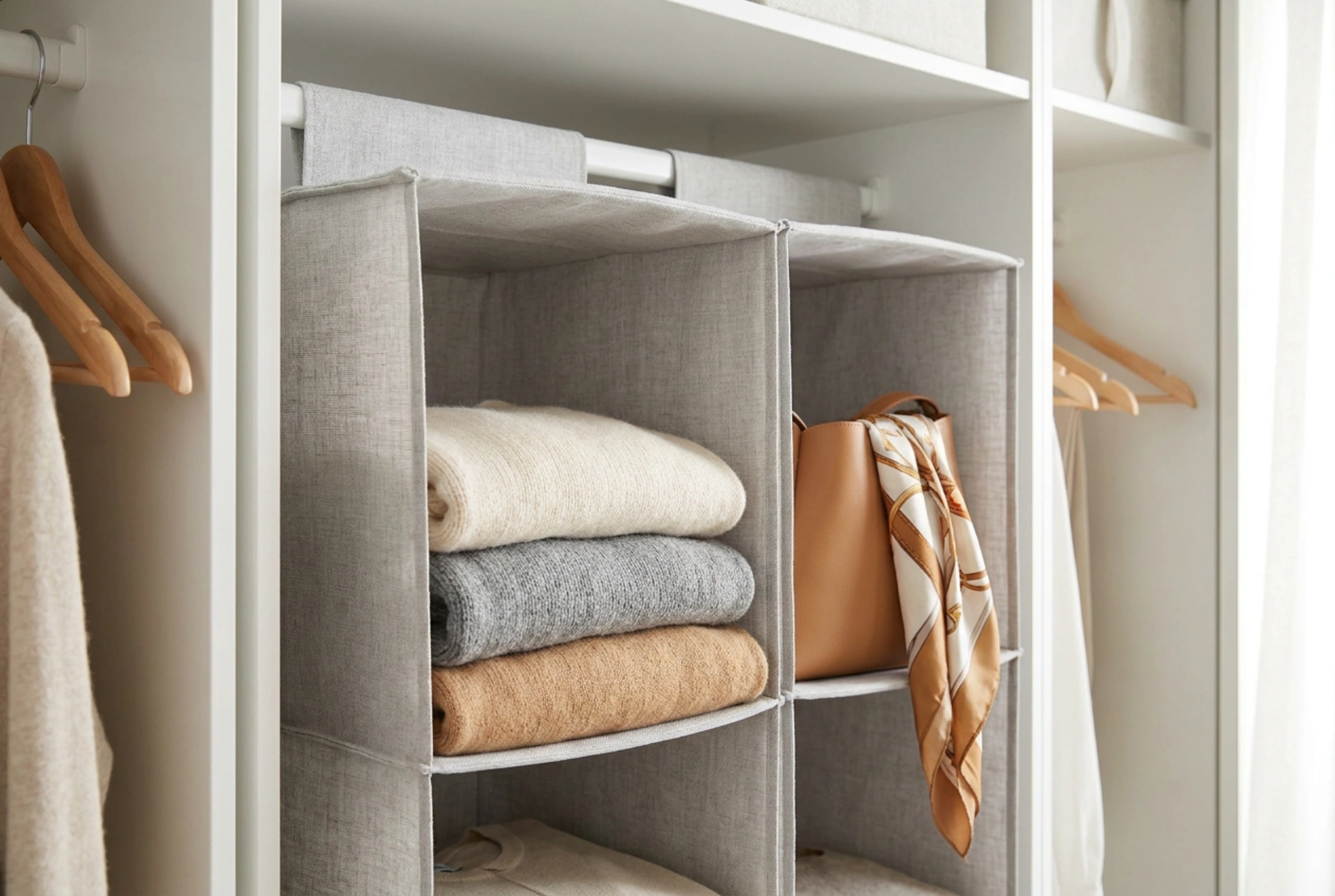
Traditional clothes hangers are the silent enemies of woollen, cashmere, and heavy cotton knitwear. When a sweater hangs from a hanger, gravity acts on the cumulative mass of the fabric, pulling it downwards. Because the contact area of a hanger is extremely narrow, it exerts high localised pressure on the shoulder seams, leading to permanent fibre elongation, unsightly shoulder bumps, and distorted necklines. A hanging fabric organiser solves this by transitioning the storage physics from vertical suspension to horizontal support. By folding sweaters and placing them on flat fabric shelves, the gravitational pull is distributed evenly across the entire surface area of the garment. This keeps the delicate natural fibres in a relaxed, unstretched state, preserving the original weave and fit of the garment. To prevent compression creasing, limit stacking to no more than three medium-weight sweaters per compartment, which maintains adequate air circulation between the layers.
Load Balancing and Centre of Gravity
Maximising the lifespan of both your hanging organiser and your wardrobe rail requires careful consideration of structural physics. Hanging organisers typically attach to the rail using high-tension hook-and-loop fasteners or metal hooks. This connection point bears the entire load of the unit. To ensure stability and prevent structural bowing, you must establish a low centre of gravity. Always place your heaviest items—such as thick cable-knit wool cardigans or heavy leather bags—in the lowest compartments. As you move upwards, the weight of the items should progressively decrease, with lightweight silk scarves, gloves, and small cotton accessories occupying the top shelves. This downward-tapering weight distribution minimises swaying when you retrieve items and prevents the fabric shelves from sagging, which would otherwise cause items to slide towards the centre.
Preserving Handbags from Structural Strain
Storing handbags incorrectly can permanently ruin their materials and construction. Suspending a handbag by its straps or handles from a wardrobe hook puts continuous tensile stress on the stitching and the material itself, leading to cracked leather, stretched handles, and weakened seams. Placing handbags flat on the shelves of a hanging organiser eliminates this stress, as the weight of the bag's contents or its own structure rests entirely on its base. For optimal preservation, fill the bags with acid-free tissue paper to maintain their shape, and store them upright. The breathable non-woven or canvas material of high-quality hanging organisers is ideal here; unlike sealed plastic storage boxes, breathable fabric allows natural air circulation, preventing the accumulation of moisture that can cause mildew on genuine leather.
Optimising Friction and Access for Accessories
The top shelves of your hanging organiser are perfect for small, lightweight accessories that are easily lost in deep drawers. However, organising these items requires understanding material friction. Slippery fabrics like silk, satin, or polyester scarves tend to slide off flat shelves easily when disturbed. To mitigate this, group these accessories into small, open fabric bins or felt baskets that slide directly into the organiser's compartments. This increases surface friction and keeps delicate items secure. Grouping accessories by material and colour not only creates visual order but also prevents rough fibres, such as coarse wool or metallic fasteners on pouches, from snagging delicate silk threads.