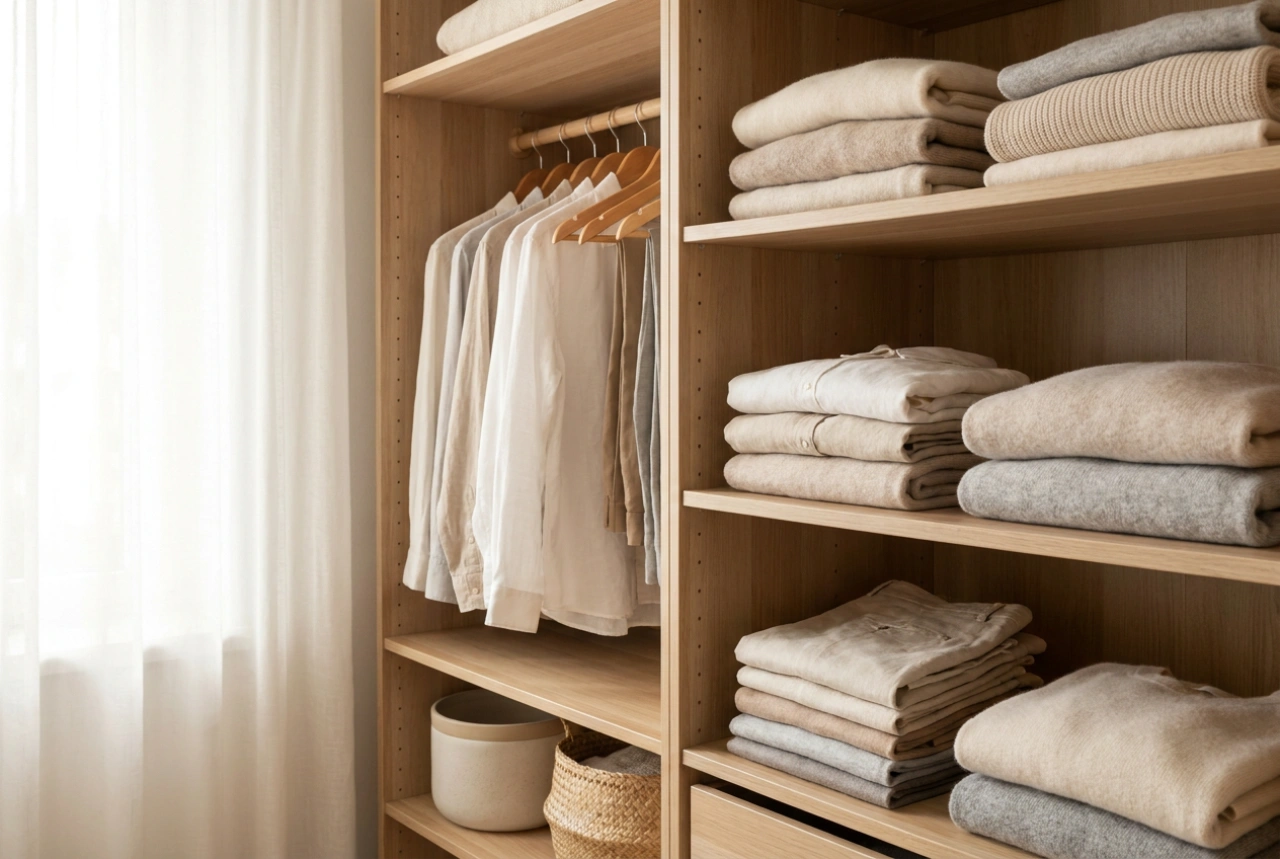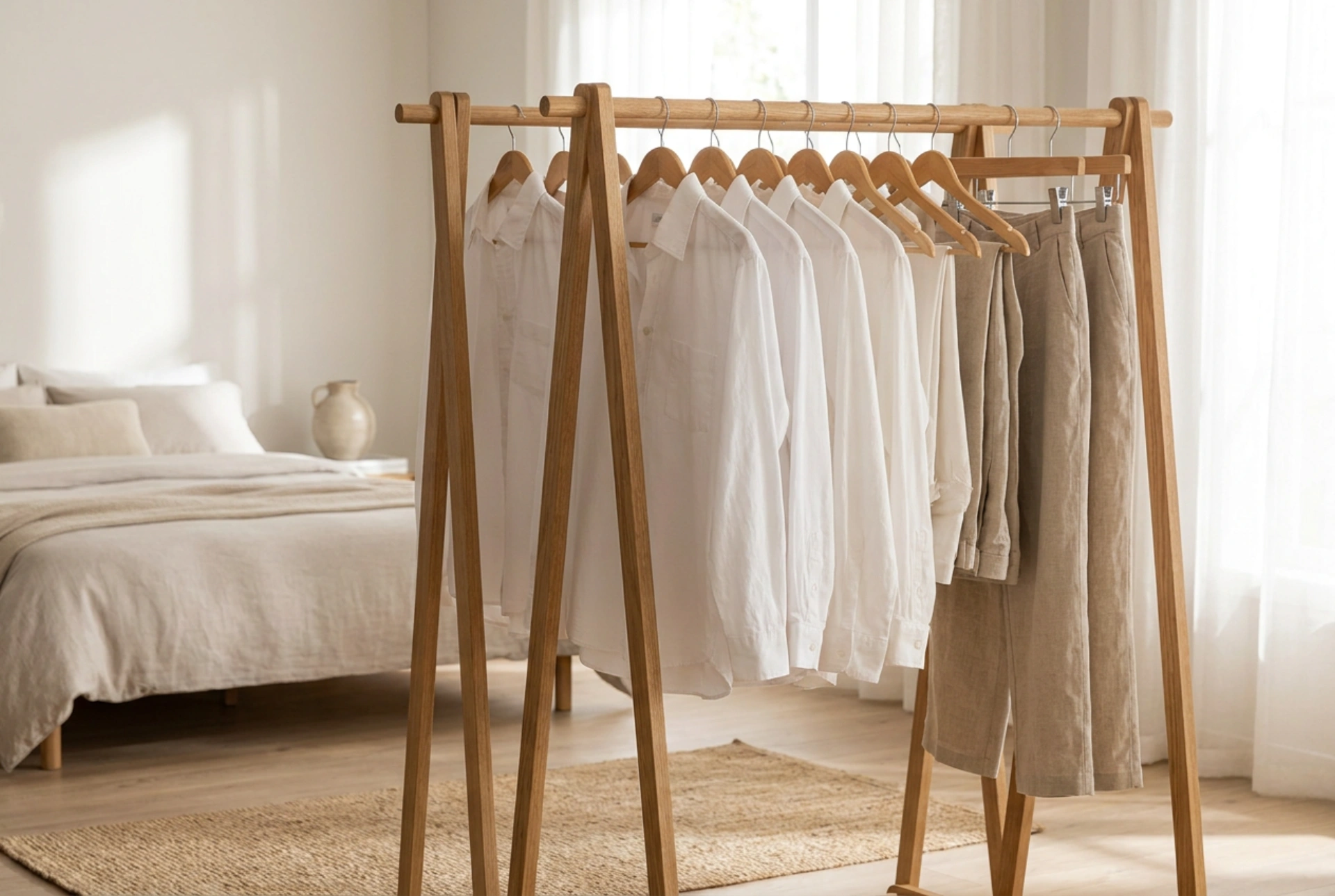


Maximising wardrobe capacity without causing structural strain or damaging delicate fabrics requires a strategic understanding of vertical space and gravity. Utilising a double clothes rail allows you to double your hanging capacity by exploiting unused vertical height, provided you balance load distribution and maintain proper airflow.
The Physics of Vertical Space: Mechanics of the Double Rail
Standard wardrobes often waste the lower half of their vertical volume, leaving a large empty space beneath shorter garments like shirts and jackets. A double clothing rack solves this spatial inefficiency by introducing a secondary tier, effectively dividing the vertical plane into two distinct functional zones. From a mechanical standpoint, this double-tier system utilises gravity to pull garments downward in parallel rows, keeping fabrics taut and reducing the compressive forces that occur when clothes are crammed horizontally onto a single, overloaded rail.
When planning a double-rail setup, structural load capacity is paramount. The vertical support columns of a freestanding or wall-mounted rack must distribute the combined downward gravitational force of the garments evenly to the floor or wall anchors. High-tensile steel or solid hardwood rails are preferred, as they resist bending under load. Bending, or deflection, not only damages the rack over time but also causes hangers to slide towards the lowest point of the curve, bunching garments together and restricting air circulation.
Fabric Chemistry and Tension Management
Hanging garments is not merely a storage method; it is a way to manage fabric tension and prevent fibre distortion. Different materials react uniquely to being suspended. Organic fibres such as cotton, linen, and wool possess natural elasticity and moisture-regain properties, meaning they absorb ambient humidity and slowly reshape themselves under the influence of gravity.
By using a double rail, you can separate garments by weight and length to optimise this natural wrinkle-release mechanism. Shorter, lighter items like cotton shirts and blouses are ideal for the upper rail, where they can hang freely without touching the lower tier. This prevents the hem of the upper garments from dragging on the lower rail, which would otherwise compress the fabric fibres and create horizontal crease lines that are difficult to steam out. Conversely, heavier woven trousers can be draped over non-slip bars on the lower rail, where their lower centre of gravity minimises structural strain on the overall unit.
Optimising Weight Distribution to Prevent Tipping
For freestanding double clothing racks, structural stability depends heavily on the centre of gravity. An unbalanced rack is prone to tipping, which can damage both the structure and your flooring. To maintain equilibrium, follow a strict bottom-heavy loading protocol.
- Place heavier items, such as structured blazers, heavy denim, or seasonal jackets, on the lower rail or at the outer edges of the rack closest to the vertical support pillars.
- Reserve the centre of the upper rail for lightweight garments like silk tops, linen shirts, and fine knits. This placement reduces bending stress on the longest, most vulnerable span of the upper rod.
- Ensure a minimum clearance of ten centimetres between the bottom hem of the top row and the bar of the lower row to facilitate smooth retrieval without snagging fabrics on the hangers below.
By keeping the heaviest masses concentrated lower and closer to the support points, you lower the overall centre of gravity, significantly increasing the lateral stability of the rack against accidental knocks.
Microclimate Control and Airflow Dynamics
Closely packed clothes act as a physical barrier to air movement, creating localised microclimates inside a wardrobe. In areas with high ambient humidity, stagnant air pockets allow moisture to accumulate within natural fibres, providing an ideal breeding ground for mould spores and musty odours. A double-rail system, when used correctly, prevents this by distributing garments over a larger surface area.
To maintain healthy airflow, practice the "two-finger rule": ensure there is at least a two-centimetre gap between each hanger. This gap allows ambient air currents to pass vertically and horizontally through the garments. As warm air rises, it flows upward through the lower tier and cools as it exits the top tier, creating a natural convection current that carries away residual body moisture from recently worn clothes. This simple thermodynamic movement is key to keeping fabrics fresh without relying on synthetic chemical deodorisers.