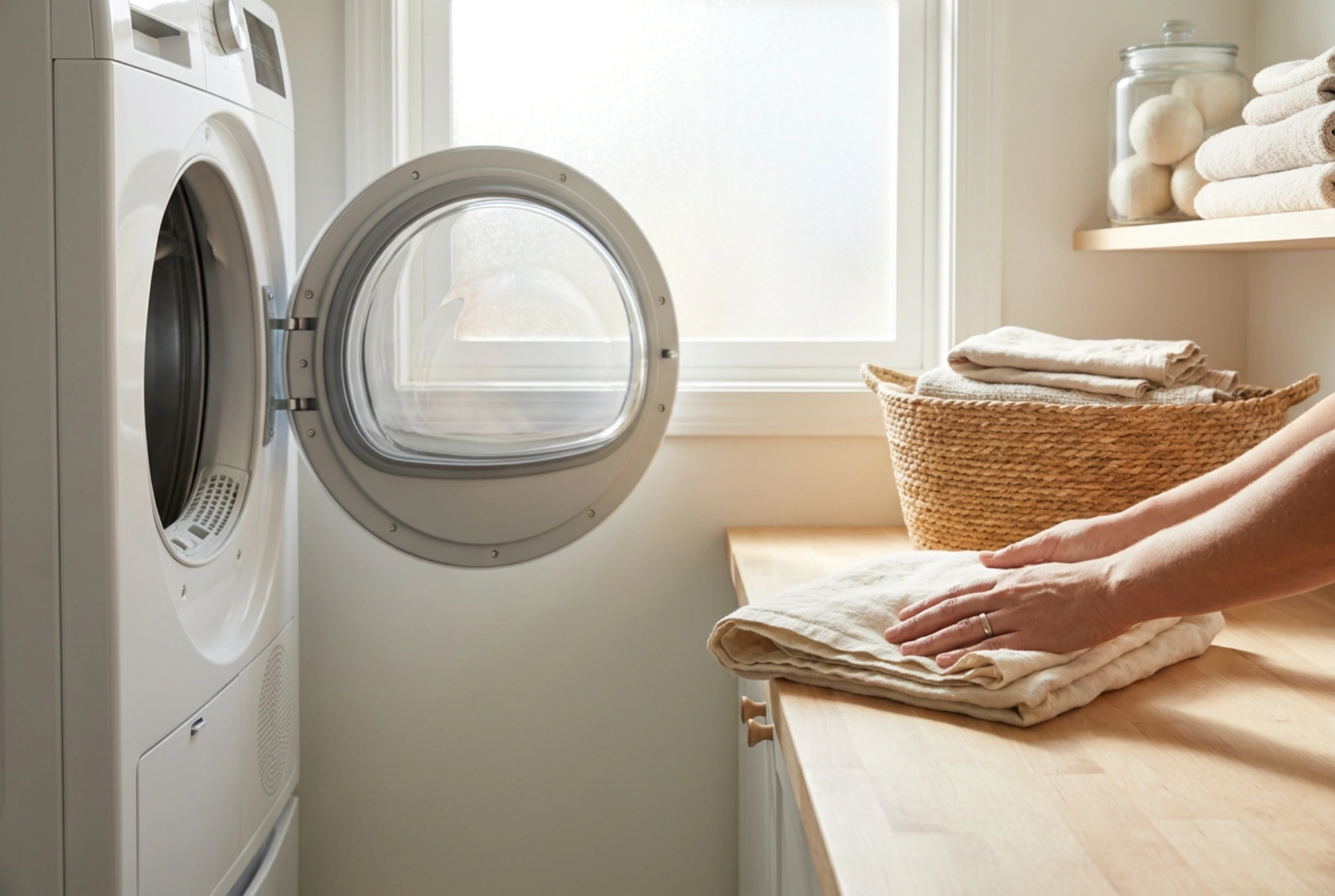


Operating an electric tumble dryer safely and efficiently is not merely a matter of pressing a button, but of managing thermal dynamics, mechanical friction, and airflow. By understanding the physics of heat transfer and the material science of different fibres, you can prevent fabric damage, reduce energy consumption, and eliminate fire hazards associated with lint accumulation.
The Physics of Airflow and Thermodynamic Efficiency
A tumble dryer operates on a simple thermodynamic principle: hot, dry air is introduced into a rotating drum to vaporise the moisture held within wet fabrics, and this moisture-laden air is then expelled or condensed. If airflow is restricted, the efficiency of this heat exchange drops dramatically. The heating element must work longer to achieve the same evaporative effect, which elevates the internal temperature of the cabinet. This excess thermal energy not only degrades elastic fibres and adhesives within garments but also poses a significant risk of overheating the electrical components of the appliance.
To maintain optimal thermodynamics, the primary barrier to airflow—the lint filter—must be cleaned before or after every cycle. Lint consists of microscopic cellulose fibres from cotton and synthetic microfragments shed during mechanical agitation. When these fibres accumulate on the mesh, they create a physical blockade that forces the dryer’s fan motor to work against high static pressure, drawing more electrical current and increasing the risk of thermal cutout failure.
Fabric Science: Temperature Thresholds and Fiber Structure
Different textile fibres possess unique thermal thresholds and structural characteristics that dictate how they behave under heat. Selecting the correct temperature setting is a matter of polymer chemistry:
- Natural Fibres (Cotton, Linen): Cotton and linen are highly hydrophilic, absorbing water deep within their crystalline polymer structures. While they can tolerate higher temperatures (typically up to 80°C) without melting, excessive heat combined with mechanical action causes "structural relaxation shrinkage." This occurs when the tension applied during fabric manufacturing is released as the moisture evaporates, causing the fibres to contract.
- Synthetic Fibres (Polyester, Nylon, Acrylic): Synthetic materials are thermoplastic polymers. If subjected to temperatures exceeding their glass transition point (often around 50°C to 60°C for delicate blends), these fibres begin to soften, lose their shape, and can permanently crease or fuse together. Always dry synthetics on low heat settings.
- Protein Fibres (Wool, Silk): Wool fibres are covered in microscopic scales (cuticles) that lock together when subjected to moisture, heat, and agitation, leading to irreversible felting and shrinkage. Wool should generally be air-dried or processed only on specialised, low-agitation, low-temperature cycles.
The Impact of Drum Volume and Loading Mechanics
For efficient evaporation to occur, garments must have room to tumble freely. When the drum is overloaded, fabrics pack tightly against one another, restricting the circulation of hot air. Instead of evaporating, moisture is trapped in the center of the dense mass, leading to damp spots, uneven drying, and prolonged cycle times that waste electricity.
Conversely, underloading the dryer is also inefficient. Without sufficient mass, the fabrics cannot properly interact with the drum's lifters, resulting in garments sliding along the bottom of the drum rather than cascading through the airflow path. To optimise mechanical action, fill the drum to approximately two-thirds of its volume, allowing ample headspace for the clothes to drop through the heated air stream, which maximises the rate of moisture extraction.
Essential Maintenance Protocols for Appliance Longevity
Beyond daily lint clearing, deep maintenance prevents systemic failures. For condenser and heat-pump dryers, the condenser unit must be regularly rinsed to remove fine lint particles that bypass the primary filters. If these coils become clogged with a wet layer of dust, the heat exchange process fails, and the appliance will continuously run without drying the load.
For vented models, checking the external ductwork annually is crucial. Rigid metal ducting is highly recommended over flexible plastic or foil ducts, as smooth metal walls minimise air friction and prevent lint from settling in ridges. Ensure that the exterior flap vent moves freely and is not blocked by organic debris, which could cause exhaust air to back up into the laundry area.