

Managing a hallway wardrobe requires a systematic approach to spatial physics and material organization to prevent visual clutter and physical obstruction. By understanding the dynamics of volume, airflow, and accessibility, you can transform a chaotic entry point into a highly efficient storage system.
The Physics of Entryway Storage: Airflow and Moisture Control
The hallway is a transition zone where outdoor humidity meets indoor warmth. When damp coats and shoes are placed immediately into a sealed cupboard, the lack of air circulation creates a microclimate with high relative humidity. This trapped moisture condenses on cold surfaces, encouraging the growth of mould spores and causing fabric degradation. To prevent this, passive ventilation is essential. Maintaining a gap of two to three centimetres at the top and bottom of cabinet backboards, or choosing slatted doors, utilizes natural convection currents to continuously cycle fresh air through the storage unit.
Furthermore, wet outerwear must be treated before storage. Water-resistant fabrics coated with polyurethane or durable water repellent (DWR) should be allowed to shed surface water on an open hanging rail before being enclosed. Storing damp items together causes capillary action, transferring moisture and soil between fabrics, which damages delicate wools and silks.
Ergonomics and Gravity: Structuring Wardrobe Zones
Efficient storage relies on organizing items based on gravity, weight distribution, and the ergonomics of human movement. A hallway wardrobe should be divided into three distinct vertical zones to optimize retrieval times and reduce physical strain:
- The Lower Zone (0–60 cm): Reserved for heavy footwear, bags, and items with a high centre of gravity. Storing heavy items at the base stabilizes free-standing cabinetry and reduces the effort required to lift heavy loads.
- The Active Zone (60–170 cm): Located between hip and eye level. This zone experiences the highest frequency of physical interaction. Hang daily-use coats, jackets, and place small trays for keys and accessories here. Using sturdy, wide-shouldered wooden hangers preserves the structural integrity of heavy wool coats by distributing their mass evenly.
- The Upper Zone (170 cm and above): Suited for lightweight, seasonal items. Because accessing this area requires reaching upward or using a step stool, it should hold low-use items like seasonal hats, scarves, or spare textiles stored in breathable fabric containers.
Material Science of Shoe Storage and Odour Mitigation
Footwear carries external contaminants, moisture, and organic compounds from sweat into the wardrobe. Leather, synthetics, and rubber react differently to these factors. Leather is porous and absorbs moisture; if stored without proper drying, it can warp and develop mildew. To combat this, use unvarnished cedar shoe trees, which absorb moisture via capillary action and release natural phytoncides that neutralize bacteria.
For active odour control in shoe compartments, leverage simple chemical reactions. Sodium bicarbonate (baking soda) acts as an amphoteric substance, meaning it reacts with both highly acidic and highly alkaline odour molecules, neutralizing them rather than masking them. Placing small, breathable cotton sachets filled with sodium bicarbonate and activated charcoal on shoe shelves absorbs moisture and volatile organic compounds (VOCs) effectively.
Visual Minimization: Eliminating Sensory Noise
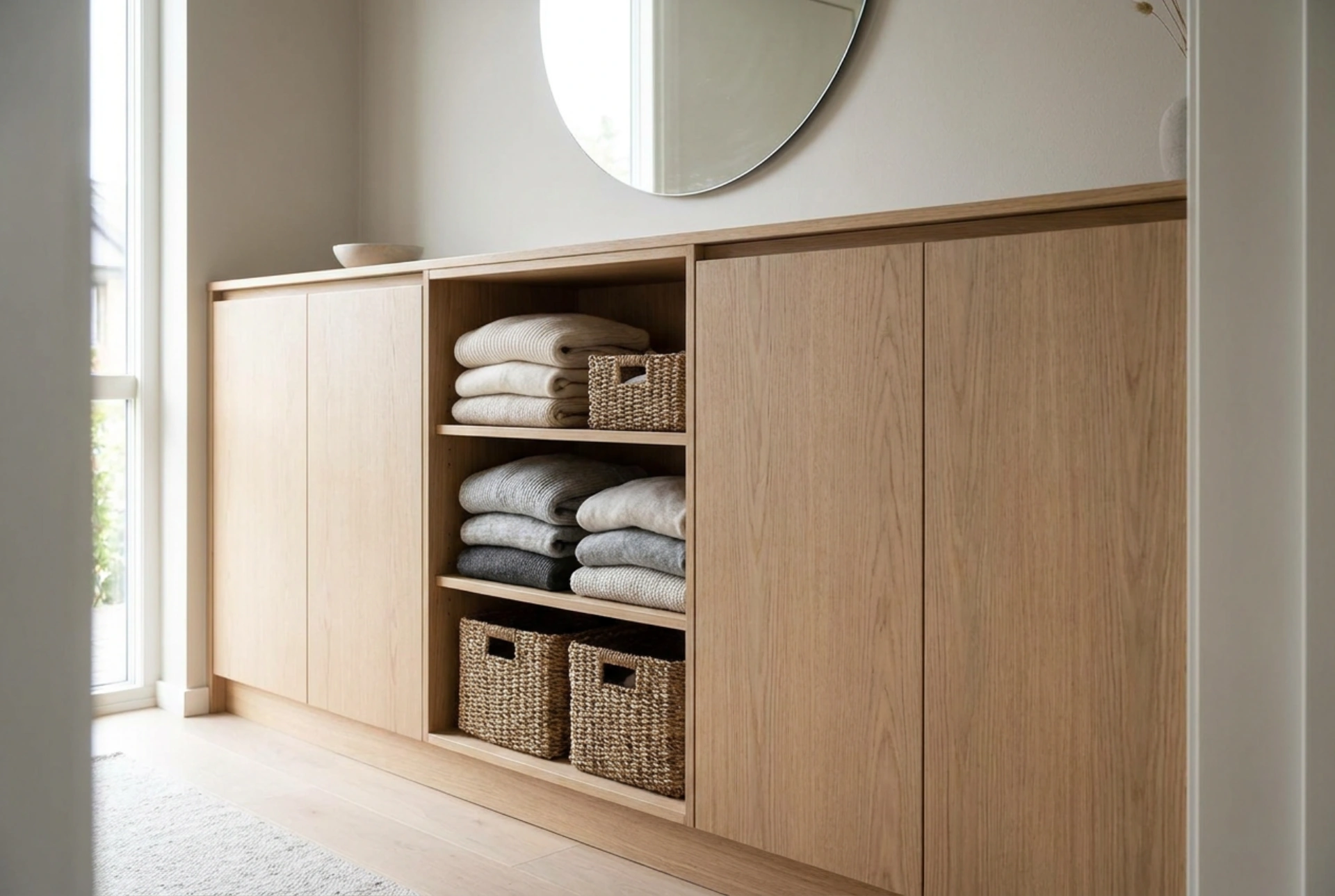
Visual chaos in a hallway increases cognitive fatigue. To achieve a minimalist aesthetic, focus on the geometry of the wardrobe exterior and the uniformity of the interior. Handle-less doors equipped with mechanical push-to-open latches eliminate protruding hardware, turning the wardrobe facade into a seamless architectural wall. Matte surfaces are preferable to gloss finishes, as they diffuse light evenly and do not highlight dust particles or oily fingerprints.
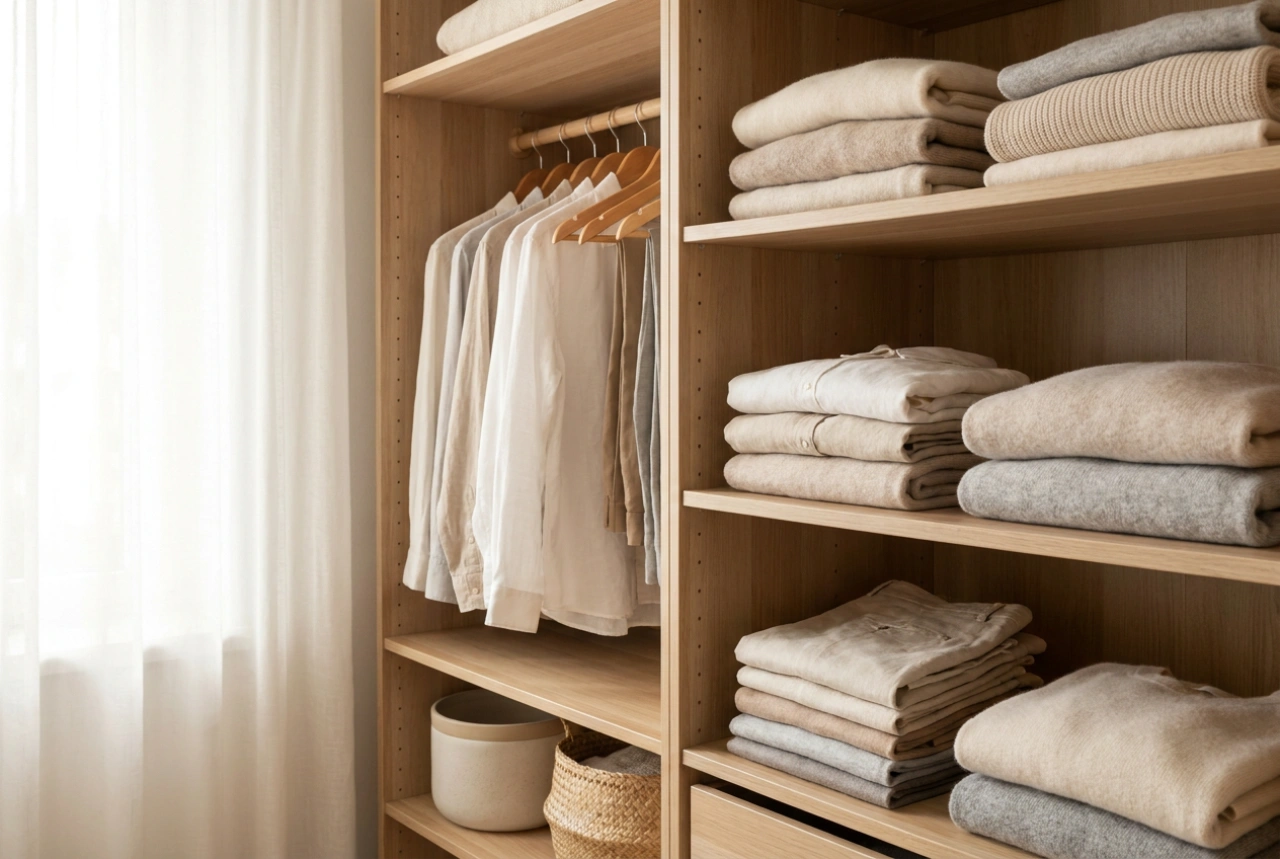
Inside the wardrobe, use modular storage containers of identical dimensions and neutral tones. This creates a uniform visual field, masking the irregular shapes of various household items. Utilizing felt, canvas, or wood containers ensures that items are physically segregated, preventing mechanical friction and wear between different material types.