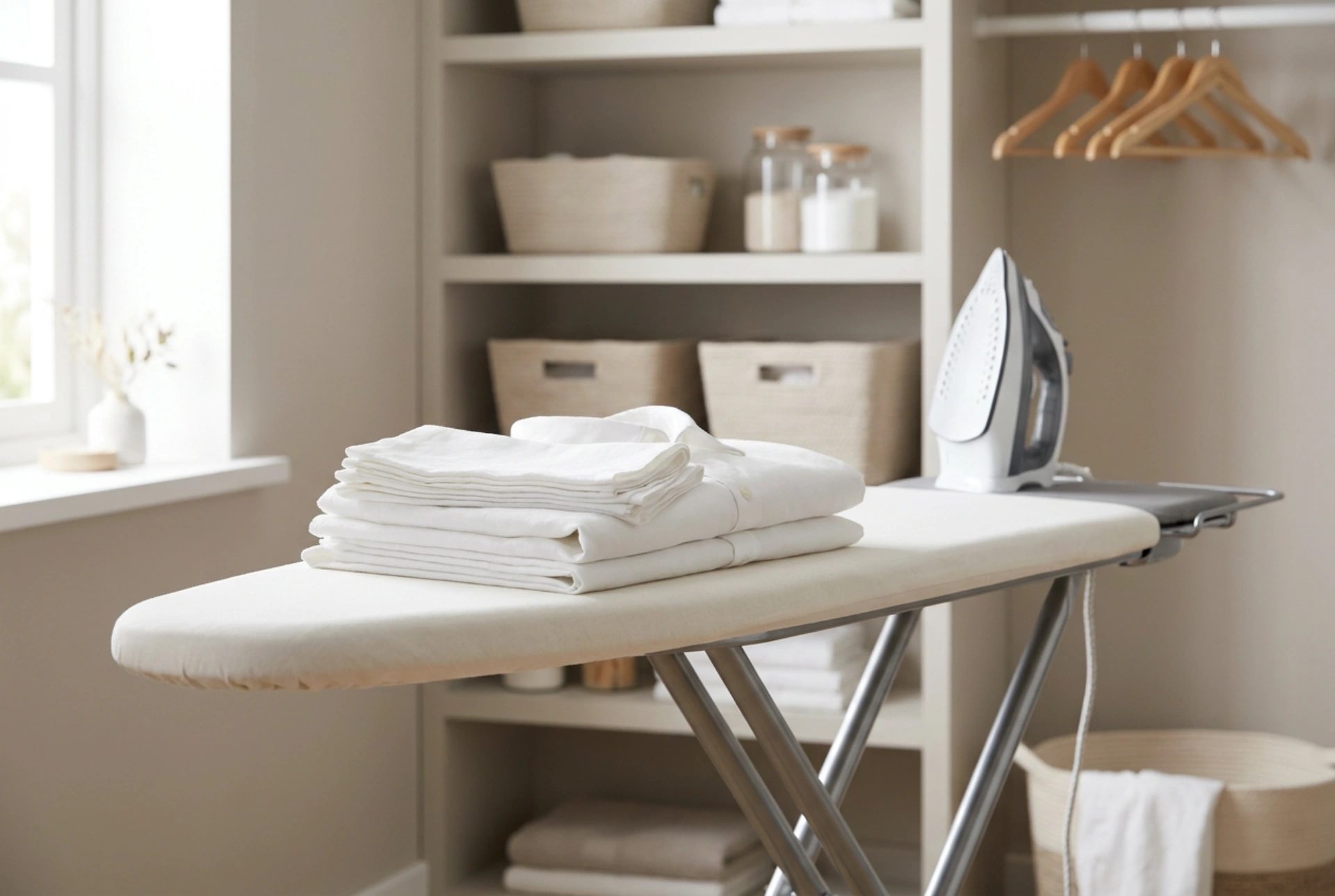


Selecting a professional-grade ironing board involves understanding thermodynamics and moisture management to achieve crisp, wrinkle-free garments efficiently. The right equipment transforms a tedious chore into a precise, systematic process of heat and steam manipulation.
The Science of Board Construction and Heat Retention
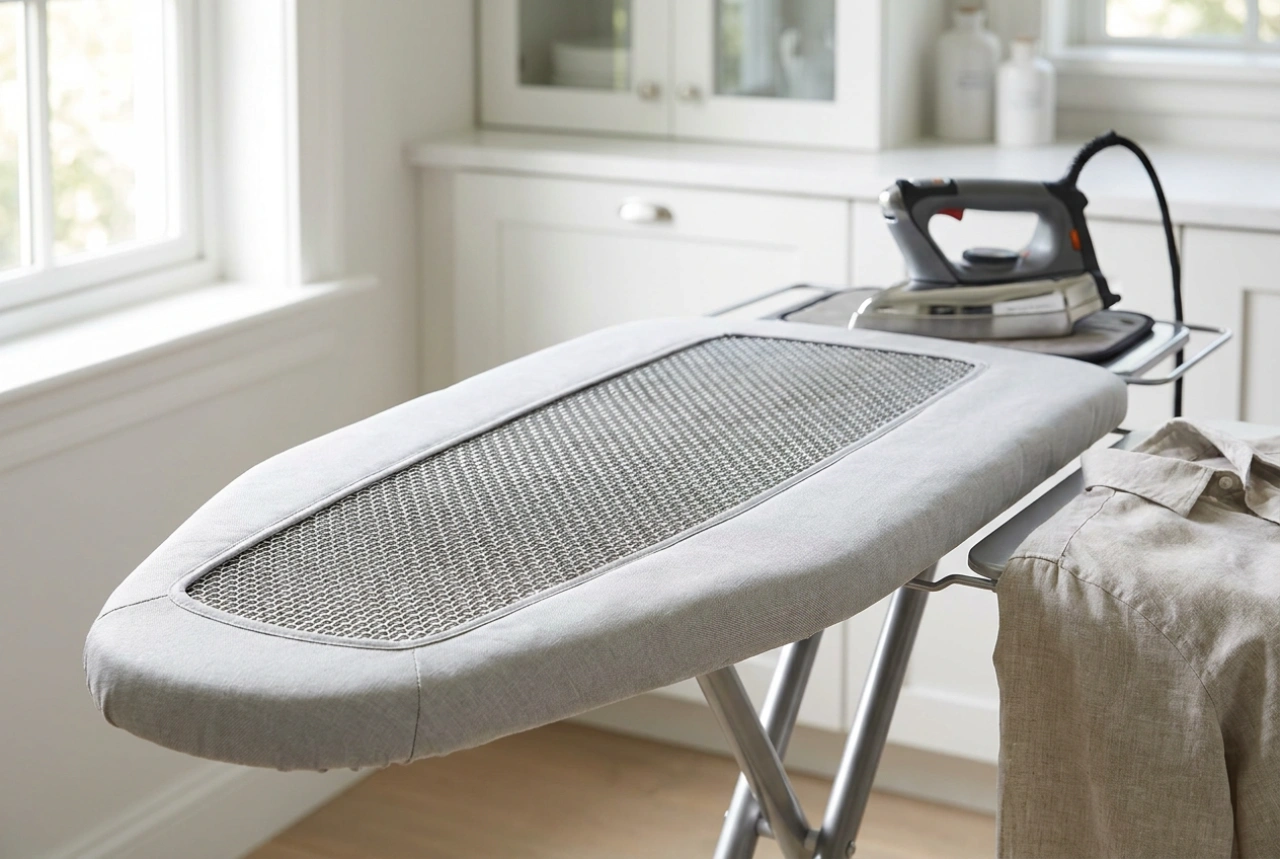
The foundation of any high-performance ironing board lies in its substrate. Standard consumer boards often utilize thin, solid metal sheets that warp under extreme heat or trap moisture, leading to damp garments and rusted frames. Professional boards employ a heavy-duty expanded steel mesh. This porous structure allows pressurized steam to pass completely through the garment and the board, preventing localized condensation.
Equally critical is the multi-layered padding system. A professional setup typically features a thick layer of dense needle-punched felt rather than cheap polyurethane foam. Foam degrades rapidly under high temperatures, losing its elasticity and causing the pattern of the underlying metal mesh to transfer onto your clothing. Felt distributes pressure evenly and retains heat, which helps maintain a stable temperature during the pressing process. Over this, a high-thread-count cotton cover coated with heat-reflective materials, such as silicone or metallized ceramic particles, is used. This reflective surface redirects thermal energy back up through the underside of the fabric, essentially pressing the garment from both sides simultaneously and drastically reducing treatment time.
Active Air Extraction and Inflation Functions
True professional ironing tables incorporate active motorized systems to control airflow. Understanding these mechanical processes is key to mastering garment care:
- Suction Function: By creating a vacuum through the board, the fabric is held firmly in place, preventing slipping. More importantly, the vacuum draws steam deep through the textile fibers, instantly removing residual moisture and cooling the fabric. This rapid cooling locks the fibers into their newly flattened state, preventing immediate re-creasing.
- Blowing Function: The motor reverses to inflate the cover, creating a cushion of air. This is indispensable for delicate fabrics like silk, wool, or cashmere. Ironing on an air cushion allows you to smooth out wrinkles using the weight of the iron alone, without pressing seams, pockets, or linings into the face of the fabric, which otherwise creates unsightly shiny patches.
Mechanical Stability and Ergonomic Adjustability
The physics of pressing require physical force, which must be countered by a rigid, stable frame. High-end boards feature asymmetrical, wide-diameter steel legs with non-slip rubber feet. This design prevents wobble, which absorbs physical energy and reduces the efficiency of your strokes. Ergonomics play a vital role in long sessions; a continuous height adjustment system, often assisted by gas springs or robust lever locks, allows the user to set the board precisely at hip height. This alignment prevents lower back strain and allows the natural weight of your upper body to assist in applying downward pressure, reducing arm fatigue.
Integrating Steam Generators and Cable Management
Modern professional pressing relies on steam generators rather than traditional steam irons. These units house large water boilers that generate high-pressure dry steam, weighing significantly more than standard water tanks. A professional board features an oversized, reinforced iron rest capable of safely supporting up to ten kilograms. This rest must be covered with heat-resistant silicone buffers to isolate thermal energy and prevent scratching. Furthermore, an integrated vertical cord guide, or flex antenna, holds the heavy steam hose aloft. This simple mechanical solution prevents the hose from dragging across the freshly pressed edges of the fabric, eliminating friction and preserving the finished look of the garment.