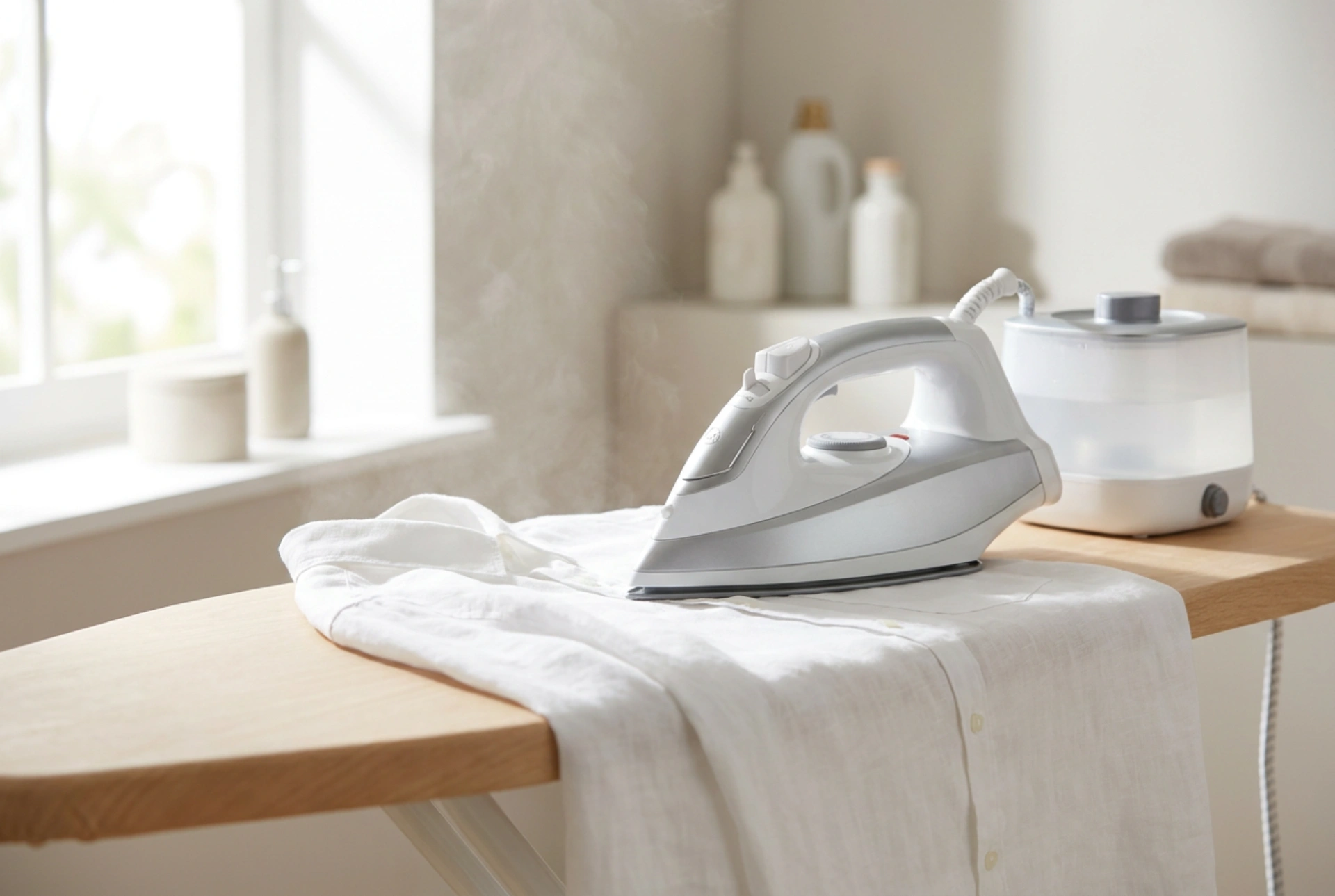


Using a steam generator station offers professional-grade ironing results, but without the correct technique and moisture management, fabrics can easily re-crease or develop damp spots. Eliminating creases permanently relies on a fundamental principle of materials science: using heat and moisture to break molecular bonds, followed by immediate cooling and drying to set the fibers in their new, flat shape.
The Molecular Science of Crease Removal
To understand why creases form—and how to eliminate them—one must look at the molecular structure of natural fibers like cotton, linen, and wool. These fibers are held together by hydrogen bonds. When a fabric wrinkles, these bonds have locked the fibers into a bent position. Steam generator stations excel because they deliver high-pressure steam that penetrates deep into the fabric core. The water molecules in the steam temporarily disrupt the hydrogen bonds between polymer chains, rendering the fibers highly pliable. However, if the fabric remains damp and warm when you move it, new hydrogen bonds will instantly reform in wrinkled positions. The key to crease-free ironing is the dual action: applying steam to relax the fibers, followed immediately by dry heat or cool airflow to evaporate moisture and lock the fibers into a perfectly flat alignment.
Preventing Condensation on the Ironing Board
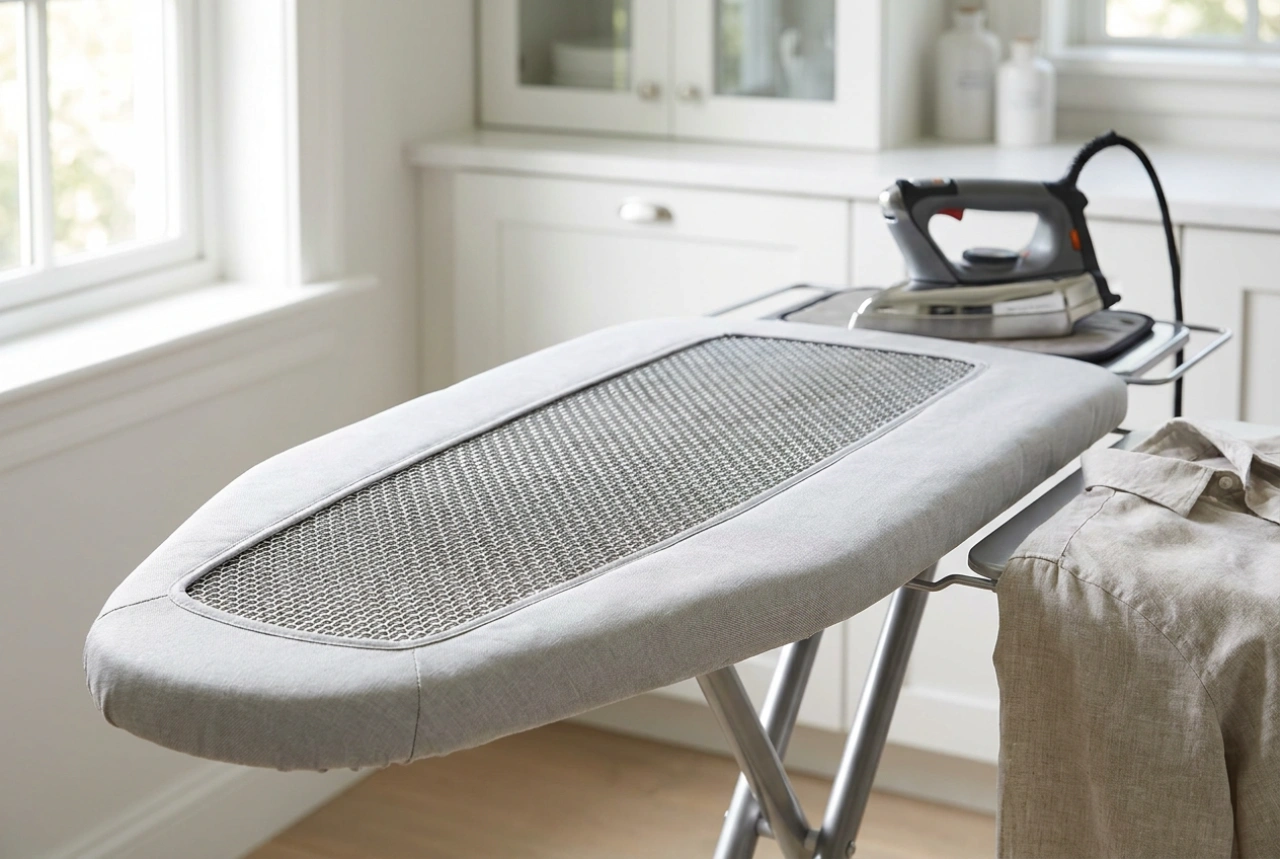
A common issue when using a powerful steam station is the accumulation of condensation on the ironing board. Because a steam generator produces a high volume of pressurized vapor, this moisture can quickly saturate a standard, solid-backed ironing board. When the board pad becomes wet, it cools down, causing the steam to condense into liquid water. This dampness transfers back to the garment, making it impossible to dry-set the fibers. To prevent this, always use an ironing board with a perforated mesh metal base that allows steam to escape downward. Furthermore, high-quality, thick felt pads wrapped in breathable cotton covers help distribute heat evenly while absorbing minimal moisture. If you use an active ironing board, utilize the extraction function to pull steam through the fabric and board, instantly drying the garment from underneath.
Movement Techniques and the Two-Stroke Rule
Creases often occur during the ironing process itself due to poor iron movement or incorrect sequence. To avoid dragging or bunching the fabric, always follow the "two-stroke rule". On the forward stroke, press the steam trigger to release high-pressure vapor, relaxing the fibers directly ahead of the soleplate. On the return stroke, release the steam trigger and use only the dry heat and weight of the iron to dry and set the fabric. Never move the iron in circular patterns; instead, work in straight, linear paths parallel to the grain of the fabric. Additionally, use your free hand to gently guide and tension the fabric ahead of the iron, ensuring no micro-folds are trapped under the soleplate. Always iron garments from the center outward to push any slack fabric toward the edges rather than trapping it in the middle.
The Order of Operations for Garments
Ironing a complex garment like a button-down shirt requires a strategic sequence so that completed sections do not wrinkle while you work on others. Always start with the smallest, thickest, and most structured parts. First, iron the collar from the points toward the center on both sides. Next, move to the cuffs, ironing them flat from the inside out. Follow this by draping the shoulder yoke over the narrow end of the board to iron it flat. Once these detailed areas are complete, iron the sleeves, aligning the seams carefully to avoid creating accidental double-creases. Finally, iron the large body panels, starting with the button placard, moving to the back, and finishing with the front panels. Hang the garment immediately on a sturdy hanger to allow it to cool completely before storing it in a wardrobe.
Material-Specific Temperature and Steam Calibration
Different materials require precise thermodynamic conditions to release wrinkles without sustaining thermal damage. Heavy linen and 100% cotton possess robust molecular structures that require maximum steam output and high temperatures to relax. For these fabrics, apply continuous steam and moderate pressure. Conversely, synthetic fibers like polyester, nylon, and acrylic are thermoplastic; they melt at high temperatures. When handling synthetics, reduce the soleplate temperature to a low setting and use minimal steam, or place a clean, dry cotton pressing cloth between the fabric and the iron to distribute heat gently. Silk and delicate wools require delicate handling: use medium heat, dry steam, and iron them on the reverse side to prevent fabric glazing or shine.