

Proper storage of over-ear headphones in a protective case prevents permanent deformation of the ear cushions and headband tension loss, extending the lifespan of the acoustic seal. Understanding how structural pressure and material memory affect polyurethane foam and synthetic leather ensures your equipment retains its ergonomic shape and acoustic properties.
The Material Science of Ear Cushion Deformation
The ear cushions of premium headphones are typically constructed from viscoelastic polyurethane foam (commonly known as memory foam) wrapped in protein leather, genuine leather, or synthetic fabrics. Viscoelastic foam responds to heat and pressure, conforming to the shape of your head to create an acoustic seal. However, when subjected to localized, continuous pressure inside an ill-fitting or improperly packed case, the open-cell structure of the foam can permanently collapse.
This structural failure, known as compression set, occurs when the polymer chains within the foam are forced into a compressed state for extended periods. Once the foam loses its elasticity, the cushion becomes flat, reducing the distance between the driver and your ear. This not only compromises comfort but also alters the acoustic chamber, directly degrading sound reproduction and bass response. To prevent this, the cushions must rest naturally inside the case without contacting rigid surfaces or protruding accessories like cables.
Managing Headband Tension and Joint Fatigue
Over-ear headphones rely on a calibrated spring steel or reinforced plastic band to apply a specific clamping force. When headphones are squeezed into a case that is too small, or when they are stored with the earcups folded inward under constant tension, the headband materials experience mechanical fatigue. Over time, this decreases the clamping force, leading to a loose fit and poor passive noise isolation during use.
Furthermore, the rotating hinges and swivelling joints are high-stress areas. Storing headphones without aligning these joints to their neutral, intended positions puts lateral stress on the pins and internal wiring. Always return the adjustable headband sliders to their smallest setting before placing the headphones in a case. This retracts the exposed metal or plastic arms, reinforcing the structural integrity of the frame and preventing bending forces from acting on the sliders.
The Correct Placement Protocol
To ensure your headphones remain free from physical distortion, follow a systematic method when placing them in their protective shell:
- Retract the Sliders: Slide the earcups back to their minimum extension. This centers the weight distribution and prevents the internal wiring from being pulled or crimped at the entry points.
- Align the Earcups: If your headphones feature swiveling earcups, rotate them flat. Ensure they rotate in the direction intended by the manufacturer; forcing a joint past its natural stop can crack the housing.
- Manage the Cable: Unplug detachable cables. Coiling a cable tightly and stuffing it directly under or between the ear cushions creates concentrated pressure points on the foam. Instead, coil the cable loosely using the over-under technique to avoid twists, and store it in the designated accessory compartment or mesh pocket.
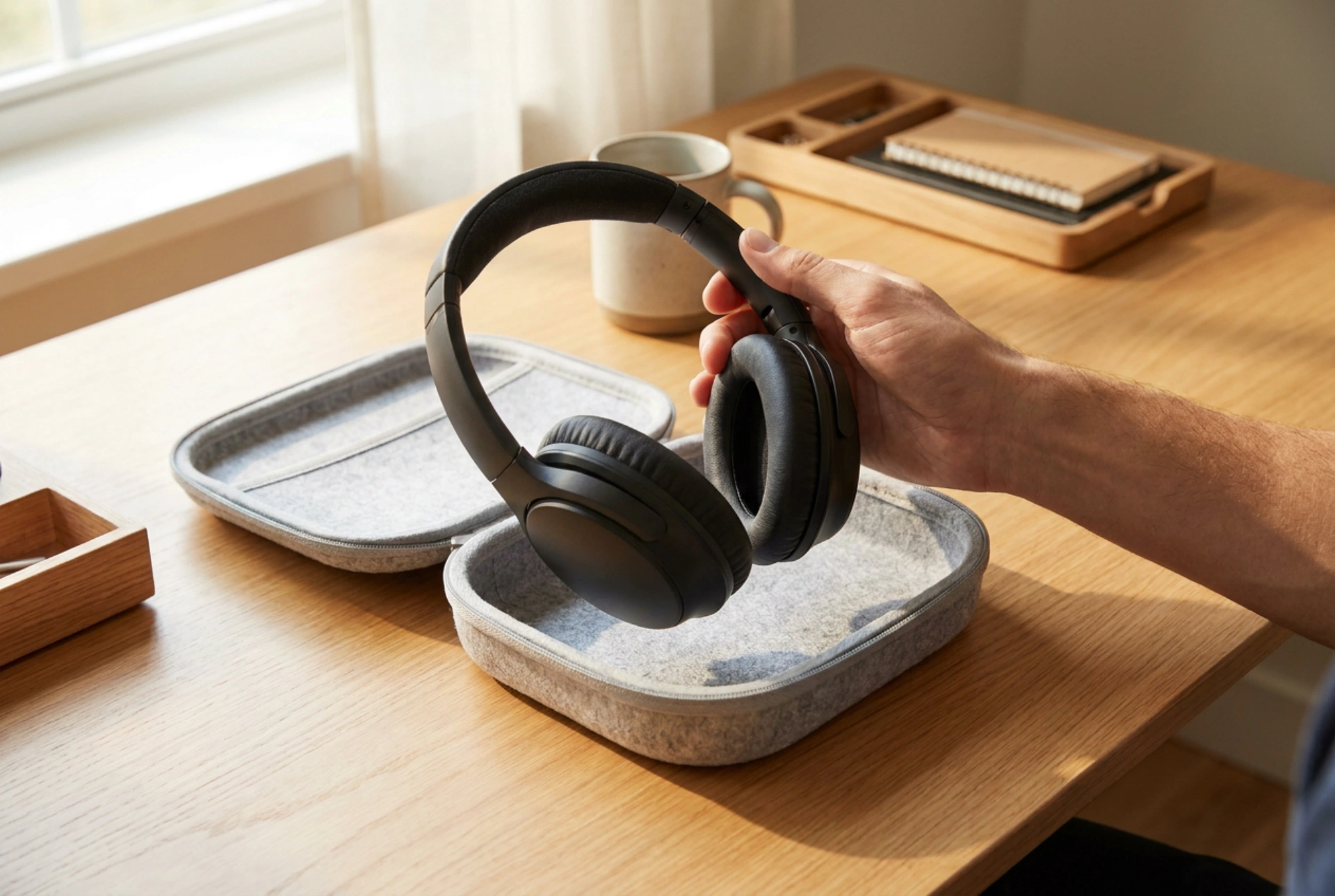
- Verify Clearance: Ensure that when the case lid is closed, it does not compress the top of the headband or the outer shells of the earcups. The case should guide the headphones, not compress them.
Controlling the Internal Microclimate
Material degradation is accelerated by environmental factors trapped within an airtight case. Skin oils (sebum), sweat, and hair products degrade synthetic and natural leathers through a process called hydrolysis, where moisture breaks down the chemical bonds of polyurethane. When sealed in a dark, stagnant case, this process accelerates, causing the outer layer of the cushions to flake, peel, or harden.
Before storing your headphones, wipe the cushions and headband with a dry, lint-free microfiber cloth to remove acidic oils and moisture. Additionally, place a small sachet of silica gel inside the case. The silica acts as a desiccant, absorbing ambient humidity and maintaining a dry environment that prevents the chemical breakdown of the synthetic coatings, ensuring the materials remain pliable and crack-resistant.
Summary Checklist for Long-Term Storage
- Always wipe down cushions to remove oils and sweat before casing.
- Retract adjustable sliders completely to protect internal wiring.
- Unplug cables and store them in separate compartments to avoid pressure marks.
- Keep a silica gel packet in the case to combat moisture and hydrolysis.
- Never stack heavy objects on top of the headphone case, even if it is a hardshell design.