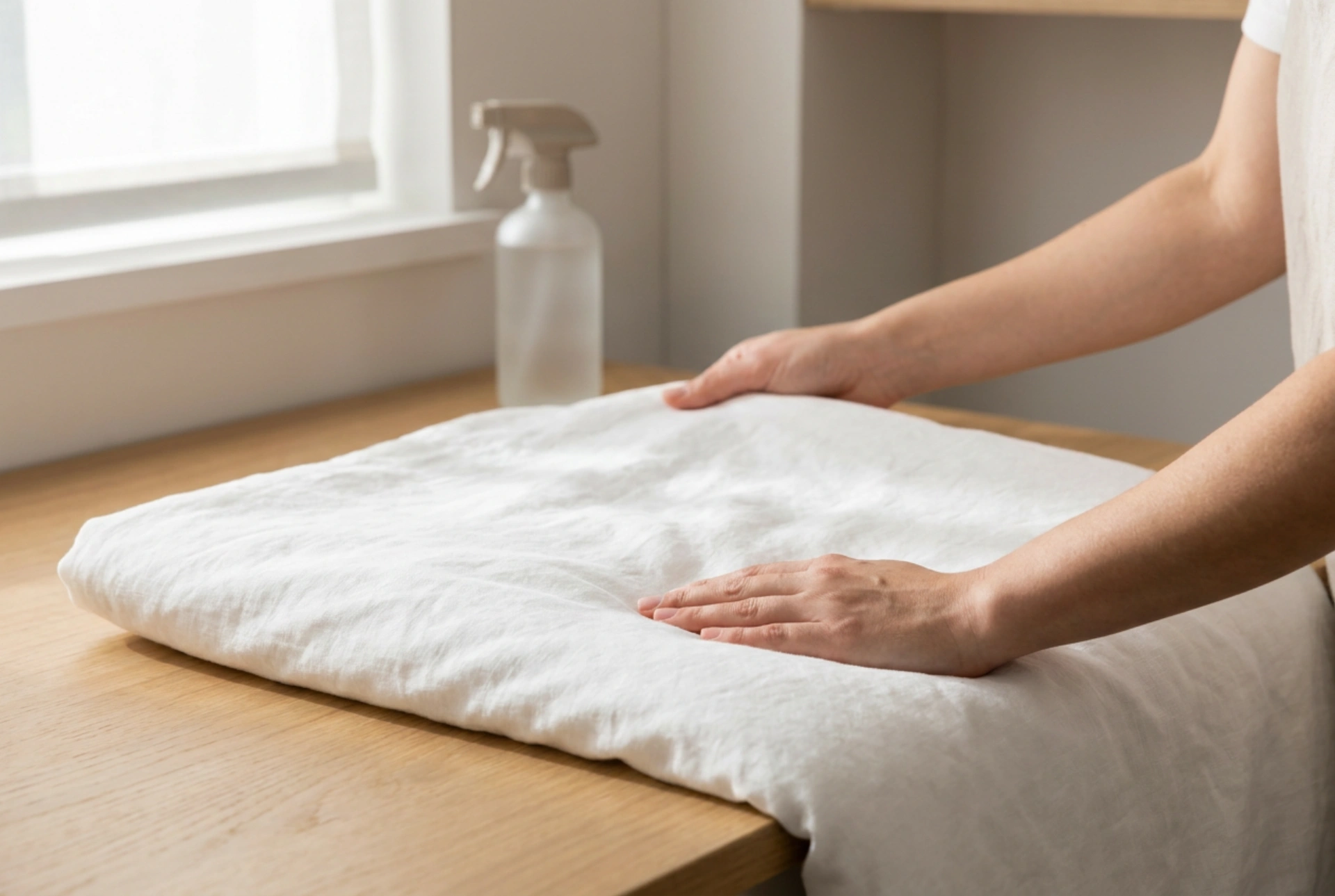


Achieving crisp, hotel-quality bed linen at home relies on the precise application of moisture, heat, and physical tension to realign fabric fibres. By understanding the material science of natural textiles, you can easily replicate a professional mangle finish using a domestic rotary iron or a standard steam press.
The Science of Smoothness: Why Moisture Matters
Natural fabrics like cotton and flax (linen) are composed of cellulose chains held together by hydrogen bonds. When these fabrics dry naturally after washing, the bonds lock into random, wrinkled positions. To remove these creases, you must temporarily break these hydrogen bonds, which is achieved through a combination of water and heat. Water acts as a natural plasticiser, slipping between the molecular chains and making them highly pliable.
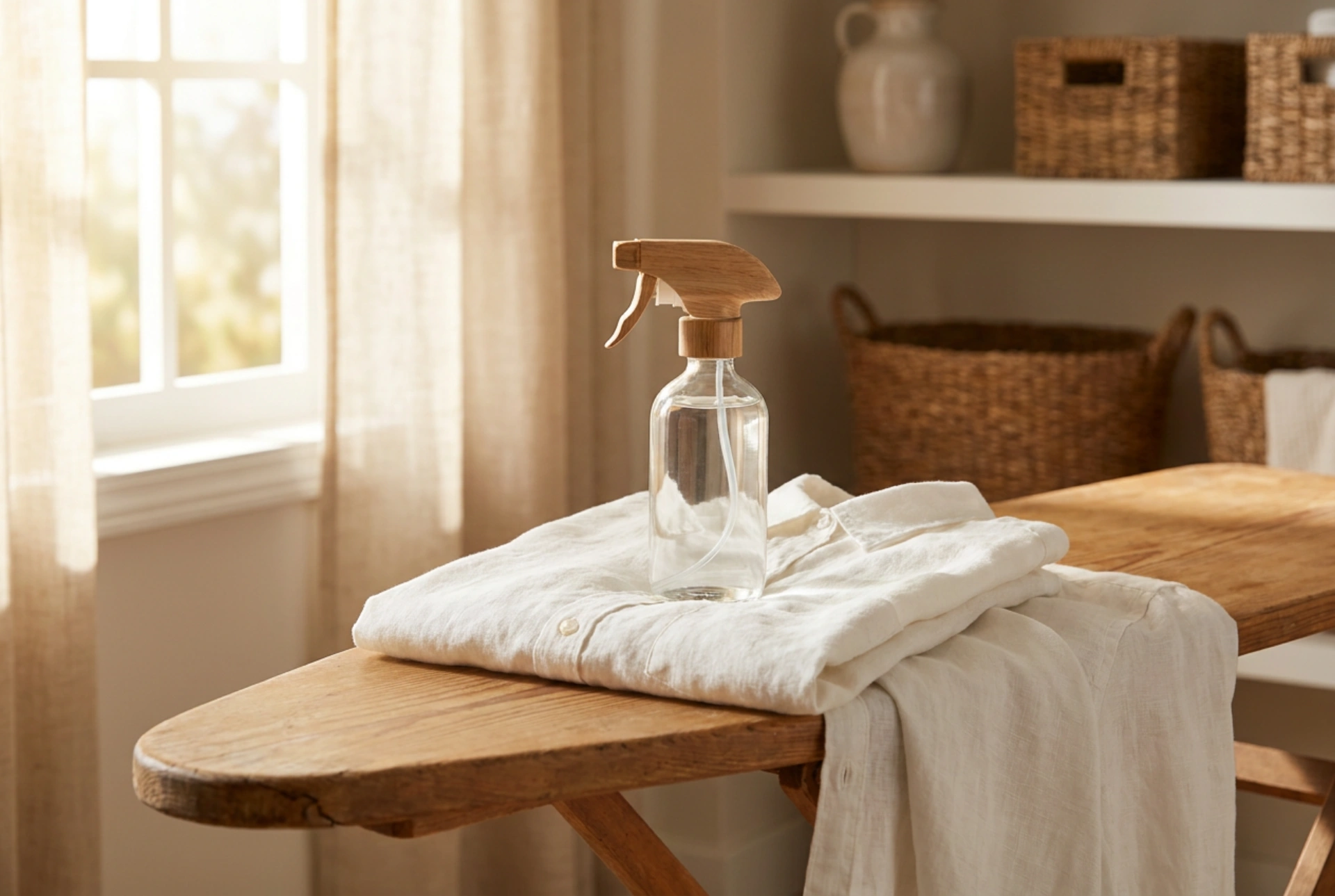
Attempting to press dry bed sheets is highly inefficient and can damage the fibres. Instead, the fabric should be slightly damp—approximately 10% to 15% residual moisture. If the linen has already dried completely, mist it evenly with distilled water using a fine-spray bottle, roll it up tightly, and let it rest in a clean container for thirty minutes. This allows the moisture to penetrate the core of the fibres evenly, relaxing the cellulose structure and preparing it for the thermal reset.
The Mechanics of the Mangle: Tension and Heat
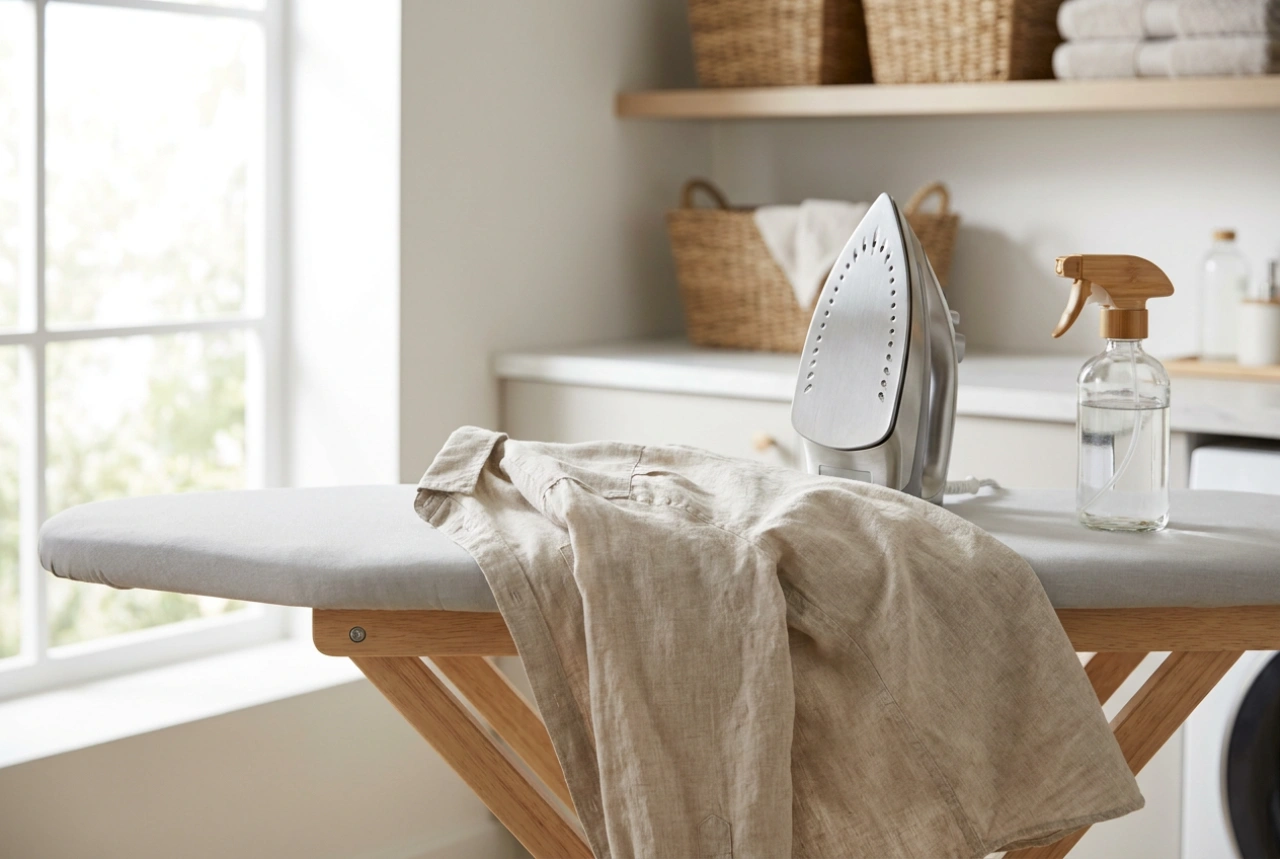
The transition from wrinkled to smooth requires thermodynamic energy and mechanical force. When the hot plate of an iron or the padded roller of a domestic rotary mangle passes over the damp fabric, the water instantly vaporises into steam. This steam penetrates the fibres, making them highly malleable. Simultaneously, the heavy physical pressure flattens the fibres, and the immediate evaporation of the moisture locks them into this new, flat state.
- Temperature selection: Pure cotton requires a temperature of approximately 200°C, while pure linen can withstand up to 220°C. Synthetic blends require significantly lower temperatures to prevent the polymer fibres from melting or glazing.
- Direction of movement: Always press parallel to the warp and weft threads—the straight grain of the weave. Pressing diagonally or in circular motions stretches the fabric unevenly, leading to warped edges and distorted hems that make neat folding impossible.
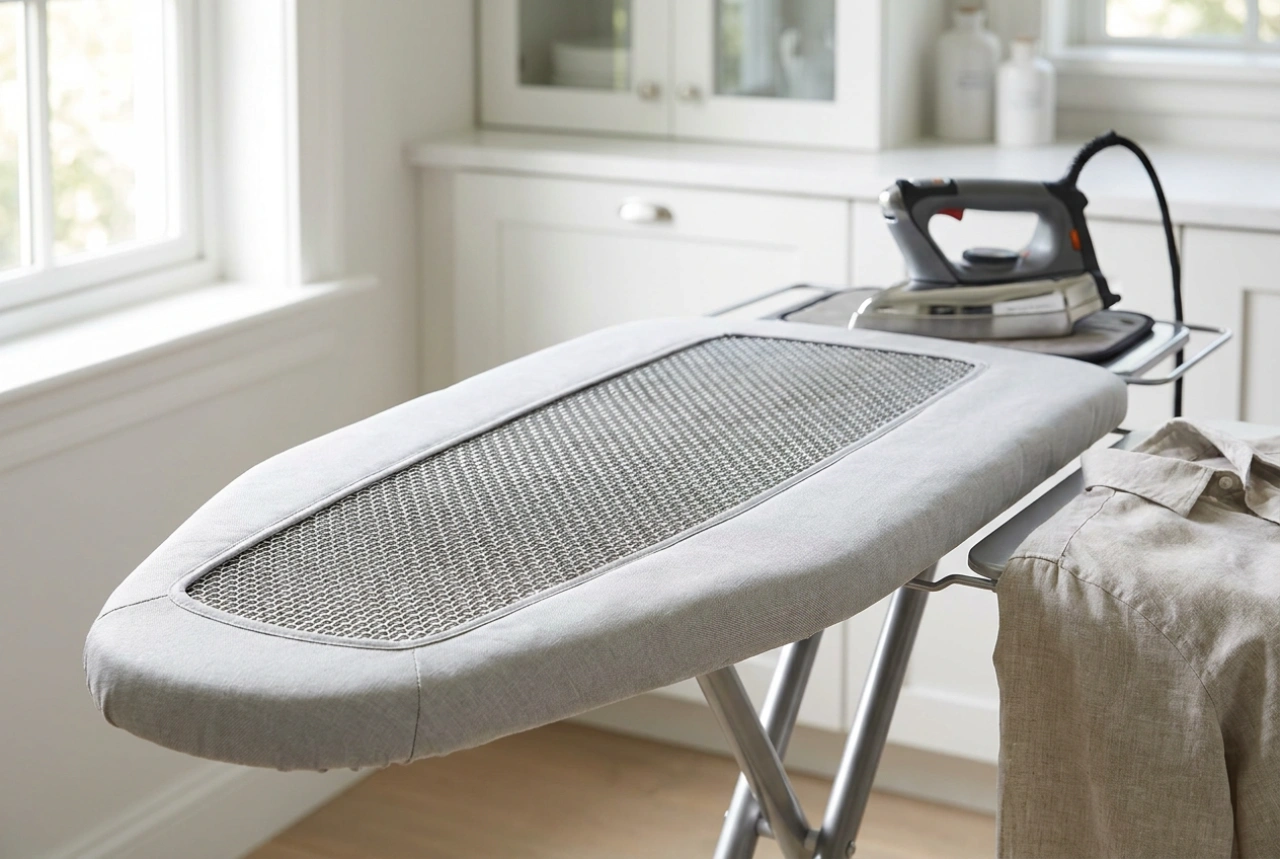
- Applying tension: If using a flat iron, gently pull the fabric taut ahead of the soleplate. If using a domestic rotary mangle, ensure the sheet is fed perfectly straight into the rollers to allow the mechanical tension to stretch out the weave evenly.
Step-by-Step Method for Large Sheets and Duvet Covers
Managing large expanses of fabric on a standard ironing board can be challenging, but folding the items strategically allows for an efficient process. To prevent the pressed areas from dragging on the floor, place a clean sheet or cotton throw on the floor beneath your workspace to act as a barrier against dust.
First, fold the duvet cover or sheet in half lengthwise, aligning the side seams precisely. Press one side, starting from the centre fold and working outwards to prevent trapping air pockets or creating permanent double creases. Flip the folded sheet over and press the reverse side. The heat and steam will easily penetrate both layers, effectively pressing the entire sheet. For exceptionally thick cotton, you may need to unfold the sheet and lightly pass over the inner surfaces, but high-quality steam distribution usually makes this step redundant.
The Geometric Fold: Preserving the Finish
Once the bed linen is perfectly smooth, the folding process must lock in this state without introducing new wrinkles. Freshly pressed fabric is still warm and highly susceptible to creasing; therefore, the folding technique must be precise and executed immediately while the fabric retains a tiny amount of warmth, then left to cool completely.
Fold the sheet lengthwise into thirds to create a long, neat band. Next, fold this band into thirds crosswise, smoothing the fabric with clean hands after each fold to expel any trapped air. This method minimises the number of fold lines and ensures the sheet fits neatly on linen cupboard shelves. For fitted sheets, tuck the elasticated corners into one another to form a neat rectangle before applying the same folding pattern. Allow the folded linen to rest on a clean, flat surface for at least one hour before storing, ensuring all residual warmth and moisture have fully dissipated.