

Washing delicate net curtains in a washing machine without ending up with a crumpled mess relies on controlling thermal energy, mechanical stress, and fiber physics. By managing the water temperature, folding techniques, and spin speeds, you can achieve pristine, wrinkle-free curtains ready to hang straight from the drum.
Understanding Fiber Behavior and the Physics of Creasing
Most modern net curtains are made of synthetic polymers like polyester, or delicate natural fibers such as cotton and linen. Synthetic fibers are highly thermoplastic, meaning they soften when exposed to heat and lock into new shapes as they cool. If curtains are washed at high temperatures and subjected to rapid spinning, the fibers bend under pressure and set into deep creases. To prevent this, the washing temperature must remain strictly below the polymer's glass transition temperature—typically under 30 degrees Celsius. For natural fibers, water swells the cell walls, making them highly susceptible to mechanical deformation during the agitation cycle. Minimizing physical friction within the drum is essential for both material types.
Preparation and the Art of Folding
The preparation phase dictates how much physical stress the fabric will undergo. Rather than stuffing the curtains haphazardly into the drum, they should be shaken outdoors to remove loose dust and then folded systematically.
- Accordion folding: Fold the curtains vertically into a long strip, then fold them loosely horizontally. This prevents the fabric from tangling and twisting around itself during the cycle.
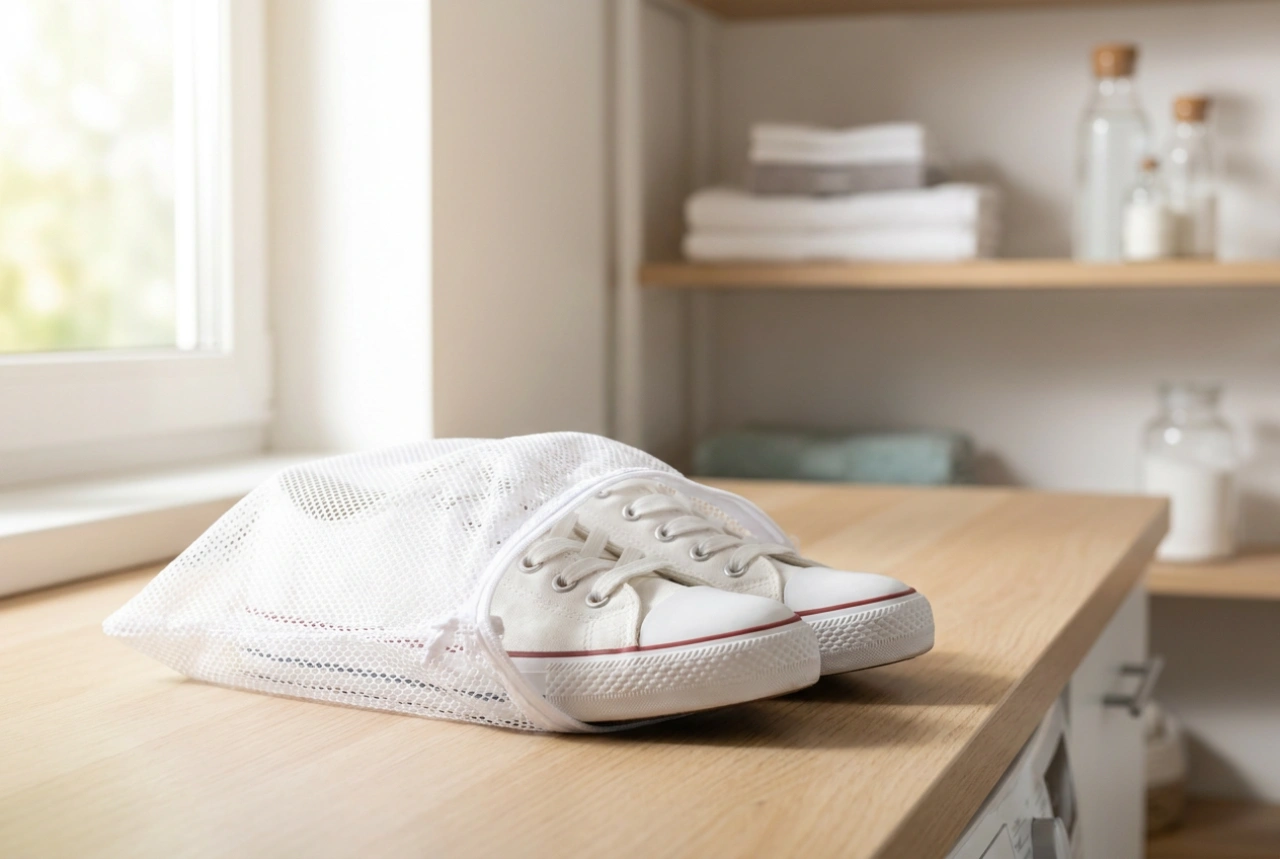
- Mesh laundry bags: Place the folded curtains inside a spacious mesh laundry bag. This acts as a physical barrier against the abrasive action of the rotating drum, reducing friction and preserving the delicate embroidery or weave.
- Drum capacity: Never overload the machine. The curtains should occupy no more than one-third to one-half of the drum volume. This allows them to float freely in the water, reducing mechanical compression.
Choosing the Right Chemical Agents
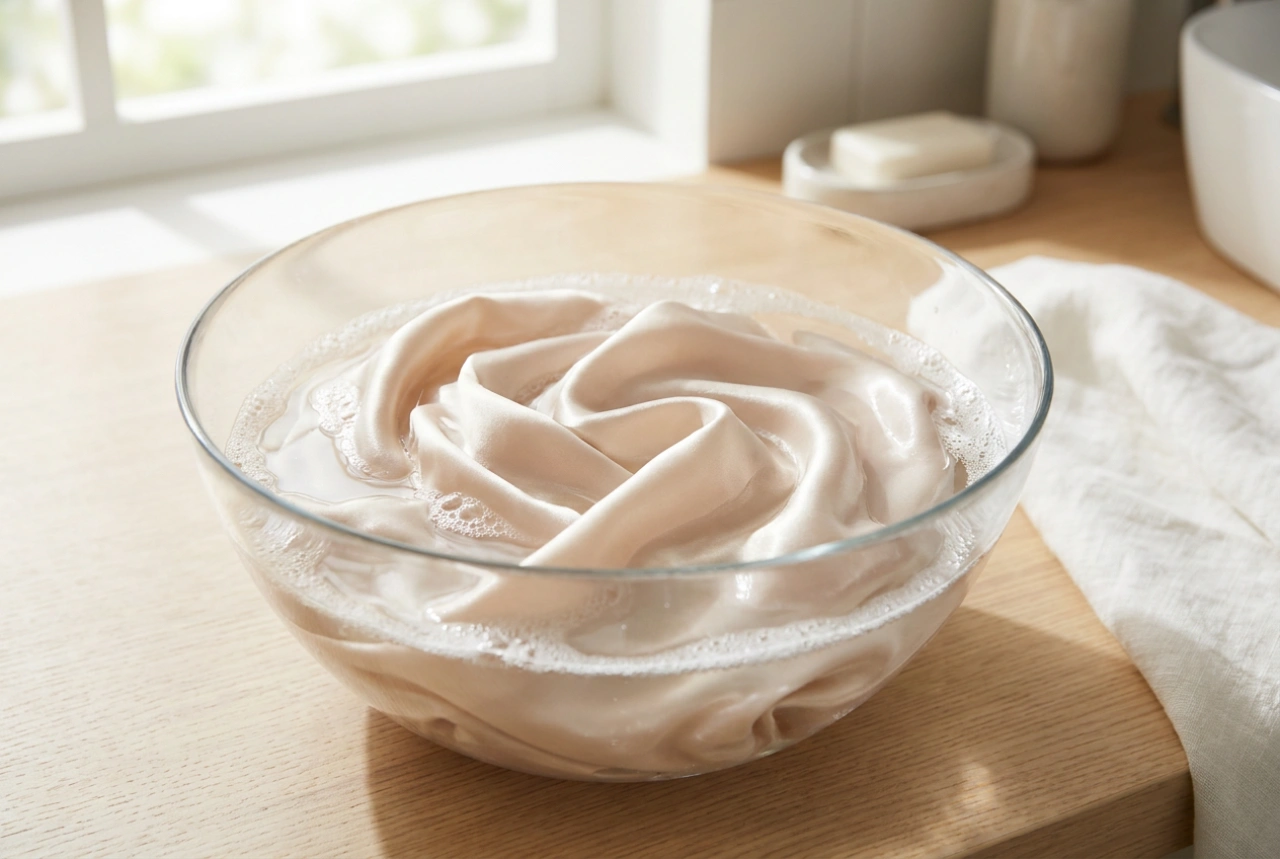
The chemical environment inside the washing machine affects both cleanliness and fiber elasticity. Standard laundry powders can leave undissolved mineral residues within the tight weave of net curtains, leading to stiffness and accelerated greying over time. Instead, use a liquid detergent designed for delicates. If whitening is required, avoid chlorine-based bleaching agents, which degrade synthetic polymers and cause yellowing under UV light. Instead, opt for oxygen-based bleaching agents like sodium percarbonate, which release active oxygen at low temperatures to break down organic stains and brighten the fabric without damaging the molecular structure. Additionally, avoid fabric softeners; they leave a hydrophobic coating that attracts dust and can weigh down lightweight fibers, causing them to sag unevenly.
Setting the Machine: Temperature, Cycles, and Spin Speeds
The programming of the washing machine must prioritize low mechanical agitation and low thermal energy.
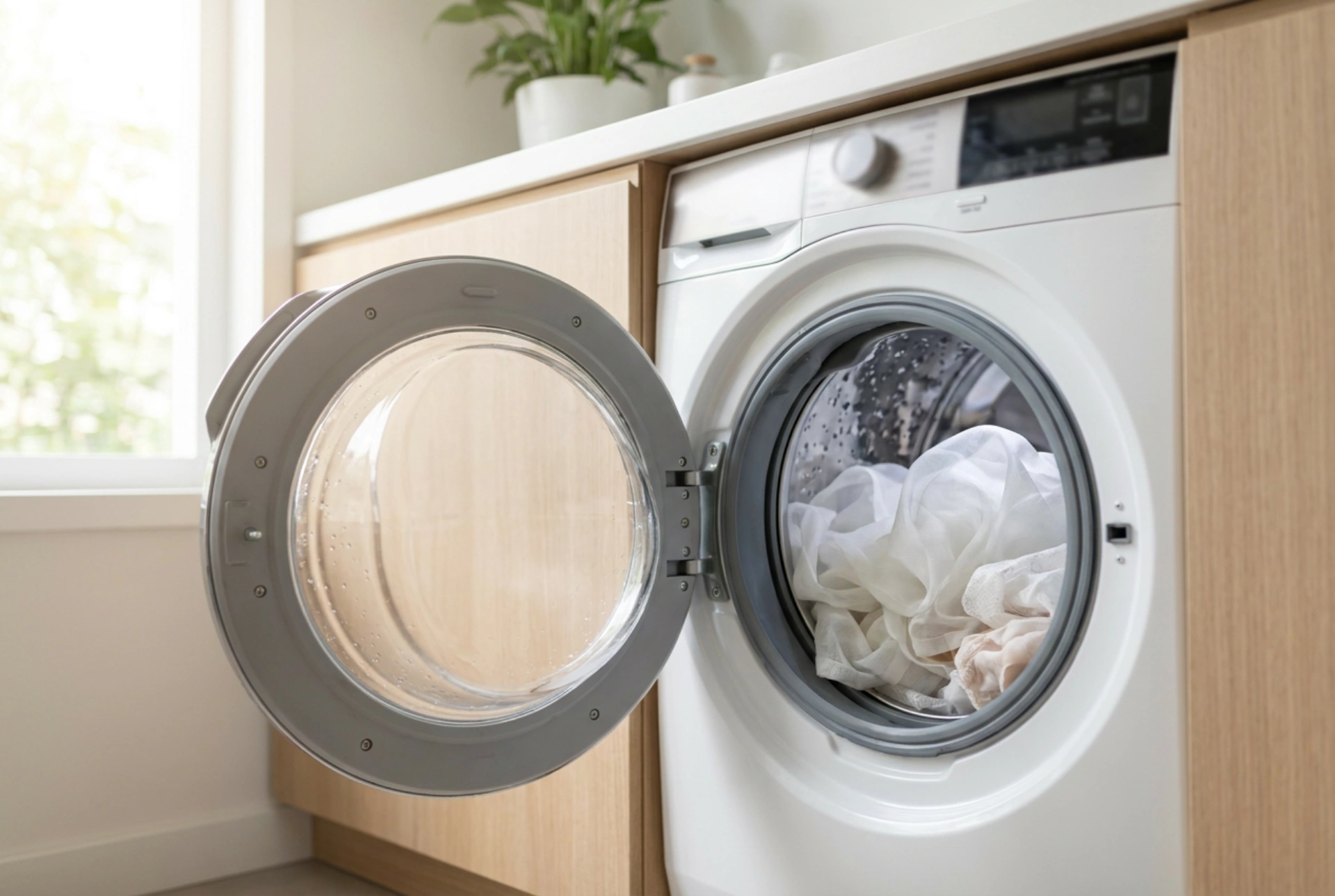
- The delicate cycle: Select a program with a high water level and gentle drum movements, often labeled as wool, silk, or delicate. High water levels cushion the fabric, reducing physical impact.
- Temperature control: Set the temperature to cold or 30 degrees Celsius maximum. This prevents thermal shock and keeps synthetic fibers rigid enough to resist creasing.
- Spin speed reduction: This is the most critical factor. Limit the spin cycle to a maximum of 400 to 600 RPM. A high spin speed forces the wet fabric against the drum holes with immense centrifugal force, embossing deep, semi-permanent creases into the weave.
Post-Wash Physics: Utilizing Gravity for Drying
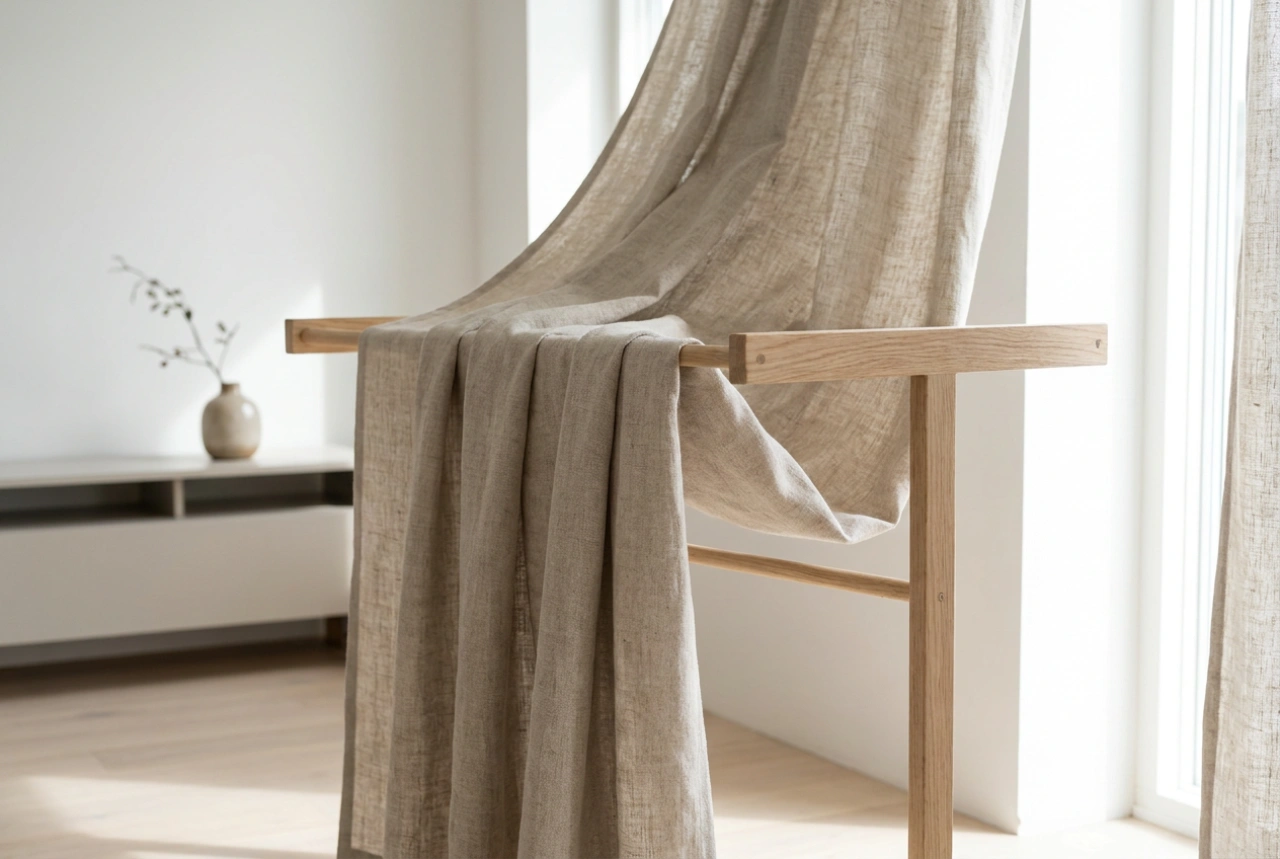
The final step to achieving a completely smooth finish involves using gravity to stretch the fibers back into their natural alignment. Immediately after the spin cycle ends, remove the curtains from the machine. Letting them sit in the drum will cause creases to set as they dry. Hang the damp curtains directly back onto the curtain rods. The weight of the water remaining in the fibers acts as a natural tensioner, pulling the fabric taut and smoothing out minor wrinkles as it evaporates. Ensure the room is well-ventilated to facilitate steady evaporation and prevent moisture accumulation.