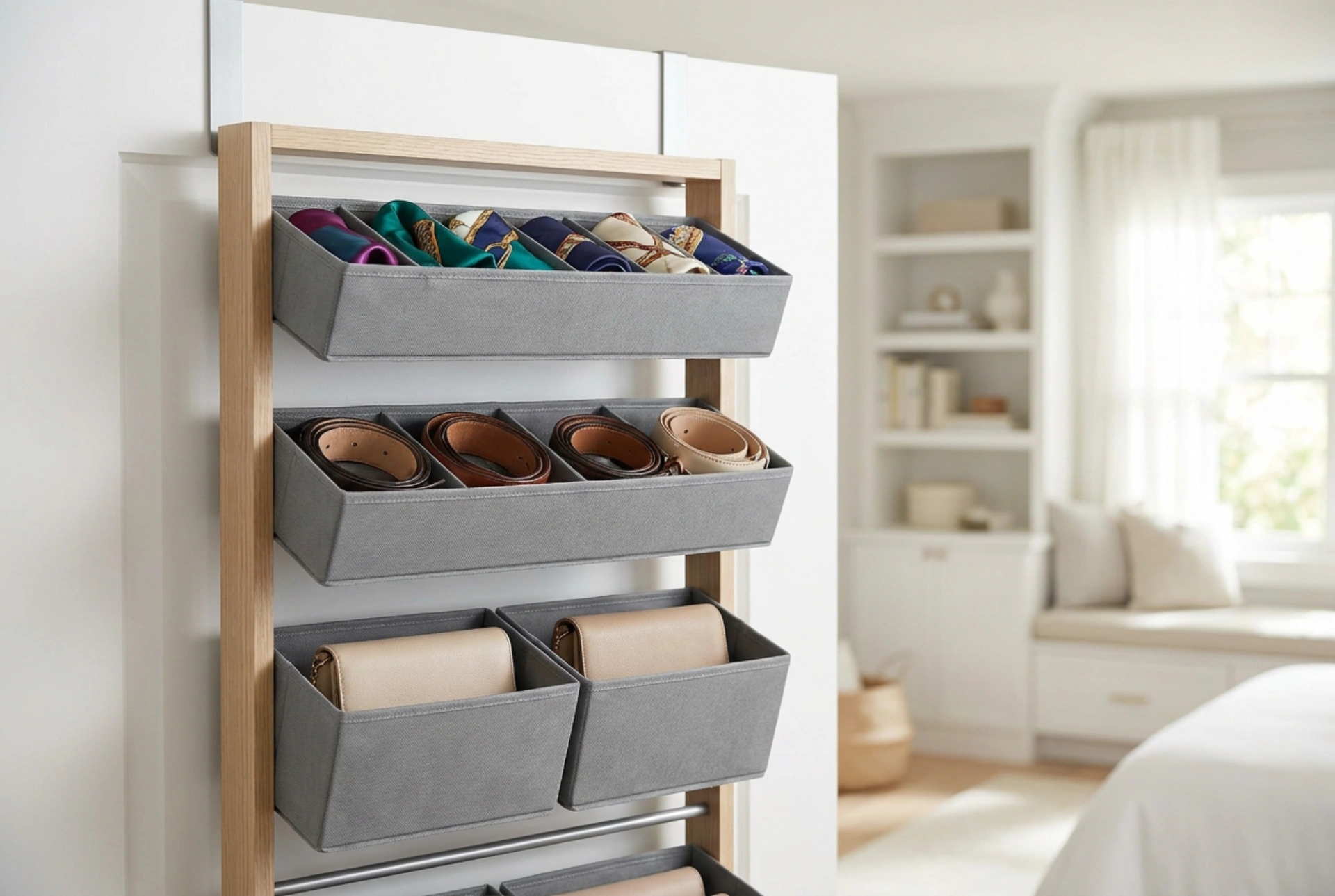


Utilising the vertical surface of closet doors converts dead space into high-efficiency storage for delicate accessories. By understanding weight distribution, material science, and mechanical friction, you can dramatically expand your wardrobe capacity while protecting your most fragile items.
The Mechanics of Vertical Space Utilization
In standard wardrobe design, the volume between the hanging rod and the door is often left vacant. This empty zone, combined with the flat plane of the inner door, represents a significant amount of underutilised square footage. Mounting an organizer directly onto this vertical plane leverages gravity to suspend accessories, keeping them uncompressed and fully visible.
Unlike drawers where items are stacked horizontally—leading to compression, fabric creasing, and lack of visibility—a vertical organizer utilizes independent pockets or hooks. This arrangement subjects each accessory only to its own gravitational pull, preventing the physical deformation that occurs when heavy items crush lighter ones in deep storage bins.
Weight Distribution and Hinge Dynamics
When attaching any storage system to a swinging door, you must calculate the physical forces exerted on the hinges. A standard closet door is designed to support its own weight plus a small margin. Adding excessive weight, especially at the outer edge of the door, increases torque—the rotational force that can pull hinges out of alignment and cause the door to sag or scrape against the frame.
- Harnessing the Lever Arm: The further an object is placed from the hinge axis, the greater the rotational force it exerts. To minimize this effect, place heavier items, such as structured leather bags or heavy metal buckles, as close to the hinge side of the door as possible.
- Placing Lightweight Items Outward: Reserve the outer edge of the organizer for lightweight materials like silk scarves, cotton pocket squares, and knitted ties. This keeps the centre of mass close to the pivot point, reducing structural strain on the screws and wood fibres of the door frame.
- Tension and Stability: Ensure the organizer is firmly anchored at both the top and bottom of the door. An unanchored organizer swings with inertia when the door is opened, causing continuous impact against the door surface. This kinetic energy can loosen mounting hardware over time and cause physical wear to the door paint or veneer.
Material Science: Preventing Accessory Degradation
Different accessories require specific storage environments to prevent structural and surface damage. The materials of your organizer must be chemically inert and physically smooth to avoid degrading delicate fibres and finishes.
Soft Barriers for Fragile Fabrics
Natural fibres like silk, cashmere, and fine wool are highly susceptible to snagging on rough surfaces. Organizers constructed with soft felt or breathable non-woven canvas pockets provide a low-friction environment. The fibres of these storage pockets do not catch on the delicate weave of scarves or ties, preserving their structural integrity and preventing costly thread pulls.
Preventing Creasing in Leather and Metals
Leather belts and watch straps contain natural moisture and oils that can dry out if subjected to improper tension. Hanging belts by their buckles on wide, rounded hooks prevents the leather from bending at sharp angles, which causes micro-cracks in the grain. Metal hardware on bags and belts should not rub against other metal surfaces to prevent galvanic corrosion and scratches; fabric dividers or individual pockets isolate these components, maintaining their original polish.
Ergonomic Zones and Systemic Order
An effective door organizer must be arranged according to frequency of use and physical ergonomics. Dividing the vertical plane into distinct zones optimizes daily routines:
- The Eye-Level Zone (Active Storage): Positioned between chest and eye height, this zone should hold daily-use items like watches, frequently worn belts, or seasonal scarves. This eliminates the need for searching and reduces handling time.
- The Lower Zone (Protective Storage): The bottom third of the door is ideal for heavier, structured accessories that are used less frequently. Since this area is prone to dust during room cleaning, utilize closed pockets or zippered compartments here.
- The Upper Zone (Out-of-Reach Storage): The top of the door should be reserved for lightweight, seasonal items. Because reaching upward requires more physical effort, storing off-season accessories here maximizes convenience in the lower zones.