

Open wardrobes demand high visual cohesion and structural discipline to prevent visual clutter and fabric damage. Transitioning to heavy-duty, thin-profile metal hangers—specifically brushed brass or gold-anodized steel—not only optimizes physical space but also establishes a uniform system that protects delicate textile fibers.
The Physics of Support: Why Metal Outperforms Plastic and Wood
The primary function of a hanger is to counteract gravity while maintaining the natural drape of a garment. Cheap plastic hangers suffer from low tensile strength, leading to bending under the weight of heavier garments like wool coats or structured blazers. This deformation alters the shoulder angle, causing unsightly fabric puckering and stretching over time. Wooden hangers, while sturdy, possess a thick profile (typically 1.5 to 2.5 cm) that significantly reduces the linear storage capacity of a closet rail.
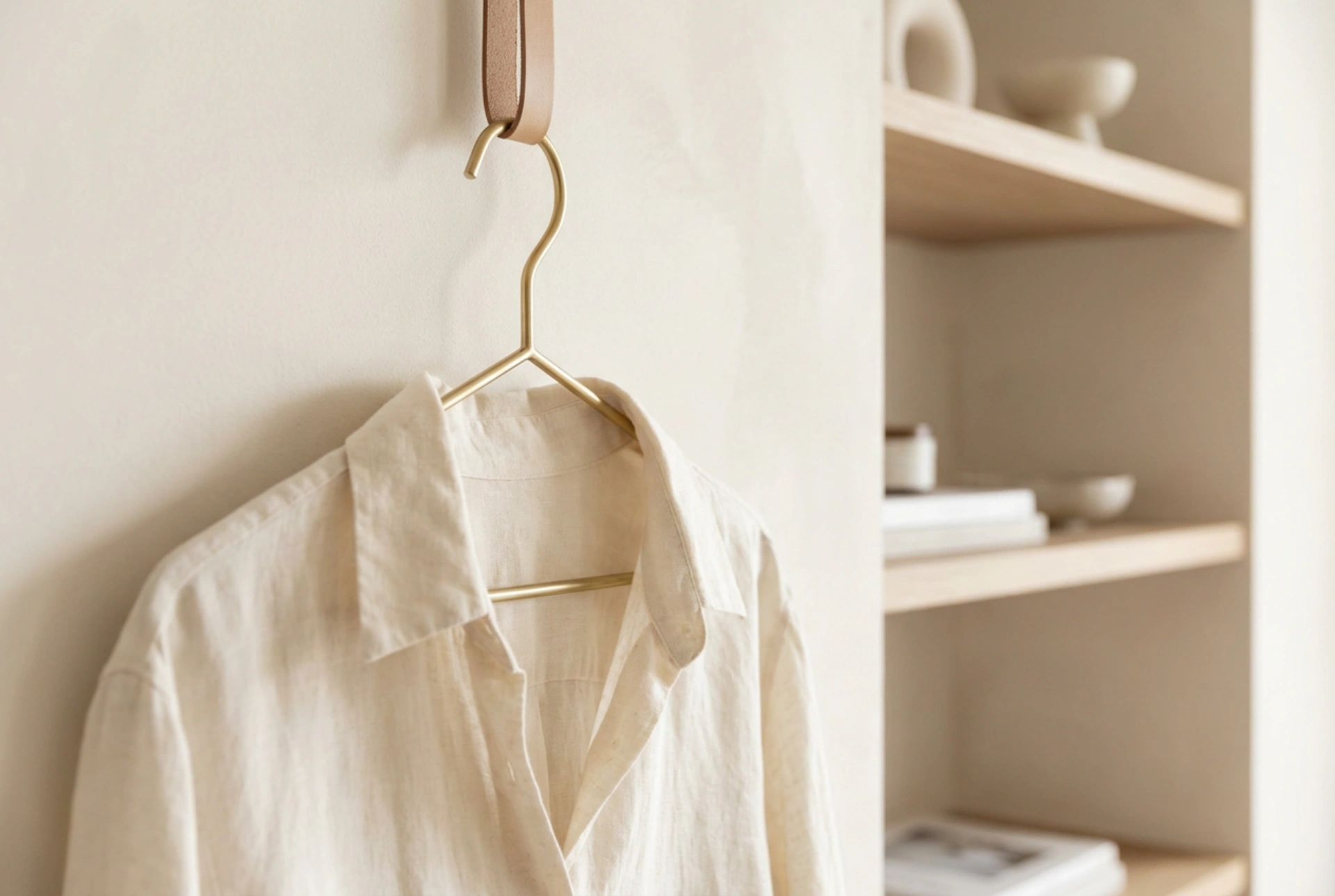
Anodized steel or solid brass hangers solve both issues. With a typical thickness of just 4 to 6 millimeters, they maximize the density of the wardrobe without compromising structural integrity. The high tensile strength of metal ensures that the hanger remains perfectly rigid, maintaining a consistent 45-degree shoulder slope. This consistency is crucial for open wardrobes, where any sag or misalignment is instantly visible, disrupting the clean horizontal line of the clothing rail.
Friction Coefficients and Fabric Interaction
The surface finish of a hanger determines how a textile behaves when draped over it. Polished gold or brass finishes have a low coefficient of friction. This is ideal for structured garments with built-in linings, such as suits and heavy jackets, as it allows the lining to slide smoothly onto the frame without catching or tearing. However, slippery fabrics like silk, satin, or fine linen may slide off a highly polished metal surface.
To balance aesthetics with functionality, look for brushed or textured gold finishes. The micro-grooves created during the brushing process slightly increase the kinetic friction, providing just enough grip to hold lightweight fabrics in place. For extremely fluid garments, utilizing subtle, integrated notches on the hanger arms or applying transparent, high-friction silicone sleeves to the shoulder tips prevents slipping without compromising the sleek, metallic aesthetic of the open closet.
Visual Cohesion and the Reduction of Visual Noise
In an open wardrobe, your clothes are part of the room’s interior design. The human brain naturally seeks patterns and order; mismatched hangers of varying shapes, colors, and materials create high cognitive load, commonly referred to as visual noise. When the eye detects twenty different hanger silhouettes, the entire space feels cluttered, regardless of how neatly the clothes are folded or hung.
Implementing a single, consistent hanger design acts as a visual anchor. The warm, reflective properties of gold or brass tones introduce a subtle, high-end metallic element that complements both neutral and dark textile palettes. By keeping the hanger geometry and color completely uniform, the hanger itself virtually disappears into a clean, rhythmic line, allowing the focus to shift entirely to the texture and color of the garments.
Preventing Oxidation and Maintaining Metallic Finishes
While metal hangers are highly durable, gold-plated, lacquered brass, or anodized aluminum surfaces require basic maintenance to prevent degradation. Human hands transfer natural oils (sebum) and moisture to the hanger hook and shoulders during daily use. Over time, these organic compounds can react with base metals, leading to tarnishing or microscopic corrosion.
To preserve the pristine golden luster, implement a simple maintenance routine. Avoid using harsh chemical solvents, glass cleaners, or abrasive scrubbing pads, which can strip away the micron-thin decorative plating. Instead, wipe the hangers down once every few months with a dry, lint-free microfiber cloth. If a deeper clean is required to remove sticky residue, use a slightly damp cloth with a single drop of pH-neutral dish soap, followed immediately by a dry towel to eliminate any residual moisture that could trigger oxidation.
Optimizing Closet Airflow and Hanging Techniques
An open wardrobe relies on proper air circulation to prevent the accumulation of ambient dust and moisture, which can lead to musty odors and fiber degradation. Packing hangers too tightly restricts this airflow. Aim for a consistent gap of approximately two to three centimeters between each hanger. This spacing allows air to circulate freely around the fibers, maintaining a stable relative humidity within the fabric weave.
Additionally, the method of hanging impacts garment longevity. Always insert the hanger from the bottom of the garment upward through the hem rather than forcing it down through the neck opening. Forcing a hanger through a collar stretches the ribbing and elastane fibers, leading to permanent collar distortion. By respecting the mechanical limits of both the hanger and the textile, you ensure a highly organized, structurally sound, and visually stunning open wardrobe system.