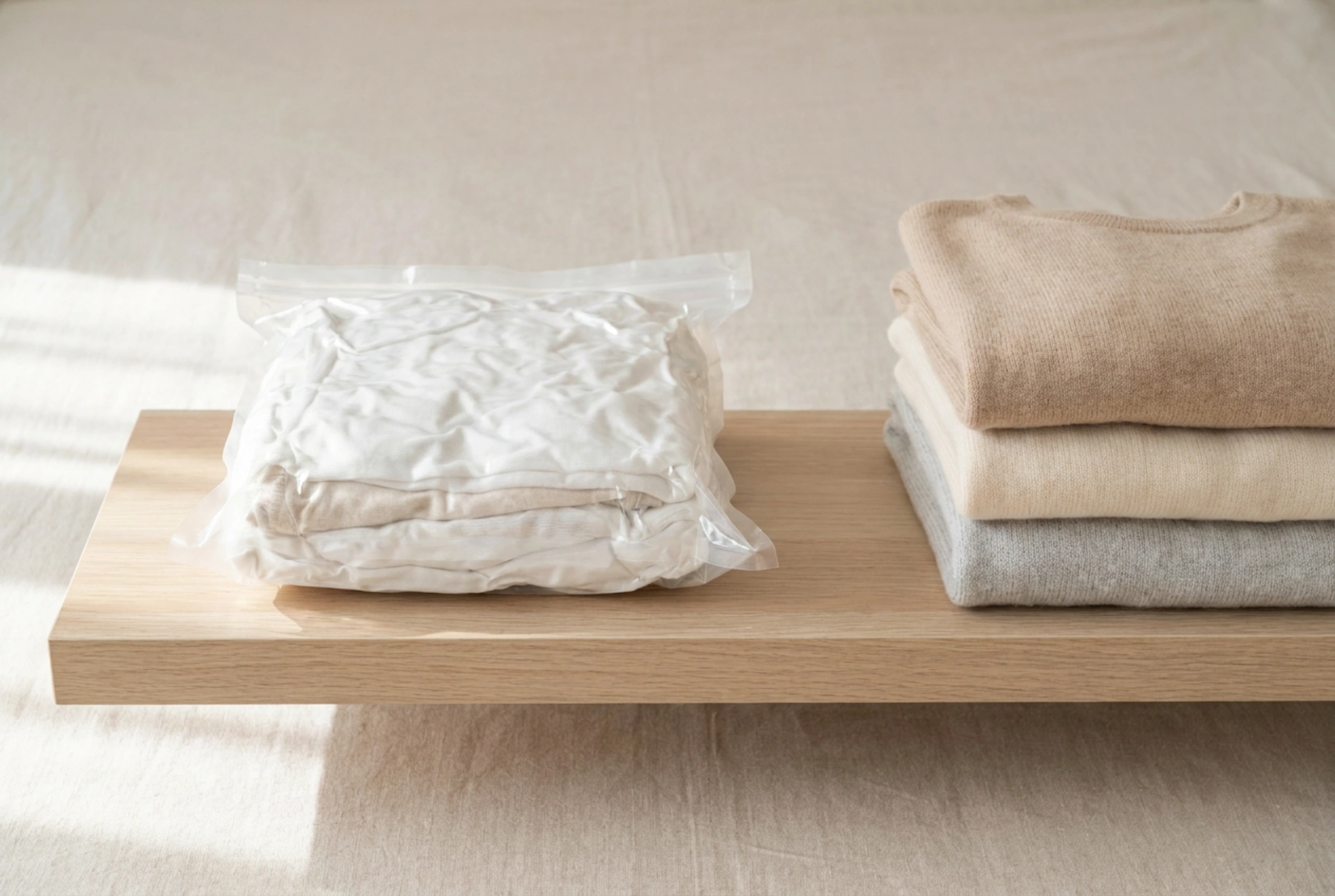


Vacuum sealing seasonal clothing is a highly efficient spatial solution, but improper compression can permanently deform textile fibers. Understanding the material science of natural and synthetic yarns ensures that garments emerge from storage with their structure, loft, and elasticity fully intact.
The Physics of Fiber Compression
Different textiles react uniquely to the mechanical stress of vacuum compression. Natural protein-based fibers, such as wool, cashmere, and silk, possess a complex three-dimensional structure. Wool fibers, for instance, have a natural wave-like crimp that creates microscopic air pockets responsible for thermal insulation. When a vacuum bag is fully evacuated, the atmospheric pressure forces these fibers into extreme contact, flattening the crimp.
If left compressed for too long, the keratin proteins in the wool undergo structural fatigue, meaning they lose their elastic recovery. Synthetic fibers like polyester and nylon are more resilient due to their thermoplastic nature, but they can still develop permanent, sharp creases if folded tightly and subjected to high pressure. Cellulose-based fibers like cotton and linen are highly prone to wrinkling when compressed, as pressure forces the hydrogen bonds between cellulose chains to reform in bent configurations.
The Threat of Trapped Micro-Moisture
Before sealing any textile, moisture management is critical. Fibers naturally absorb ambient moisture from the air. If you pack garments that are even slightly damp, the airtight environment of a vacuum bag traps this moisture. Under pressure and fluctuating temperatures, this creates a micro-greenhouse effect.
For natural fibers, excess humidity leads to anaerobic bacterial growth and mildew, which chemically break down the protein or cellulose structures, causing dry rot and musty odors. For synthetic polymers, trapped moisture can trigger hydrolysis over extended periods, slowly degrading the fiber finish. All garments must be laundered to remove organic residues (like skin cells and sebum, which attract pests) and then allowed to dry for at least 24 hours in a well-ventilated, low-humidity room before packing.
A Step-by-Step Safe Packing Protocol
To preserve fiber integrity, you must modify the standard vacuum-packing process by shifting from maximum compression to regulated compression.
- Fold Strategically: Fold garments along their natural seams to minimize fiber tension. Avoid tight rolling, which stretches elastic fibers unevenly. For delicate materials like silk or fine cashmere, insert sheets of acid-free tissue paper between the folds to act as a physical buffer and absorb any residual micro-moisture.
- Protect Against Hard Elements: Metal zippers, heavy buttons, and decorative hardware can press deeply into adjacent fabrics under vacuum pressure, causing physical fiber cutting or permanent indentation. Fold garments so that all metal and plastic hardware is turned inward, wrapped in tissue paper, or shielded by tougher fabrics like denim.
- The 50% Compression Rule: Never extract 100% of the air. For down jackets, wool coats, and heavy knits, compress the bag to no more than 50% of its original volume. Down feathers rely on three-dimensional clusters to trap air; complete vacuuming can snap the delicate plumules, permanently reducing the garment's insulation capacity.
Reconstituting and Revitalizing Fibers After Storage
When retrieving clothes from vacuum storage, do not wear them immediately. The fibers need time and specific environmental cues to recover their natural geometry. Hang the garments on broad, contoured hangers in a room with gentle air circulation.
To accelerate fiber relaxation, utilize thermodynamics. Introducing mild, warm moisture—such as hanging the garments in a bathroom after a warm shower or using a handheld garment steamer—allows the water molecules to penetrate the fiber core. This breaks the temporary hydrogen bonds formed during compression, allowing the natural molecular structure of the fibers to spring back to its original, uncreased shape.