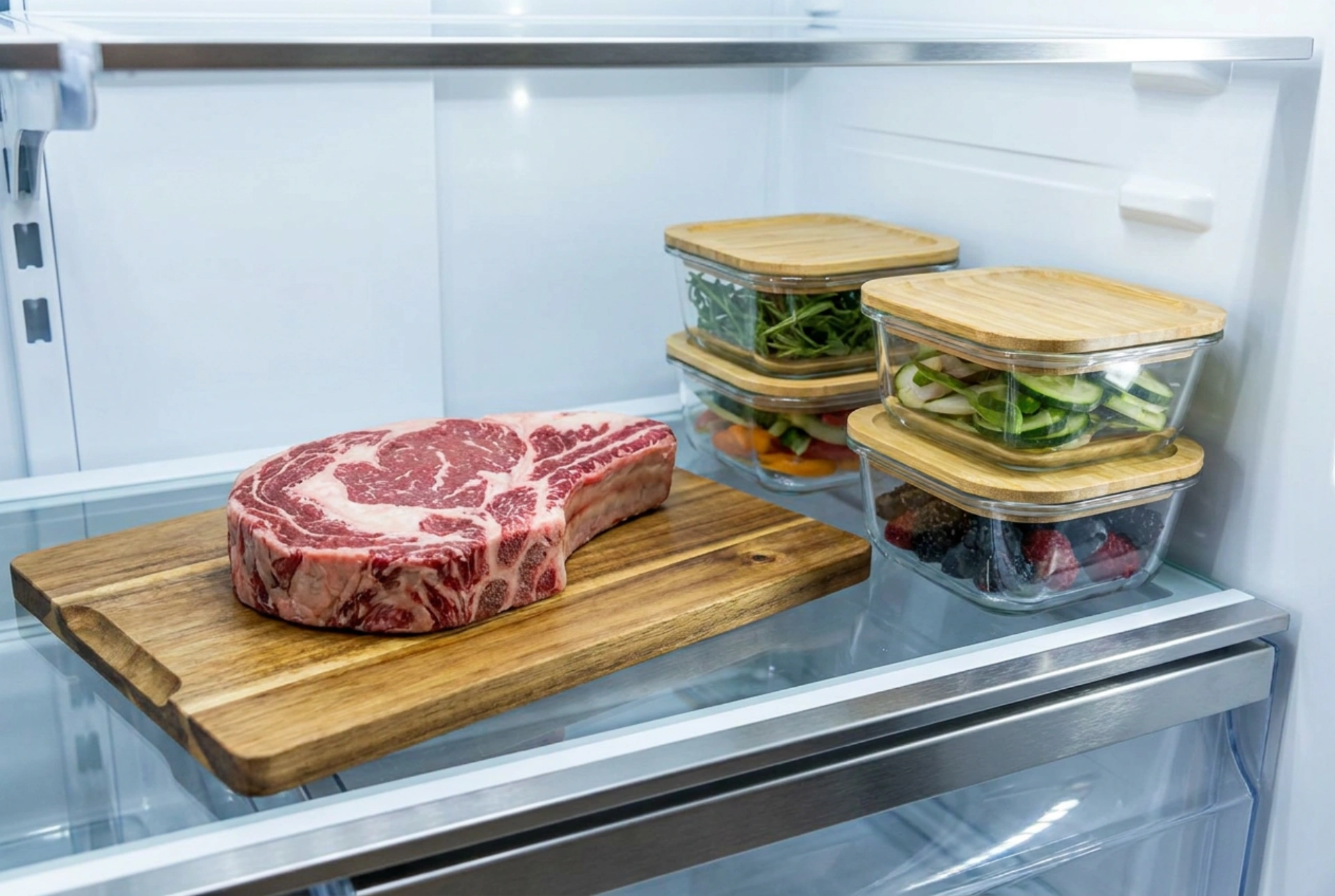


Dry-aging meat at home requires strict control over temperature, humidity, and airflow to safely trigger the enzymatic breakdown that enhances tenderness and flavour. Understanding the physics of moisture loss and microbial control allows you to transform standard beef cuts safely using a domestic refrigerator.
The Biochemical Science Behind Aging
Dry-aging is not a process of rot, but rather controlled decomposition driven by endogenous enzymes already present in the muscle tissue. Two primary groups of enzymes, calpains and cathepsins, break down the tough structural proteins within the meat. This process, known as proteolysis, naturally tenderises the muscle fibers over several weeks.
Simultaneously, physical evaporation occurs. As moisture escapes the muscle tissues, the concentration of natural compounds—such as glutamate and fat molecules—increases, yielding a richer, more concentrated flavour profile. For this chemical transformation to succeed without bacterial spoilage, you must meticulously manage the microclimate inside the appliance.
The Critical Variables: Temperature and Airflow
To safely execute dry-aging, you must maintain a constant temperature between 1.5°C and 3.0°C. If the temperature drops below 1.0°C, the enzymatic activity ceases, halting the tenderising process entirely. If the temperature rises above 4.0°C, harmful pathogenic bacteria can rapidly proliferate, ruining the meat and posing a severe health risk. Use an external digital thermometer with a probe to monitor fluctuations, as built-in refrigerator thermostats can be unreliable.
Air circulation is equally vital. Constant airflow carries moisture away from the surface of the meat, allowing a dry, protective crust—known as a pellicle—to form. This desiccated outer layer seals the inner moisture and shields the interior muscle from oxygen and bacteria. To facilitate this in a domestic fridge, place the meat on an elevated wire rack rather than a flat tray, ensuring unimpeded air movement around all sides of the cut.
Setting Up Your Refrigerator Environment
Standard domestic refrigerators often struggle with high humidity fluctuations. To combat this, you can employ two distinct technical approaches:
- The Open-Air Wire Rack Method: This requires a dedicated refrigerator where no other foods are stored to prevent cross-contamination of aromas. Place a stainless-steel wire rack over a tray filled with coarse sea salt. The salt acts as a natural desiccant, absorbing excess ambient moisture and keeping relative humidity stable.
- Permeable Membrane Bags: For multi-use domestic refrigerators, specialized dry-aging bags made of moisture-permeable polymers are highly effective. These membranes allow water vapor to escape while creating a physical barrier against external bacteria, yeasts, and unwanted refrigerator odours.
The Process: Selection, Monitoring, and Trimming
Always begin with large subprimal cuts, such as a whole ribeye or strip loin, rather than individual steaks. Single steaks have too much surface area relative to their volume; once the dry crust is trimmed away, virtually no meat will remain. Look for cuts with a thick fat cap, which protects the underlying muscle from excessive drying during the cycle.
Leave the meat undisturbed for 21 to 35 days, checking the temperature daily. By week three, the exterior will turn a deep purple-black and feel completely hard to the touch. Once the desired aging duration is reached, retrieve the meat and use a sharp boning knife to carefully shave off the dark, dehydrated pellicle. Underneath, you will find incredibly tender, ruby-red beef ready for portioning into steaks.